Love this? Save it for later!
Share the inspiration with your friends
Introduction
“You ever have one of those serendipitous moments where a simple stroll turns into a flavor revelation?” I remember that afternoon like it was yesterday. I was wandering through the bustling streets of Kadıköy, Istanbul, the kind of neighborhood where every corner hums with life and every vendor’s stall bursts with colors and aromas. Between the calls of sellers and the chatter of locals, I caught a whiff of something fresh and tangy, different from the usual spices and sweets that filled the air.
Curious, I followed the scent to a tiny café tucked away behind a faded blue door. The owner, a cheerful man named Kemal, was tossing a bowl of what he called “Turkish tabbouleh,” but with a twist — juicy pomegranate seeds and a bright splash of lime. I was skeptical at first; tabbouleh, for me, was always the herb-forward, lemony Levantine salad with bulgur. However, that unexpected addition of pomegranate and lime brought an explosion of freshness and a playful zing that I couldn’t stop thinking about.
Honestly, I’ve made a mess trying to replicate that recipe in my own kitchen — forgetting to soak the bulgur just right, or squeezing too much lime and turning it bitter. You know that feeling when you almost give up? But this version stuck with me. It’s vibrant, refreshing, and honestly, a little addictive. Maybe you’ve been there too, craving a salad that’s both light and packed with personality. Let me tell you, this fresh Turkish tabbouleh with pomegranate & lime might just become your new favorite.
Why You’ll Love This Recipe
After testing countless versions and tweaking the balance of flavors, I can say with confidence this fresh Turkish tabbouleh with pomegranate & lime is a keeper. Here’s why it shines:
- Quick & Easy: Ready in under 30 minutes, making it perfect for busy weeknights or last-minute gatherings.
- Simple Ingredients: Uses pantry staples and fresh produce you can find year-round—no specialty shopping trips needed.
- Perfect for Entertaining: Bright and colorful, it’s a crowd-pleaser that fits beautifully on mezze platters or as a side dish.
- Crowd-Pleaser: Kids and adults alike love the burst of sweet pomegranate against the zesty lime and fresh herbs.
- Unbelievably Delicious: The texture combo of tender bulgur, crisp veggies, and juicy seeds is truly next-level.
What sets this recipe apart is the tangy lime juice paired with those ruby-red pomegranate jewels. Instead of the usual lemon, the lime adds a sharper citrus note, while pomegranate seeds give a refreshing pop that’s unexpected but so satisfying. It’s not just a salad; it’s a little celebration of fresh, bright flavors that wake up your taste buds and feel light on the palate. The recipe has become my go-to for potlucks and cozy dinner parties alike, especially when I want something that tastes both exotic and familiar.
What Ingredients You Will Need
This fresh Turkish tabbouleh with pomegranate & lime keeps things straightforward but flavorful. Each ingredient plays a role in creating that lively mix of textures and tastes. You’ll find most of these are pantry staples or fresh produce that’s easy to source.
- Bulgur wheat (fine or medium grind) – about 1 cup (170g), soaked to tenderize (the base of the salad)
- Fresh parsley – 2 cups, finely chopped (adds bright herbaceous notes)
- Fresh mint leaves – ½ cup, chopped (gives a cooling contrast)
- Ripe tomatoes – 2 medium, diced (juicy and slightly sweet)
- Cucumber – 1 small, peeled and diced (refreshing crunch)
- Pomegranate seeds – ½ cup (about one small pomegranate; these add a sweet-tart burst)
- Green onions – 3, thinly sliced (mild onion flavor)
- Fresh lime juice – juice of 2 limes (about 3 tablespoons, for that zesty punch)
- Extra virgin olive oil – 3 tablespoons (adds richness and mouthfeel)
- Salt – to taste (I usually start with ½ teaspoon and adjust)
- Black pepper – freshly ground, to taste
- Optional: sumac – 1 teaspoon (for a subtle tangy depth; I recommend Spice House brand for its vibrant flavor)
If you want to get creative, you can swap bulgur for quinoa to make it gluten-free or use coconut sugar in a pinch to balance acidity if your pomegranates are especially tart. And, for a touch of nuttiness, a handful of toasted pine nuts on top works wonderfully.
Equipment Needed
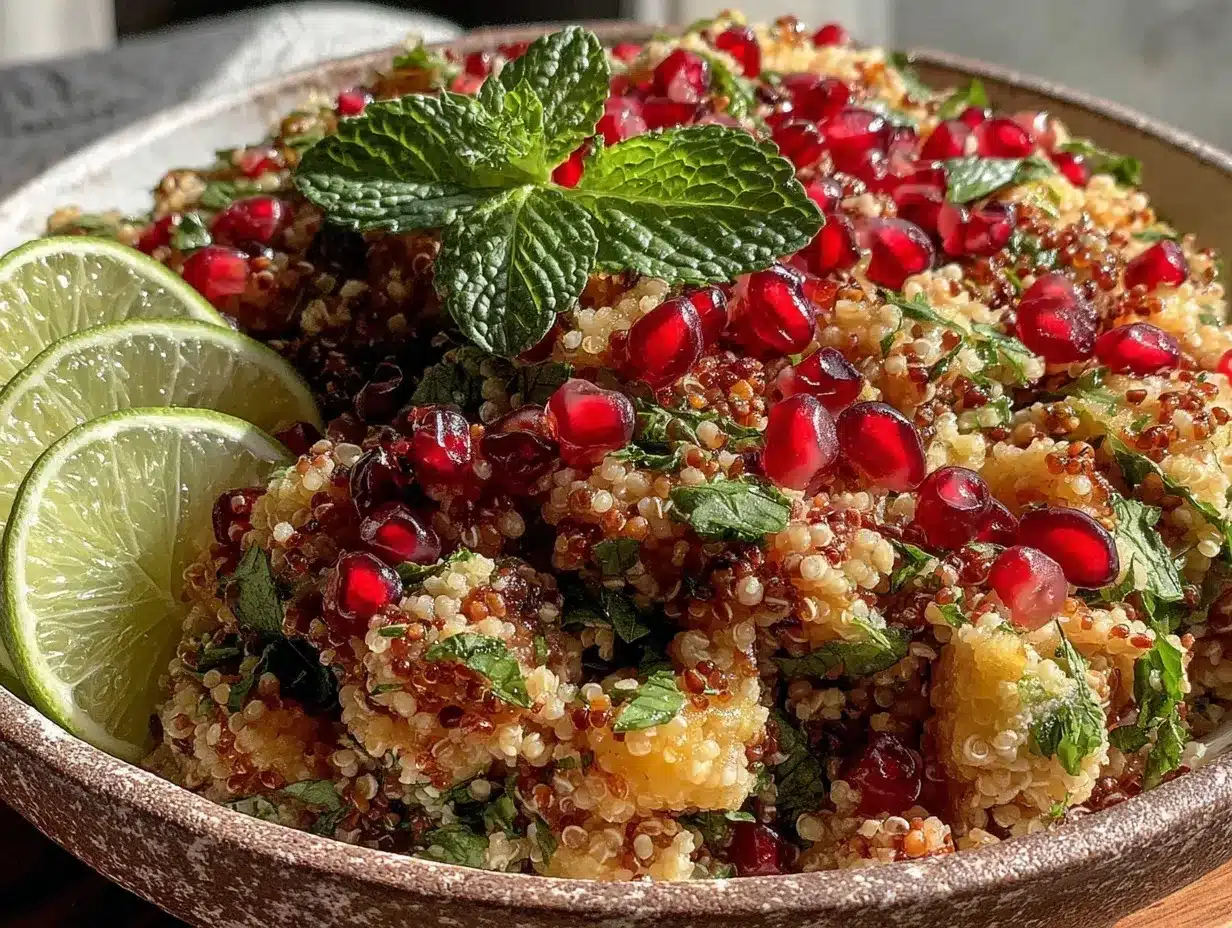
- Mixing bowl: A large bowl to combine all ingredients comfortably.
- Fine sieve or colander: For rinsing bulgur and draining excess water.
- Sharp knife and cutting board: For chopping herbs and vegetables finely.
- Citrus juicer or reamer: Makes extracting lime juice easier and less messy.
- Measuring cups and spoons: For precise ingredient amounts, especially when balancing lime and salt.
- Optional: Food processor to finely chop herbs quickly, though hand-chopping preserves texture better.
I started out using a basic colander to soak bulgur and later upgraded to a fine mesh sieve, which helps avoid sogginess. For chopping herbs, I prefer a sharp chef’s knife because it keeps the parsley bright green without bruising it. If you don’t have a citrus juicer handy, just use your hand and strain seeds out.
Preparation Method
- Soak the bulgur: Place 1 cup (170g) of fine or medium bulgur in a fine sieve and rinse under cold water. Transfer to a bowl and pour 1¼ cups (300ml) boiling water over it. Cover and let it sit for about 15-20 minutes until the bulgur is tender but not mushy. Drain any excess water if needed.
- Prep the vegetables and herbs: While bulgur soaks, finely chop 2 cups parsley, ½ cup mint leaves, 3 green onions, 2 diced tomatoes, and 1 peeled, diced cucumber. Try to keep the cuts uniform for a nice texture.
- Combine the ingredients: In a large mixing bowl, add the soaked bulgur, chopped vegetables, and herbs. Toss gently to combine.
- Add pomegranate seeds: Sprinkle ½ cup fresh pomegranate seeds evenly over the mixture. These little bursts of sweetness will brighten every bite.
- Season and dress: Pour in 3 tablespoons extra virgin olive oil and juice of 2 fresh limes (about 3 tablespoons). Add ½ teaspoon salt, freshly ground black pepper to taste, and optional 1 teaspoon sumac for extra tang.
- Mix gently: Toss everything carefully but thoroughly to coat the ingredients with the dressing without bruising the herbs or tomatoes. Taste and adjust salt or lime juice if needed.
- Rest before serving: Let the tabbouleh sit at room temperature for 10-15 minutes to allow flavors to meld, though it’s delicious eaten right away.
Quick tip: If you find your bulgur a bit chewy, you might have under-soaked it. Just add a splash of water and let it rest a few more minutes. Also, using ripe tomatoes really makes a difference in flavor here — I once tried this with underripe ones and nearly gave up on the recipe until I swapped them out!
Cooking Tips & Techniques
Making fresh Turkish tabbouleh with pomegranate & lime is all about balance and freshness. Here’s what I’ve learned through trial and error:
- Don’t over-soak the bulgur. It shouldn’t be mushy, just tender. Over-soaking leads to a soggy salad that loses its signature texture.
- Chop herbs finely but not too fine. Roughly chopping can make the salad tough, but a food processor can turn it into a green paste if you’re not careful.
- Use fresh lime juice. Bottled lime juice doesn’t have the same brightness and can dull the dish’s freshness.
- Mix gently. The tomatoes and herbs bruise easily, so fold ingredients carefully to keep everything looking vibrant.
- Season gradually. Salt and lime juice can overpower this salad fast, so add a little at a time and taste often.
- Multitasking tip: While bulgur is soaking, prep your veggies and herbs. This way, everything comes together smoothly.
Once, I accidentally doubled the lime juice (yes, in a mad rush), and while it tasted sharp, adding a little honey balanced it out. So, don’t be afraid to tweak as you go!
Variations & Adaptations
This fresh Turkish tabbouleh with pomegranate & lime is quite versatile. Here are some ways to make it your own:
- Gluten-Free Option: Swap bulgur for cooked quinoa or fine millet for a similar texture without gluten.
- Seasonal Twist: In winter, add diced roasted beets instead of cucumber for earthiness and color contrast.
- Protein Boost: Toss in some crumbled feta or toasted chickpeas to make it more filling.
- Spice It Up: Add a pinch of Aleppo pepper or a diced mild chili for subtle heat.
- Personal Favorite: I once tried adding a splash of rose water along with the lime for a floral hint that surprised everyone at the dinner table.
For a lighter version, reduce the olive oil slightly or replace it with a drizzle of pomegranate molasses for extra tang and sweetness.
Serving & Storage Suggestions
Serve this fresh Turkish tabbouleh with pomegranate & lime chilled or at room temperature. It pairs beautifully with grilled meats, fresh pita, or as part of a mezze spread. I love drizzling a little extra olive oil on top just before serving and garnishing with a few whole pomegranate seeds for a pretty presentation.
Store leftovers covered in the refrigerator for up to 2 days. The flavors deepen as it sits, though the herbs may darken slightly. To refresh it, toss gently and add a squeeze of lime before serving again.
Reheating isn’t recommended—this salad is best enjoyed fresh and crisp. If you want to prep in advance, keep the dressing separate and combine just before serving for maximum freshness.
Nutritional Information & Benefits
This fresh Turkish tabbouleh with pomegranate & lime is not just tasty but nourishing. A serving (about 1 cup or 200g) roughly contains:
| Calories | 150 |
|---|---|
| Protein | 4g |
| Fiber | 5g |
| Fat | 7g (mostly healthy fats from olive oil) |
| Carbohydrates | 20g |
Key benefits come from fresh parsley and mint packed with antioxidants, pomegranate seeds rich in vitamin C and anti-inflammatory compounds, and olive oil’s heart-healthy monounsaturated fats. It’s naturally gluten-free if you substitute bulgur, low in calories, and full of fiber to keep you feeling satisfied.
For anyone watching sodium, be mindful of added salt and balance it with extra lime juice or herbs.
Conclusion
This fresh Turkish tabbouleh with pomegranate & lime has become a staple in my kitchen. It’s one of those recipes I keep returning to when I want something that feels both light and lively, easy yet impressive. You can tweak it to your taste, and honestly, that’s part of the fun. Whether you’re new to tabbouleh or looking for a fresh twist on a classic, this recipe delivers a bright, zesty punch that’s hard to beat.
If you do try it, please share how you customized it or what you paired it with—I love hearing your kitchen stories! Here’s to fresh flavors and simple pleasures in every bite.
FAQs
What type of bulgur is best for tabbouleh?
Fine or medium-ground bulgur works best as it soaks quickly and achieves a tender texture without being mushy.
Can I make tabbouleh ahead of time?
You can prepare it a few hours in advance and refrigerate, but keep the dressing separate if possible to keep herbs fresh.
Is there a gluten-free alternative to bulgur?
Yes! Quinoa or fine millet are excellent substitutes that keep the texture similar and are gluten-free.
How do I prevent the salad from becoming soggy?
Don’t over-soak the bulgur and drain any excess water well. Also, toss salad gently to avoid crushing the ingredients.
Can I add other fruits besides pomegranate?
Sure! Diced fresh figs or chopped apples can add a different sweet note, but pomegranate gives a uniquely tart burst that’s hard to replace.
Pin This Recipe!
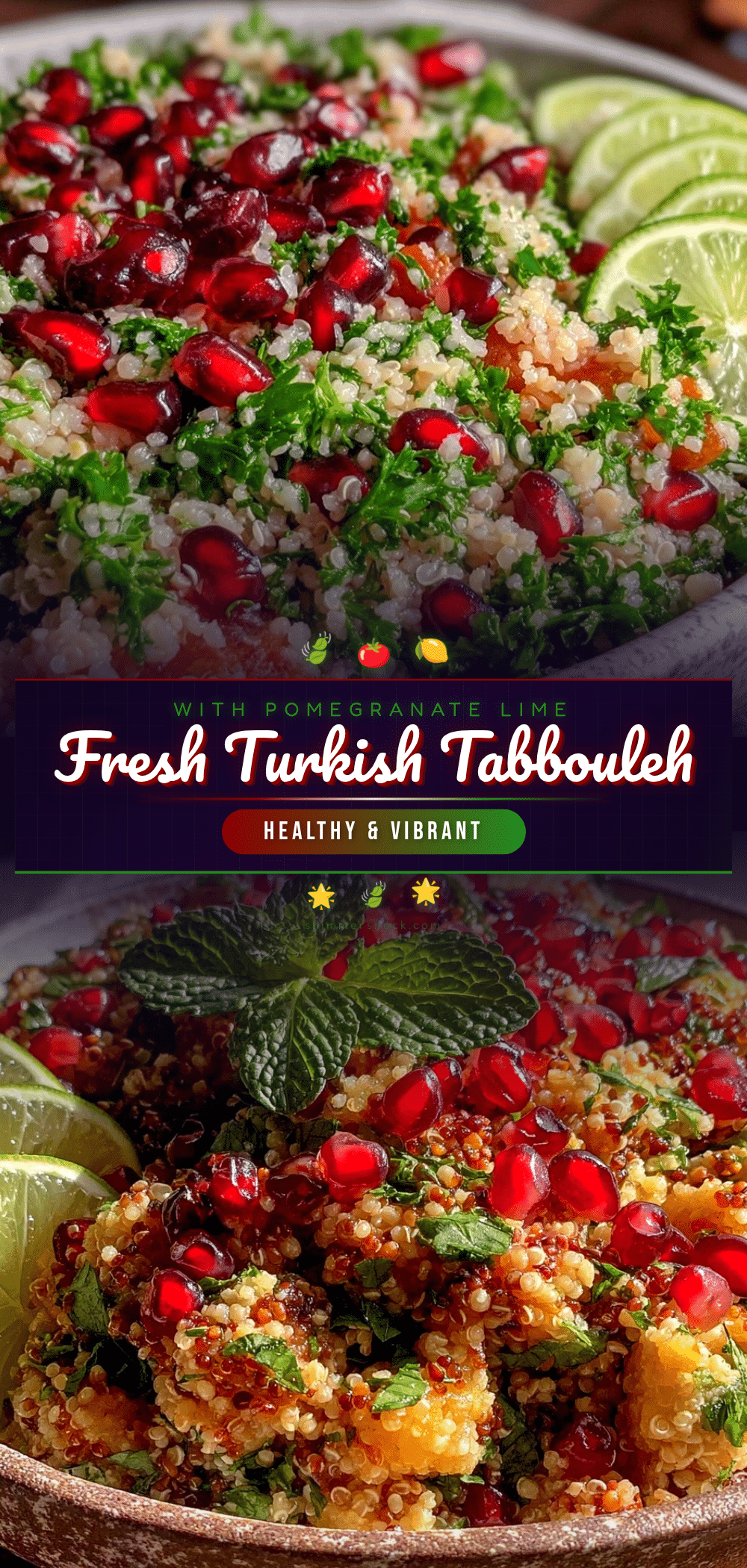
Fresh Turkish Tabbouleh with Pomegranate Lime
A vibrant and refreshing twist on traditional tabbouleh featuring juicy pomegranate seeds and zesty lime juice, perfect for a light and flavorful salad.
- Prep Time: 10 minutes
- Cook Time: 20 minutes
- Total Time: 30 minutes
- Yield: 6 servings 1x
- Category: Salad
- Cuisine: Turkish
Ingredients
- 1 cup (170g) bulgur wheat (fine or medium grind), soaked
- 2 cups fresh parsley, finely chopped
- ½ cup fresh mint leaves, chopped
- 2 medium ripe tomatoes, diced
- 1 small cucumber, peeled and diced
- ½ cup pomegranate seeds (about one small pomegranate)
- 3 green onions, thinly sliced
- Juice of 2 limes (about 3 tablespoons)
- 3 tablespoons extra virgin olive oil
- ½ teaspoon salt, or to taste
- Freshly ground black pepper, to taste
- 1 teaspoon sumac (optional)
Instructions
- Place 1 cup (170g) of fine or medium bulgur in a fine sieve and rinse under cold water.
- Transfer bulgur to a bowl and pour 1¼ cups (300ml) boiling water over it. Cover and let it sit for 15-20 minutes until tender but not mushy. Drain excess water if needed.
- While bulgur soaks, finely chop 2 cups parsley, ½ cup mint leaves, 3 green onions, 2 diced tomatoes, and 1 peeled, diced cucumber.
- In a large mixing bowl, combine soaked bulgur, chopped vegetables, and herbs. Toss gently to combine.
- Sprinkle ½ cup fresh pomegranate seeds evenly over the mixture.
- Add 3 tablespoons extra virgin olive oil and juice of 2 fresh limes (about 3 tablespoons). Season with ½ teaspoon salt, freshly ground black pepper to taste, and optional 1 teaspoon sumac.
- Toss everything carefully but thoroughly to coat ingredients without bruising herbs or tomatoes. Taste and adjust salt or lime juice if needed.
- Let the tabbouleh sit at room temperature for 10-15 minutes to allow flavors to meld before serving.
Notes
Do not over-soak the bulgur to avoid sogginess. Use fresh lime juice for best flavor. Mix gently to prevent bruising herbs and tomatoes. Adjust salt and lime gradually to balance flavors. For gluten-free, substitute bulgur with quinoa or fine millet. Optional toppings include toasted pine nuts or crumbled feta for added texture and protein.
Nutrition
- Serving Size: About 1 cup (200g)
- Calories: 150
- Fat: 7
- Carbohydrates: 20
- Fiber: 5
- Protein: 4
Keywords: tabbouleh, Turkish salad, pomegranate, lime, bulgur, fresh herbs, healthy salad, gluten-free option, easy recipe