Love this? Save it for later!
Share the inspiration with your friends
“You ever had one of those nights where your stomach’s rumbling louder than the TV, and the clock’s mocking you because dinner’s nowhere in sight?” That was me last Thursday evening. I was juggling a mountain of emails, and honestly, the thought of spending hours cooking felt like a cruel joke. Then, my phone buzzed with a message from my old college buddy, Mike, who’s surprisingly a wizard in the kitchen. He casually dropped his go-to recipe for his quick Thai pad thai with shrimp and peanuts—something he whipped up in less time than it takes to order takeout.
Now, I wasn’t expecting much, thinking, “Sure, Mike, easy for you to say.” But let me tell you, that first sizzle of shrimp hitting the pan and the tangy, sweet aroma of tamarind sauce dancing in the air immediately grabbed my attention. The mix of crunchy peanuts, tender noodles, and fresh lime was like a tiny party happening right in my kitchen. I might have even forgotten to set the timer once or twice because I was so caught up in tasting and tweaking.
Maybe you’ve been there—craving something satisfying but quick, with big bold flavors that don’t feel like a compromise. This quick Thai pad thai with shrimp & peanuts hit that sweet spot perfectly for me. It’s honest, no-fuss cooking that brings a little restaurant magic home without the stress. Plus, that slightly messy moment when I accidentally knocked over the fish sauce bottle? Totally worth it for what came out of the pan.
This recipe has stuck around because it’s reliable, tasty, and just the right kind of comforting. You know that feeling when a dish makes you close your eyes, savoring every bite? Yup, this is it. So, let me walk you through how to make your own 20-minute Thai feast that tastes like you spent hours cooking.
Why You’ll Love This Quick Thai Pad Thai with Shrimp & Peanuts
Honestly, this recipe is one of those rare finds that blends speed, flavor, and simplicity without cutting corners. After testing countless versions (and yes, a few flops), I landed on this quick Thai pad thai with shrimp & peanuts that’s become a family favorite—and a lifesaver on busy nights.
- Quick & Easy: Ready in about 20 minutes, perfect for nights when you want big flavor without the wait.
- Simple Ingredients: No exotic grocery runs needed. Most pantry staples, plus fresh shrimp and peanuts.
- Perfect for Weeknight Dinners: Whether you’re cooking for one or feeding a hungry crew, this hits the spot every time.
- Crowd-Pleaser: The balance of tangy tamarind, savory fish sauce, and crunchy peanuts gets rave reviews from both picky eaters and adventurous foodies.
- Unbelievably Delicious: The texture combo of tender noodles with crisp peanuts and juicy shrimp is next-level comfort food.
This isn’t just another pad thai recipe—it’s my best version because of the way the flavors harmonize. I blend the tamarind paste just right for that perfect tang, and I toss in peanuts at the last moment for crunch that really pops. Plus, the shrimp cooks just so, staying juicy and tender. Honestly, it’s the kind of meal that makes you pause, take a breath, and appreciate the magic that simple ingredients can create.
What Ingredients You Will Need
This quick Thai pad thai with shrimp & peanuts recipe relies on straightforward, fresh ingredients that come together to deliver big flavor without fuss. You’ll find most of these in your pantry or local market, and I’ve included some substitutions where needed to keep things flexible.
- Rice noodles (8 oz / 225 g, flat, about ¼ inch wide) – I recommend Thai Kitchen brand for perfect texture.
- Raw shrimp (12 oz / 340 g, peeled and deveined) – Fresh or frozen, just thaw before cooking.
- Peanuts (½ cup / 60 g, roasted and unsalted) – Adds that essential crunch.
- Eggs (2 large, room temperature) – For a rich, silky texture.
- Garlic (3 cloves, minced) – Fresh is best for punchy aroma.
- Green onions (4, sliced thinly) – For freshness and color.
- Bean sprouts (1 cup / 100 g) – Adds crispness; optional but recommended.
- Tamarind paste (3 tablespoons) – The star for that authentic tangy flavor.
- Fish sauce (3 tablespoons) – I trust Red Boat for its clean, savory depth.
- Brown sugar (2 tablespoons) – Balances the tang with sweetness.
- Lime (1, cut into wedges) – For serving and that fresh zing.
- Vegetable oil (3 tablespoons) – For stir-frying; neutral oils work best.
- Crushed red pepper flakes (optional, to taste) – For a little heat if you like it spicy.
If you want to swap things up, you can use almond flour tortillas to make a low-carb version of the noodles or swap coconut aminos for fish sauce if avoiding soy. Also, fresh shrimp can be swapped for firm tofu cubes if you prefer a vegetarian version.
Equipment Needed
- Large mixing bowl: For soaking the rice noodles.
- Wok or large skillet: A wok works best for even heat, but a big non-stick skillet will do just fine.
- Spatula or wooden spoon: For tossing and stirring ingredients without scratching your pan.
- Measuring spoons and cups: To get those seasoning amounts just right.
- Knife and cutting board: For prepping shrimp, garlic, and green onions.
If you don’t have a wok, no worries! A heavy-bottomed skillet heats evenly and keeps your noodles from sticking. I’ve used everything from cast iron pans to non-stick skillets, and the key is a hot pan and quick tossing. Also, keep a small bowl handy for whisking the eggs before adding them to the pan—it makes scrambling much easier and faster.
Preparation Method
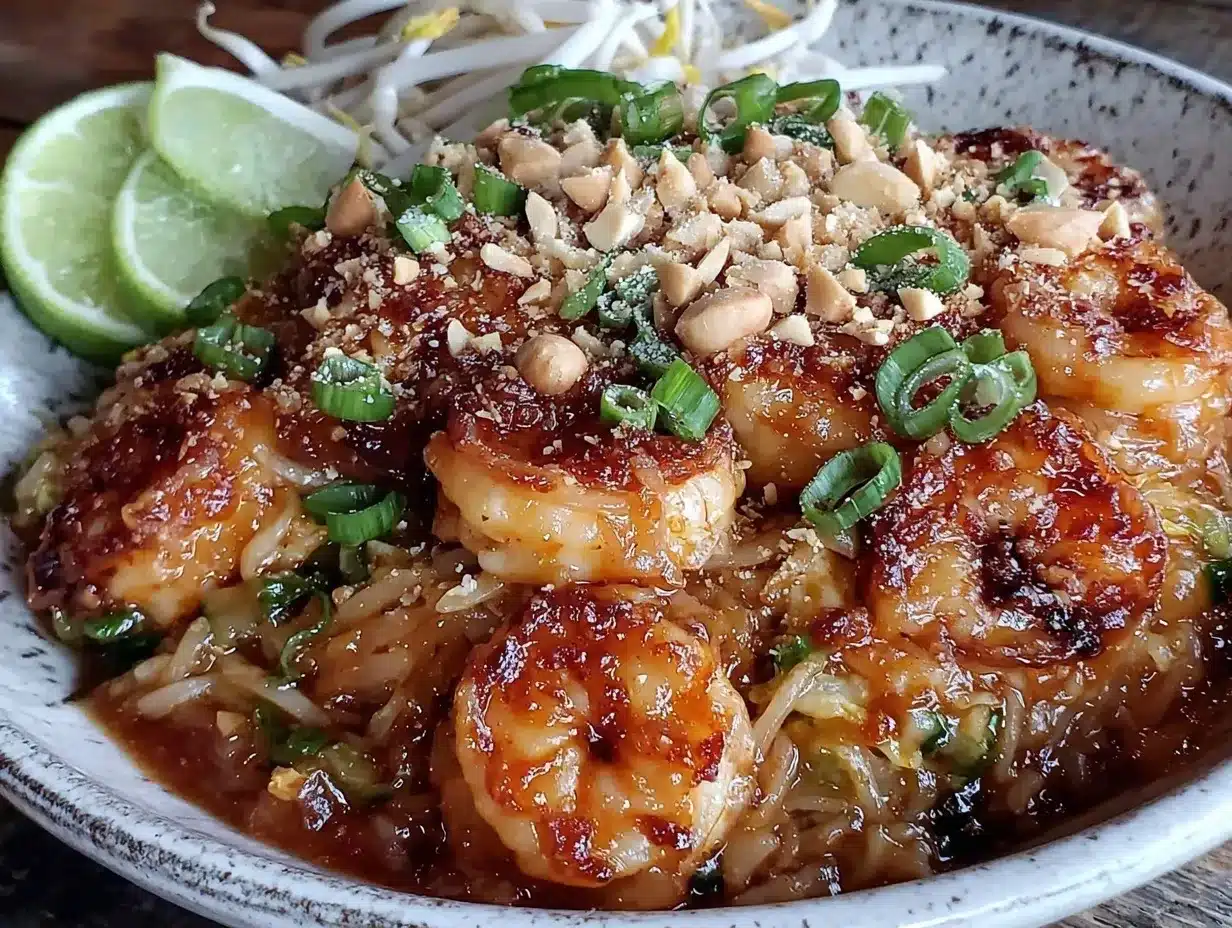
- Soak the rice noodles: Place rice noodles in a large bowl of warm water and soak for 8-10 minutes until they’re pliable but still firm. Drain and set aside. (Pro tip: Don’t over-soak or they’ll get mushy when stir-fried.)
- Mix the sauce: In a small bowl, whisk together tamarind paste, fish sauce, and brown sugar until smooth. Set aside. This combo brings the signature sweet-sour-savory balance that makes pad thai sing.
- Prep the shrimp and aromatics: Peel and devein shrimp if not done already. Mince garlic and slice green onions thinly. Keep bean sprouts ready to toss in later.
- Heat the wok/skillet: Add 2 tablespoons of vegetable oil over medium-high heat. Once shimmering, add minced garlic and stir-fry for about 30 seconds until fragrant but not browned.
- Cook the shrimp: Toss shrimp into the pan and stir frequently, cooking for 2-3 minutes until they turn pink and opaque. Remove shrimp and set aside to avoid overcooking.
- Scramble the eggs: Add remaining 1 tablespoon oil to the pan. Pour in beaten eggs and gently scramble until just set, then mix with garlic residue on the pan.
- Add noodles and sauce: Toss drained noodles into the pan with the eggs. Pour over the tamarind-fish sauce mixture and quickly stir to coat everything evenly. This step takes about 2-3 minutes. Watch those noodles—they should be glossy but not mushy.
- Combine shrimp and veggies: Return cooked shrimp to the pan, add green onions and bean sprouts. Stir everything together for another minute to warm through.
- Finish with peanuts: Remove from heat and sprinkle roasted peanuts on top. Add red pepper flakes now if you want that gentle kick.
- Serve immediately: Plate your pad thai with lime wedges on the side for squeezing over just before eating.
If your noodles stick, a quick splash of warm water helps loosen them without making them soggy. Also, keep tossing gently to avoid breaking the noodles too much. This recipe moves fast, so prep your ingredients beforehand to keep everything flowing smoothly.
Cooking Tips & Techniques
One thing I learned the hard way is that timing is everything with pad thai. The noodles should stay firm, not soggy, so soak them just until pliable and cook quickly at high heat. You know that satisfying sizzle sound? That’s your cue to keep stirring and moving fast.
Don’t overcrowd your pan—cooking shrimp in batches if needed prevents steaming and keeps them juicy. Also, tossing in the peanuts at the very end preserves their crunch, which is key for texture contrast.
If you’re worried about the tamarind paste, taste your sauce before adding. Tamarind brands vary in tartness, so adjust sugar or fish sauce to balance it out. I usually keep extra lime wedges nearby to brighten up the dish if it feels heavy.
Pro tip: Fresh lime juice squeezed over the finished dish just before serving wakes up the flavors like nothing else. And honestly, don’t skip the green onions and bean sprouts—they add freshness and crunch that make a huge difference.
Variations & Adaptations
- Vegetarian Pad Thai: Swap shrimp for firm tofu cubes, and replace fish sauce with soy sauce or coconut aminos to keep it plant-based.
- Low-Carb Option: Use spiralized zucchini noodles or shirataki noodles instead of rice noodles for a lighter twist.
- Spicy Kick: Add fresh chopped Thai chilies or a drizzle of chili garlic sauce when stirring the sauce for more heat.
I once tried adding thin carrot ribbons and snap peas for extra color and crunch—totally delicious and a fun way to sneak in more veggies. You can also swap peanuts for cashews if allergies are a concern, keeping that nutty texture intact.
Serving & Storage Suggestions
Serve this quick Thai pad thai with shrimp & peanuts piping hot, right off the stove. A squeeze of fresh lime juice just before eating brings that perfect zing. It pairs beautifully with a crisp cucumber salad or a light iced jasmine tea for balance.
If you have leftovers (though they rarely last long!), store in an airtight container in the fridge for up to 2 days. Reheat gently in a skillet over medium heat with a splash of water to keep noodles from drying out. Avoid microwaving if possible to maintain texture.
Flavors tend to mellow and meld after sitting, so next-day pad thai can actually taste even more harmonious—just refresh with lime and fresh peanuts before serving.
Nutritional Information & Benefits
This quick Thai pad thai with shrimp & peanuts is a balanced meal offering lean protein from shrimp, healthy fats from peanuts, and energy from rice noodles. A typical serving contains approximately 450 calories, 30 grams of protein, and moderate carbs, making it satisfying without feeling heavy.
Shrimp provides omega-3 fatty acids and essential minerals like selenium and iodine. Peanuts add vitamin E and magnesium, supporting heart health. Plus, using fresh garlic and lime juice adds antioxidants and boosts immune support.
For those watching gluten, this recipe is naturally gluten-free if you confirm your tamarind paste and fish sauce are certified gluten-free. It’s also low in saturated fat and can be made dairy-free easily.
Conclusion
This quick Thai pad thai with shrimp & peanuts is one of those recipes that proves you don’t need a lot of time to make something truly special. It’s reliable, bursting with flavor, and perfect for busy weeknights or when you want a satisfying meal without fuss. I love how it brings a little bit of Thailand into my kitchen with straightforward ingredients and simple steps.
Feel free to tweak the spice, swap shrimp for tofu, or add your favorite veggies to make it your own. Cooking should be fun and flexible, after all! If you give this recipe a try, I’d love to hear how it turned out for you. Drop a comment or share your adaptations—there’s nothing better than a shared love for good food.
So go ahead, grab those noodles, and let this quick pad thai become your new weekday hero dish. Happy cooking!
FAQs About Quick Thai Pad Thai with Shrimp & Peanuts
Can I use dried shrimp instead of fresh shrimp?
Dried shrimp have a much stronger flavor and different texture, so they’re not the best substitute here. Fresh or frozen shrimp work best for tender bites.
How do I make the dish less spicy?
Simply skip the red pepper flakes and avoid adding chili sauce. You can also balance heat by adding a bit more sugar or lime juice.
Can I prepare the sauce in advance?
Absolutely! The tamarind, fish sauce, and sugar mix can be made ahead and stored in the fridge for up to a week.
What’s the best way to prevent the noodles from sticking?
Soak them properly until pliable but not mushy, drain well, and toss quickly in a hot pan with oil. Adding a splash of water during cooking can help too.
Is it okay to use crunchy peanut butter instead of whole peanuts?
Crunchy peanut butter changes the texture and flavor significantly. Whole roasted peanuts are better for that authentic crunch and nutty bite.
Pin This Recipe!
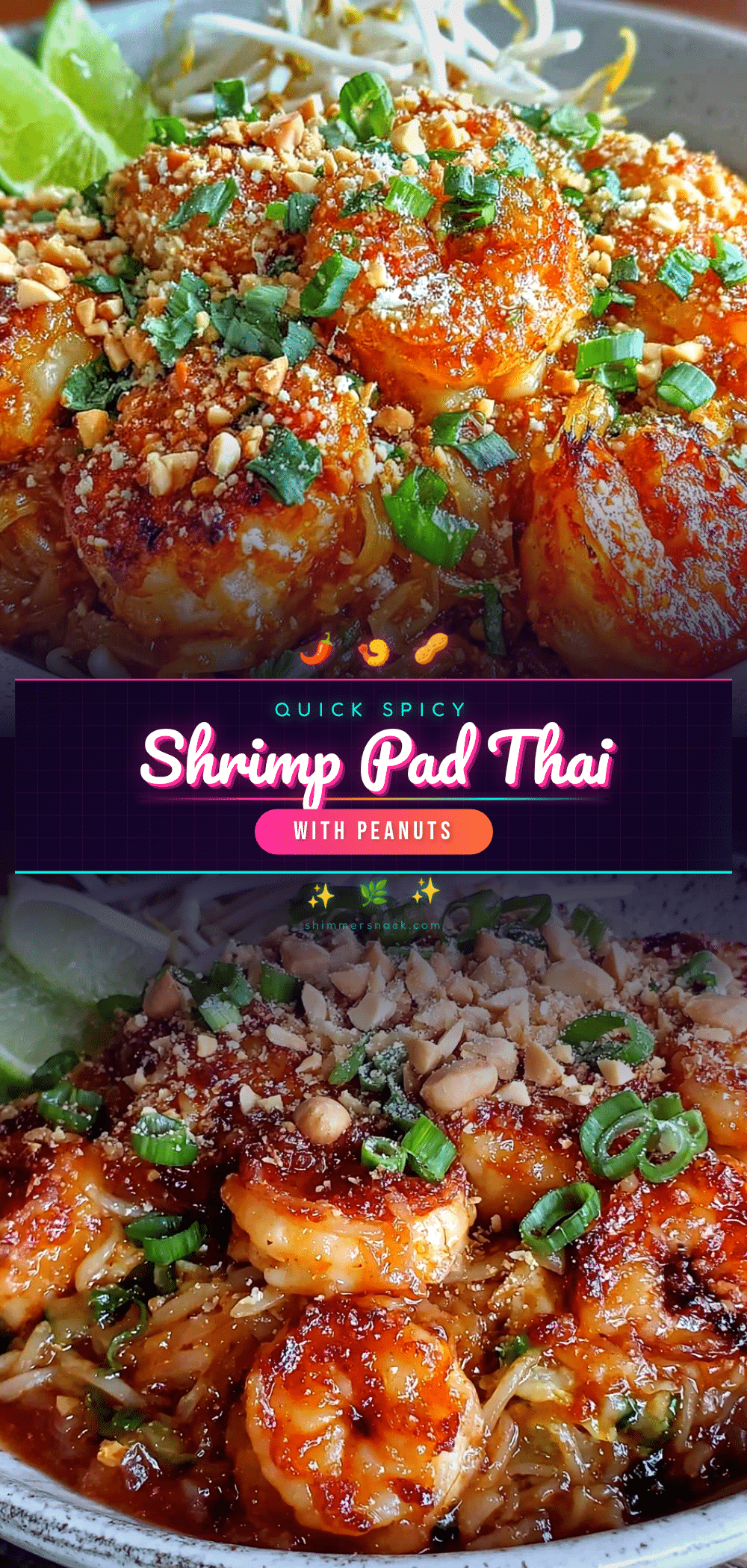
Quick Thai Pad Thai with Shrimp
A quick and easy 20-minute Thai pad thai recipe featuring shrimp, peanuts, and a tangy tamarind sauce. Perfect for busy weeknights with bold, authentic flavors and a satisfying crunch.
- Prep Time: 10 minutes
- Cook Time: 10 minutes
- Total Time: 20 minutes
- Yield: 3-4 servings 1x
- Category: Main Course
- Cuisine: Thai
Ingredients
- 8 oz (225 g) flat rice noodles, about ¼ inch wide
- 12 oz (340 g) raw shrimp, peeled and deveined
- ½ cup (60 g) roasted unsalted peanuts
- 2 large eggs, room temperature
- 3 cloves garlic, minced
- 4 green onions, sliced thinly
- 1 cup (100 g) bean sprouts (optional but recommended)
- 3 tablespoons tamarind paste
- 3 tablespoons fish sauce
- 2 tablespoons brown sugar
- 1 lime, cut into wedges
- 3 tablespoons vegetable oil
- Crushed red pepper flakes (optional, to taste)
Instructions
- Soak the rice noodles in a large bowl of warm water for 8-10 minutes until pliable but still firm. Drain and set aside.
- In a small bowl, whisk together tamarind paste, fish sauce, and brown sugar until smooth. Set aside.
- Peel and devein shrimp if not done already. Mince garlic and slice green onions thinly. Keep bean sprouts ready.
- Heat 2 tablespoons vegetable oil in a wok or large skillet over medium-high heat. Add minced garlic and stir-fry for about 30 seconds until fragrant but not browned.
- Add shrimp and stir frequently, cooking for 2-3 minutes until pink and opaque. Remove shrimp and set aside.
- Add remaining 1 tablespoon oil to the pan. Pour in beaten eggs and gently scramble until just set, mixing with garlic residue.
- Add drained noodles and tamarind-fish sauce mixture to the pan. Toss quickly to coat evenly, cooking for 2-3 minutes until noodles are glossy but not mushy.
- Return cooked shrimp to the pan. Add green onions and bean sprouts. Stir together for another minute to warm through.
- Remove from heat and sprinkle roasted peanuts on top. Add crushed red pepper flakes if desired.
- Serve immediately with lime wedges for squeezing over.
Notes
Do not over-soak noodles to avoid mushiness. Cook shrimp in batches if needed to keep them juicy. Toss peanuts at the end to preserve crunch. Adjust tamarind paste sweetness or saltiness by tasting the sauce before adding. Fresh lime juice squeezed over the finished dish brightens flavors. Avoid microwaving leftovers to maintain texture; reheat gently in a skillet with a splash of water.
Nutrition
- Serving Size: About 1 cup per serv
- Calories: 450
- Sugar: 8
- Sodium: 900
- Fat: 18
- Saturated Fat: 3
- Carbohydrates: 40
- Fiber: 3
- Protein: 30
Keywords: Pad Thai, Thai recipe, shrimp pad thai, quick dinner, easy Thai food, peanuts, tamarind sauce, weeknight meal