Love this? Save it for later!
Share the inspiration with your friends
“The clatter of pans and the faint hum of K-pop drifting from my phone were the soundtrack to that rainy Thursday evening when I first attempted Korean beef bibimbap. Honestly, I wasn’t planning anything fancy—just trying to whip up something quick after a long day. But as the sizzle of the marinated beef hit the pan and the gochujang sauce started to thicken, I felt like I was transported miles away, right into a bustling Seoul street food market. Maybe you’ve been there—the craving hits late, and you want something that’s both comforting and exciting in flavor.
It was my friend Ji-ho’s recommendation, actually. She casually mentioned, “You have to try bibimbap with a fried egg on top; it’s a game-changer.” I wasn’t convinced at first (I mean, mixing all those ingredients together? Seemed a bit chaotic). But I gave it a shot, and I still remember how the spicy-sweet notes of gochujang mingled perfectly with the savory beef and the creamy egg yolk. The best part? It’s one of those meals that looks like a masterpiece but comes together without a fuss—even if you forget to buy sesame oil once (guilty!).
Since then, Korean beef bibimbap with gochujang and fried egg has become a staple in my kitchen—whether it’s a solo dinner or a quick meal for friends. Let me tell you, it’s the kind of dish that sticks with you, not just because of the flavors but because of the joy in building it piece by piece. If you’ve never tried making bibimbap at home, this recipe might just surprise you with how approachable and satisfying it is.
Why You’ll Love This Recipe
This flavorful Korean beef bibimbap recipe is honestly one of my kitchen favorites, and here’s why you might find it irresistible too:
- Quick & Easy: Ready in about 30 minutes, perfect for busy weeknights or whenever you crave something hearty without hours of prep.
- Simple Ingredients: No need for exotic groceries—you probably have most of these in your pantry, plus a few fresh veggies.
- Perfect for Any Occasion: Whether it’s a cozy solo dinner or a casual meal with friends, bibimbap impresses without stress.
- Crowd-Pleaser: Kids and adults alike love the combination of flavors and textures—plus, who can resist a fried egg on top?
- Unbelievably Delicious: The balance of spicy, savory, and umami flavors with that creamy egg and crisp veggies is next-level comfort food.
What sets this recipe apart for me is the way the beef is marinated just right to soak up the gochujang’s kick without overpowering the fresh vegetables. I also blend a bit of sesame oil in the mix, which gives it that authentic Korean aroma. And the fried egg? It’s not just a topping—it’s the glue that holds all the flavors together in the most satisfying way.
This isn’t just another bibimbap recipe—it’s my best version that I keep coming back to, especially on those nights when I want something vibrant and nourishing but don’t want to fuss. You’ll find yourself closing your eyes after the first bite, trust me.
What Ingredients You Will Need
This Korean beef bibimbap recipe calls for straightforward, wholesome ingredients that come together to create a bold and satisfying flavor profile. Most are pantry staples or simple produce, making it approachable for cooks of all levels.
- For the Beef Marinade and Stir-Fry:
- Ground beef (about 1 pound / 450 g) – I prefer 80/20 for flavor and juiciness
- Soy sauce (3 tablespoons) – I personally go for Kikkoman for consistency
- Gochujang (Korean chili paste, 1 tablespoon) – adds the signature spicy-sweet punch
- Sesame oil (1 tablespoon) – gives a nutty aroma, try to get toasted sesame oil for best effect
- Garlic (2 cloves, minced) – fresh is key here for that punch
- Brown sugar (1 teaspoon) – balances the heat with a hint of sweetness
- For the Vegetables:
- Carrot (1 medium, julienned) – fresh and crunchy
- Spinach (2 cups fresh) – lightly blanched or sautéed
- Cucumber (1 small, thinly sliced) – adds cool freshness
- Bean sprouts (1 cup) – optional, but they add a lovely crunch
- For the Rice and Toppings:
- Cooked white rice (2 cups / 400 g) – short grain or jasmine works nicely
- Eggs (1 per serving) – fried sunny side up for that luscious yolk
- Toasted sesame seeds (1 teaspoon) – for garnish and texture
- Green onions (1, thinly sliced) – fresh pop of flavor
- Optional Extras:
- Kimchi (for serving) – brings a tangy, fermented bite
- Seaweed strips (gim/nori) – adds an extra layer of umami
If you can’t find gochujang, you could try mixing a bit of chili paste with a touch of miso paste as a substitute, but honestly, gochujang is worth the hunt. For a gluten-free version, just swap soy sauce with tamari or coconut aminos. And if you want a vegetarian twist, try swapping the beef with sautéed mushrooms or tofu.
Equipment Needed
To make this Korean beef bibimbap, you’ll need a few basic kitchen tools that you probably already have on hand:
- Non-stick skillet or frying pan: For cooking the beef and frying the eggs. I find a 10-inch pan works perfectly.
- Medium saucepan: To cook the rice if you’re not using a rice cooker. A lid is essential here to trap steam.
- Mixing bowls: For marinating the beef and prepping vegetables separately.
- Colander or strainer: Useful if you blanch the spinach or rinse bean sprouts.
- Rice cooker (optional): Perfect for fuss-free, perfectly cooked rice every time. If you don’t have one, a heavy-bottomed pot with a tight-fitting lid works just fine.
For frying eggs, a non-stick pan with a lid helps if you want a perfectly cooked yolk without flipping. I once tried a cast-iron pan for everything, but I prefer non-stick for ease of cleanup and less oil. If you’re on a budget, simple stainless steel pans do the trick too—just watch the heat carefully to avoid sticking.
Preparation Method
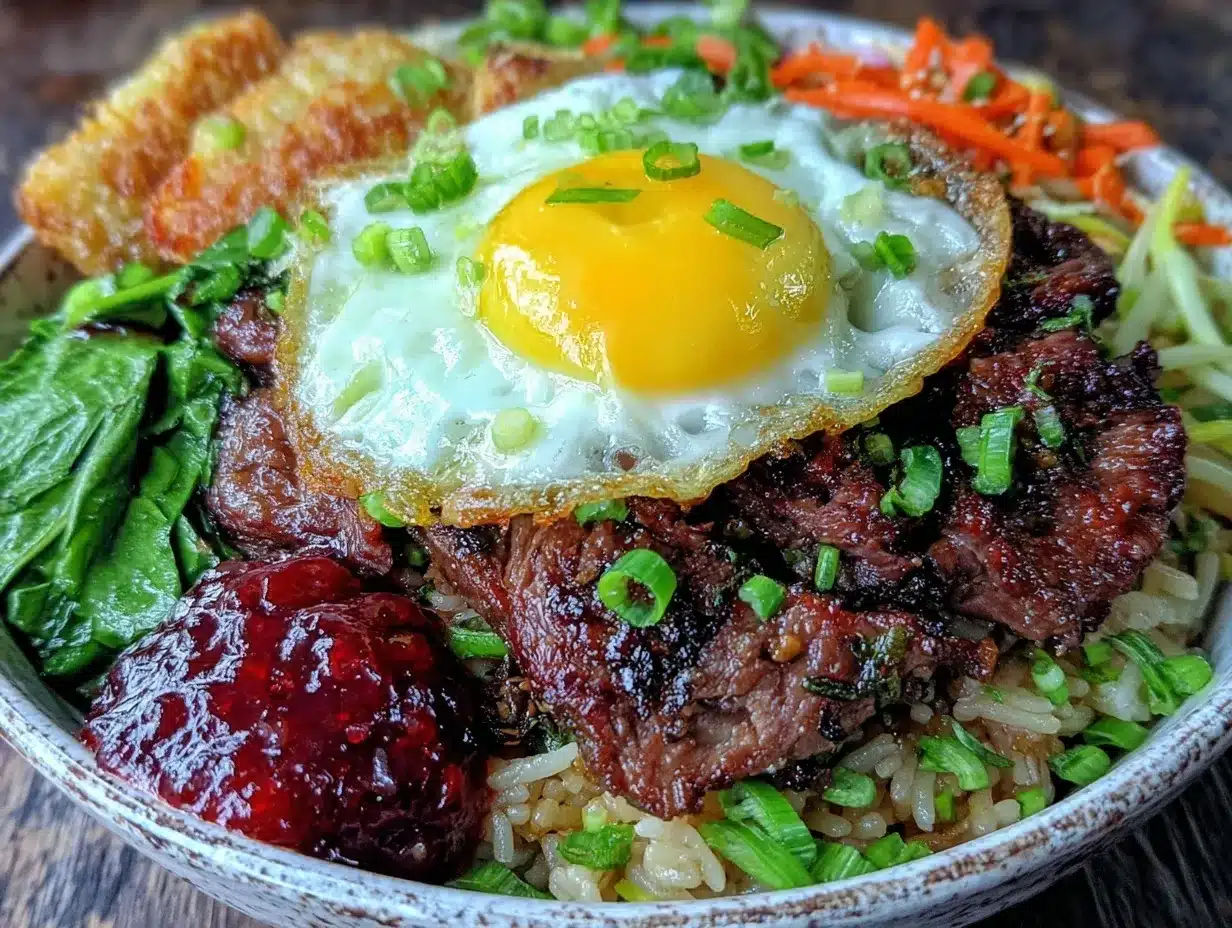
- Cook the Rice: Rinse 2 cups (400 g) of short grain rice under cold water until the water runs clear. Drain well. In a medium saucepan, combine the rice with 2 1/2 cups (600 ml) of water. Bring to a boil, then reduce heat to low, cover, and simmer for 15 minutes. Remove from heat, keep covered, and let it rest for 10 minutes. Fluff with a fork before serving.
- Prepare the Vegetables: Julienne the carrot into thin matchsticks. Blanch the spinach in boiling water for about 30 seconds, then drain and squeeze out excess water. Thinly slice cucumber and rinse bean sprouts if using. Set each veggie aside separately—this keeps the colors and textures distinct.
- Marinate and Cook the Beef: In a bowl, mix 1 pound (450 g) ground beef with 3 tablespoons soy sauce, 1 tablespoon gochujang, 1 tablespoon sesame oil, 2 minced garlic cloves, and 1 teaspoon brown sugar. Let it marinate for at least 10 minutes (you can prep veggies meanwhile). Heat a non-stick skillet over medium-high heat. Add the marinated beef and cook for 5-7 minutes, stirring occasionally, until browned and cooked through. Drain excess fat if needed.
- Cook the Vegetables: In the same pan or a separate skillet, lightly sauté the carrots and bean sprouts separately for 2-3 minutes with a pinch of salt. Sauté the spinach briefly with a little sesame oil and garlic if you like a bit more flavor.
- Fry the Eggs: Heat a small amount of oil in a non-stick pan over medium heat. Crack one egg per serving and fry sunny side up until whites are set but yolk is still runny, about 2-3 minutes. Cover with a lid for even cooking if needed.
- Assemble the Bibimbap: Scoop warm rice into bowls. Arrange cooked beef, carrots, spinach, cucumber, and bean sprouts on top in separate sections. Place the fried egg in the center. Garnish with sliced green onions and toasted sesame seeds. Serve with extra gochujang on the side for those who want more heat.
- Enjoy: Mix everything together just before eating to enjoy that perfect blend of flavors and textures. You’ll notice the spicy, savory, and fresh elements all coming alive with each bite!
Pro tip: If your gochujang is too thick, stir in a splash of warm water or rice vinegar to loosen it up for easier mixing. And if you’re juggling time, cook the rice ahead and reheat gently with a sprinkle of water to keep it fluffy.
Cooking Tips & Techniques
Making bibimbap at home can seem intimidating, but a few tricks make it a breeze:
- Marinate the beef for at least 10 minutes: Even a short marination lets the flavors penetrate the meat, giving you that deep, savory taste without waiting forever.
- Don’t overcrowd the pan when cooking beef: Crowding traps moisture and causes steaming instead of browning. Cook in batches if needed for that beautiful caramelization.
- Use fresh vegetables: Crisp, fresh veggies provide the contrast against the rich beef and egg. Blanch spinach quickly to maintain vibrant color and tenderness.
- Perfect the fried egg: If you’re worried about undercooked whites, cover the pan with a lid for a minute to gently steam the top without flipping. The yolk should remain runny for that creamy texture.
- Balance your gochujang: It’s spicy and sweet, but can be strong for some. Start with a tablespoon and add more to taste. Mixing it with a little sesame oil or vinegar brightens the flavor.
- Multitask smartly: While rice cooks, prep veggies and marinate beef. Then cook beef and sauté veggies simultaneously if you have an extra pan. Timing is everything here!
From personal experience, I learned that adding a pinch of brown sugar to the beef marinade really mellows the heat and adds a subtle caramel note. Also, don’t skip the sesame oil—it’s a small step that makes a huge difference in that authentic Korean aroma.
Variations & Adaptations
This Korean beef bibimbap recipe is wonderfully flexible—here are some ways to make it your own:
- Vegetarian Version: Swap ground beef with firm tofu or mushrooms like shiitake or cremini, sautéed with the same marinade for a meaty texture without the meat.
- Spicy Level Adjustments: Add extra gochujang or a dash of chili flakes if you like it fiery. For milder tastes, mix gochujang with a bit of honey or omit it altogether and use soy sauce.
- Grain Alternatives: Try brown rice or quinoa for a nuttier, fiber-rich base. Just remember to adjust cooking times accordingly.
- Seasonal Veggies: Swap carrots and cucumbers for zucchini, bell peppers, or even roasted sweet potatoes in cooler months. I once tossed in sautéed kale for a winter twist that worked beautifully.
- Egg Alternatives: If you prefer, top with a soft-boiled egg or even a poached egg for a different texture experience.
Personally, I’ve tried using ground turkey for a leaner option, and while it’s lighter, the flavor isn’t quite as rich as the beef version—but it’s a solid alternative for those watching fat intake.
Serving & Storage Suggestions
Serve the Korean beef bibimbap hot, right after assembling, so the fried egg’s yolk gently coats the ingredients when mixed. Presentation-wise, a white or neutral-colored bowl really makes the vibrant veggies pop, making it as beautiful as it is tasty.
This dish pairs wonderfully with a side of crisp kimchi or a light cucumber salad to balance the richness. For beverages, a chilled green tea or a light lager complements the spicy and savory notes well.
If you have leftovers (though that rarely happens!), store components separately if possible—rice, beef, and veggies in airtight containers in the fridge for up to 2 days. Reheat gently in a skillet or microwave, then add a fresh fried egg on top to revive the dish’s charm.
Flavors actually deepen if you let the beef marinade sit overnight before cooking, so prepping in advance is a great strategy for weeknight meals.
Nutritional Information & Benefits
This bibimbap recipe offers a balanced meal packed with protein, fiber, and vitamins:
- Ground beef provides iron, zinc, and high-quality protein essential for muscle repair and energy.
- Vegetables like spinach and carrots contribute antioxidants, vitamin A, and fiber for digestion.
- Gochujang adds a flavorful kick with some capsaicin benefits, which may help with metabolism.
- Using sesame oil adds healthy fats and antioxidants, enhancing heart health.
For those watching carbs, swapping white rice for cauliflower rice is an option, though you’ll lose some traditional texture. The recipe is naturally gluten-free if you choose tamari over soy sauce. Be mindful of the egg allergy if serving guests with sensitivities.
From my own experience, this dish feels nourishing and energizing without heaviness, making it a favorite when I want something wholesome yet indulgent.
Conclusion
Flavorful Korean beef bibimbap with gochujang and fried egg is one of those recipes that’s as satisfying to make as it is to eat. It brings together fresh veggies, savory marinated beef, and that luscious fried egg into a bowl that’s bursting with color, texture, and bold flavor.
Feel free to tweak the veggies, spice level, or protein to your liking—this recipe is a great canvas for your personal touch. I love it because it’s approachable and comforting, yet never boring. It’s the kind of meal that welcomes you in after a hectic day, with a little bit of Korean soul in every bite.
If you try this recipe, I’d love to hear how you made it your own! Drop a comment below or share your favorite bibimbap adaptations to keep the flavor conversation going.
Here’s to many delicious bowls ahead—happy cooking!
FAQs
What is the best type of rice for bibimbap?
Short-grain white rice or jasmine rice works best because they’re sticky enough to hold the ingredients together, but you can use brown rice or quinoa for a healthier twist.
Can I make bibimbap ahead of time?
Yes, but it’s best to store components separately (rice, beef, veggies) and assemble just before eating. This keeps textures fresh and prevents sogginess.
How spicy is bibimbap with gochujang?
Gochujang has a mild to moderate heat level with a sweet undertone. You can adjust the amount to suit your spice tolerance or serve extra on the side.
Is bibimbap gluten-free?
It can be if you use gluten-free soy sauce alternatives like tamari and ensure gochujang is gluten-free, as some brands may contain wheat.
What can I use instead of ground beef?
Ground turkey, tofu, mushrooms, or even thinly sliced chicken work well as substitutes, depending on your preference or dietary needs.
Pin This Recipe!
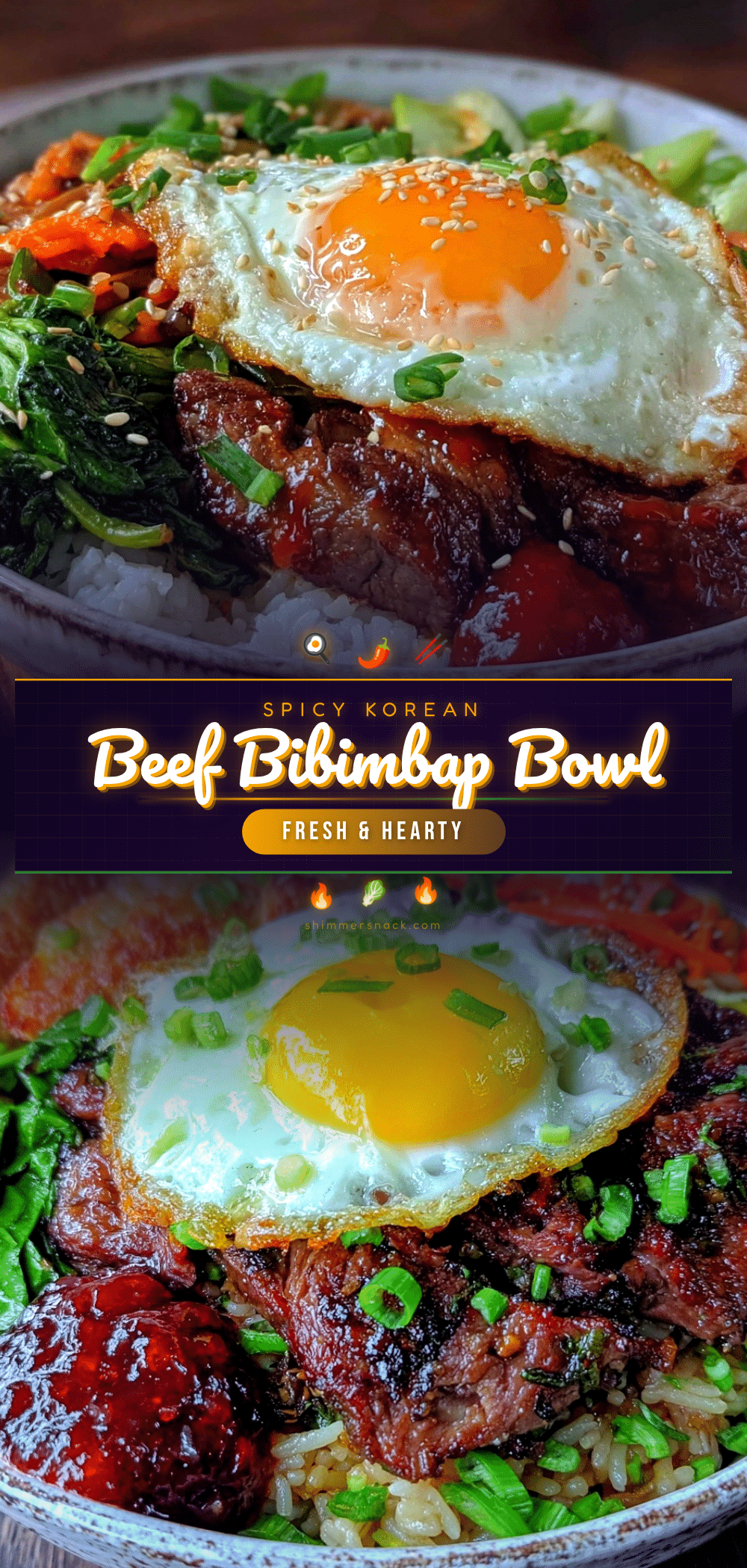
Flavorful Korean Beef Bibimbap Recipe with Gochujang and Fried Egg Made Easy

A quick and easy Korean beef bibimbap recipe featuring marinated ground beef, fresh vegetables, gochujang sauce, and a fried egg, perfect for a comforting and flavorful meal.
- Prep Time: 15 minutes
- Cook Time: 15 minutes
- Total Time: 30 minutes
- Yield: 4 servings 1x
- Category: Main Course
- Cuisine: Korean
Ingredients
- 1 pound ground beef (80/20 preferred)
- 3 tablespoons soy sauce
- 1 tablespoon gochujang (Korean chili paste)
- 1 tablespoon sesame oil (toasted preferred)
- 2 cloves garlic, minced
- 1 teaspoon brown sugar
- 1 medium carrot, julienned
- 2 cups fresh spinach, blanched or sautéed
- 1 small cucumber, thinly sliced
- 1 cup bean sprouts (optional)
- 2 cups cooked white rice (short grain or jasmine)
- 1 egg per serving, fried sunny side up
- 1 teaspoon toasted sesame seeds
- 1 green onion, thinly sliced
- Kimchi (optional, for serving)
- Seaweed strips (gim/nori, optional)
Instructions
- Rinse 2 cups (400 g) of short grain rice under cold water until the water runs clear. Drain well. In a medium saucepan, combine the rice with 2 1/2 cups (600 ml) of water. Bring to a boil, then reduce heat to low, cover, and simmer for 15 minutes. Remove from heat, keep covered, and let it rest for 10 minutes. Fluff with a fork before serving.
- Julienne the carrot into thin matchsticks. Blanch the spinach in boiling water for about 30 seconds, then drain and squeeze out excess water. Thinly slice cucumber and rinse bean sprouts if using. Set each veggie aside separately.
- In a bowl, mix 1 pound (450 g) ground beef with 3 tablespoons soy sauce, 1 tablespoon gochujang, 1 tablespoon sesame oil, 2 minced garlic cloves, and 1 teaspoon brown sugar. Let it marinate for at least 10 minutes.
- Heat a non-stick skillet over medium-high heat. Add the marinated beef and cook for 5-7 minutes, stirring occasionally, until browned and cooked through. Drain excess fat if needed.
- In the same pan or a separate skillet, lightly sauté the carrots and bean sprouts separately for 2-3 minutes with a pinch of salt. Sauté the spinach briefly with a little sesame oil and garlic if desired.
- Heat a small amount of oil in a non-stick pan over medium heat. Crack one egg per serving and fry sunny side up until whites are set but yolk is still runny, about 2-3 minutes. Cover with a lid for even cooking if needed.
- Scoop warm rice into bowls. Arrange cooked beef, carrots, spinach, cucumber, and bean sprouts on top in separate sections. Place the fried egg in the center. Garnish with sliced green onions and toasted sesame seeds. Serve with extra gochujang on the side.
- Mix everything together just before eating to enjoy the perfect blend of flavors and textures.
Notes
Marinate the beef for at least 10 minutes for best flavor. Avoid overcrowding the pan when cooking beef to ensure proper browning. Use fresh vegetables and blanch spinach quickly to maintain color and tenderness. Fry eggs sunny side up with runny yolks for best texture. Adjust gochujang amount to taste; mix with warm water or rice vinegar if too thick. Cook rice ahead and reheat gently if needed.
Nutrition
- Serving Size: 1 bowl with rice, be
- Calories: 520
- Sugar: 6
- Sodium: 900
- Fat: 28
- Saturated Fat: 8
- Carbohydrates: 45
- Fiber: 4
- Protein: 30
Keywords: Korean beef bibimbap, gochujang, fried egg, Korean recipe, quick bibimbap, easy Korean meal, ground beef bibimbap