Love this? Save it for later!
Share the inspiration with your friends
“You have to trust the smoke,” my neighbor, Earl, said as he carefully adjusted the firebox on his towering offset smoker. It was a humid Saturday afternoon in Austin, and the smell of post oak wood curling through the air was impossible to ignore. Earl, a retired mechanic with a knack for barbecue, wasn’t just making any brisket — he was crafting the best Texas-style brisket with authentic post oak smoke, a recipe he swore by for over twenty years.
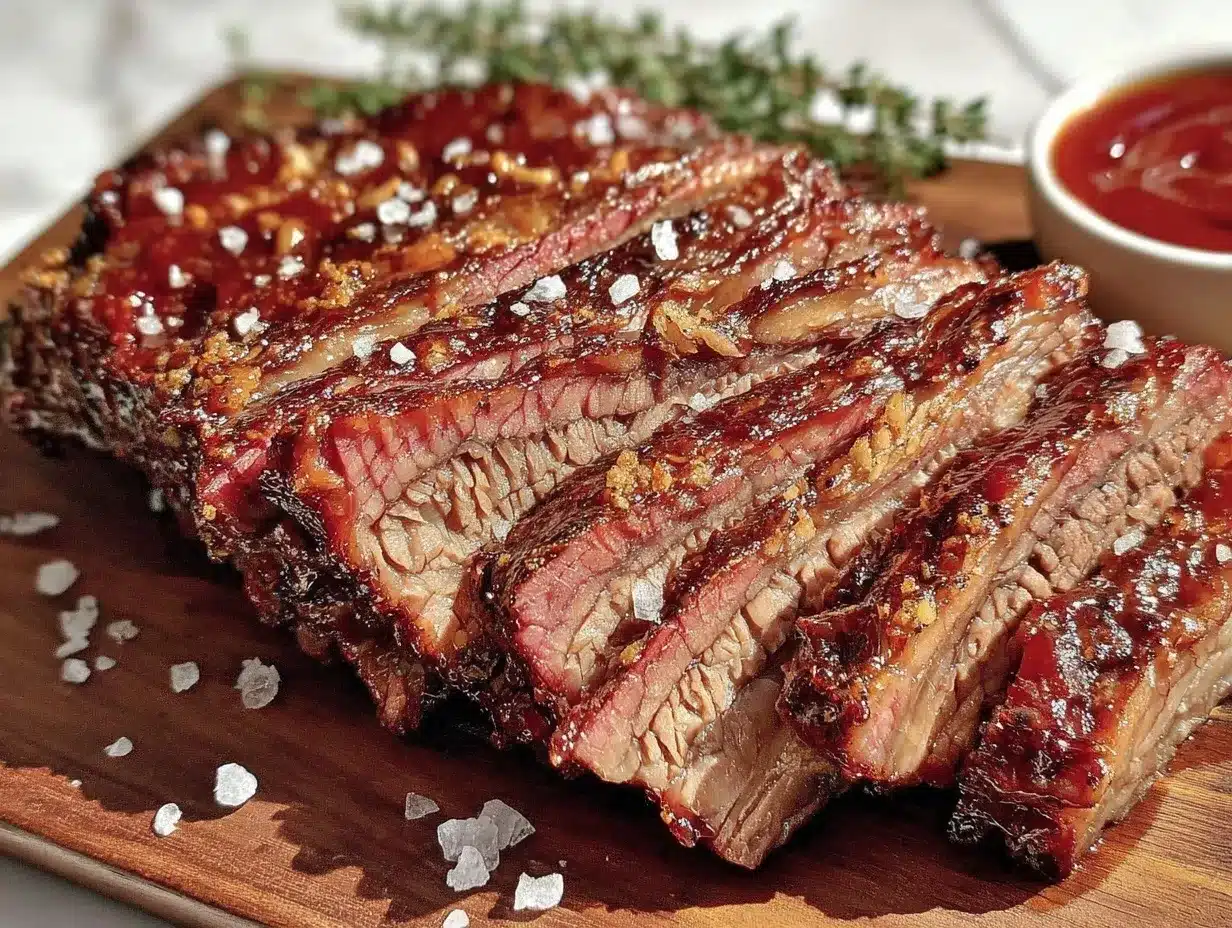
I wasn’t planning to be the one taking notes, honestly. I had stopped by to borrow a wrench, but the aroma pulled me in like a magnet. Watching Earl tend to his brisket, the way he handled the meat with quiet confidence and patience, was a lesson in slow cooking and respect for tradition. The brisket’s bark developed a perfect crust, deep mahogany in color, with that irresistible smoky sheen.
Maybe you’ve been there—waiting for something good, knowing it’s going to take time but being too excited to care. Earl’s brisket wasn’t just about the meat or the smoke; it was about the entire ritual, from picking the right cut early that morning at the local butcher to the final slice that revealed tender, juicy pink meat with a smoky ring that told you, “This is the real deal.”
Let me tell you, this recipe stayed with me because it’s honest, straightforward, and rooted in Texan barbecue culture. If you’ve ever wondered how to capture that authentic post oak smoke flavor at home without a pitmaster’s years of experience, you’re in the right place. I’m sharing Earl’s secrets and my own tweaks so you can make the best Texas-style brisket that will have your friends asking for seconds—maybe even thirds.
Why You’ll Love This Recipe
This best Texas-style brisket recipe with authentic post oak smoke has been tested over countless backyard cookouts and family gatherings. It’s the kind of recipe that turns casual meals into celebrations—without requiring a professional smoker or endless hours of fiddling.
- Slow and Steady: The low-and-slow smoking method guarantees tender, juicy meat that practically melts in your mouth.
- Authentic Post Oak Flavor: Using real post oak wood chips or chunks gives this brisket that unmistakable Texas smoke profile you won’t find in a hurry-cooked brisket.
- Simple Ingredients: You don’t need a long list of spices or fancy rubs—just quality meat, salt, pepper, and the smoke.
- Perfect for Any Occasion: Whether it’s a weekend barbecue, a holiday feast, or just a Sunday dinner, this brisket steals the show.
- Proven Technique: This recipe is a blend of Earl’s decades of experience and my own kitchen experiments, designed to help home cooks replicate true Texas barbecue.
What makes this brisket stand apart is the balance between the smoky bark and the juicy interior. Earl insists on trimming the fat just right and wrapping the brisket at the perfect moment to lock in moisture without steaming the bark. Honestly, that little trick makes all the difference.
And hey, this isn’t just a recipe—it’s a way to slow down, connect with your food, and impress everyone around your table. If you love barbecue that carries a story and a smoky punch, you’ll want to keep this recipe handy.
What Ingredients You Will Need
This recipe uses simple, wholesome ingredients that highlight the natural flavors of the brisket and the post oak smoke. Most of these you’ll find easily at your local butcher or grocery store, and they require minimal prep.
- Beef Brisket: 5-6 pounds (2.3-2.7 kg) whole packer cut, well-marbled (Earl swears by locally sourced meat from trusted butchers for best results)
- Coarse Kosher Salt: About 2 tablespoons (adds essential seasoning and helps form the crust)
- Coarse Black Pepper: About 2 tablespoons (freshly cracked for that classic Texas peppery bite)
- Post Oak Wood Chunks or Chips: 2-3 handfuls (look for seasoned, dry post oak; avoid green wood to prevent bitterness)
- Yellow Mustard: 2 tablespoons (used as a binder for the rub, but it won’t taste like mustard in the final product)
- Optional Rub Additions: 1 teaspoon garlic powder or onion powder (for subtle flavor depth, but keep it minimal to let the smoke shine)
Substitution Tip: If you can’t find post oak, white oak is the closest alternative, but the flavor won’t be quite as distinct. For salt, coarse kosher salt is best, but sea salt can work in a pinch. Avoid table salt as it’s too fine and can over-season.
Keep your ingredients straightforward—this brisket is about the meat and smoke, not a complicated spice blend. I recommend picking a brisket with good marbling and even thickness, which helps it cook evenly and stay tender.
Equipment Needed
- Offset Smoker or Charcoal Smoker: Earl’s preference is an offset smoker for that authentic smoke flow, but a charcoal grill set up for indirect heat works too.
- Charcoal and Post Oak Wood Chunks: For steady heat and smoke production. Avoid lighter fluid; use chimney starters instead.
- Meat Thermometer: An instant-read thermometer is crucial for monitoring internal temperature accurately.
- Sharp Butcher’s Knife: For trimming the brisket’s fat cap before cooking.
- Aluminum Foil or Butcher Paper: Used for wrapping the brisket during part of the cook to retain moisture (Earl prefers butcher paper for better bark).
- Spray Bottle: Filled with apple cider vinegar or water to spritz the meat during cooking if needed.
If you don’t have a dedicated smoker, no worries. A charcoal kettle grill can be adapted with a two-zone fire setup to smoke the brisket, just keep a close eye on temperature fluctuations. I’ve done this many times and it works well when you can’t get your hands on a full smoker.
Preparation Method
- Trim the Brisket: Use a sharp knife to trim the fat cap down to about 1/4 inch thickness. Remove any silver skin or hard fat that won’t render. This helps with smoke penetration and even cooking. (Approx. 15 minutes)
- Apply the Binder: Rub the brisket all over with yellow mustard. It might seem odd, but it helps the rub stick without adding a mustard flavor. (5 minutes)
- Season the Brisket: Generously coat with kosher salt and cracked black pepper. Add garlic powder if using, but keep it light. Pat the rub in, don’t rub aggressively. (10 minutes)
- Prepare Your Smoker: Light your charcoal using a chimney starter and let it burn down to glowing coals. Add post oak wood chunks on top to create steady smoke. Aim for a temperature of 225°F (107°C). (20-30 minutes)
- Place the Brisket on the Smoker: Fat side up, positioning the thicker end closer to the heat source for even cooking. Close the lid and maintain a steady temperature.
- Monitor and Maintain Smoke and Temperature: Check every 45 minutes to 1 hour. Add charcoal or wood as needed, and spritz the brisket with apple cider vinegar or water if it looks dry. (Total cook time about 10-12 hours)
- Wrap the Brisket: When the internal temperature hits about 165°F (74°C), wrap it tightly in butcher paper or foil to keep moisture in while still allowing the bark to breathe. Return to smoker.
- Finish Cooking: Continue smoking until the internal temperature reaches 203°F (95°C). Use the thermometer probe test—if it slides in like butter, you’re done.
- Rest the Brisket: Let it rest wrapped for at least 1 hour at room temperature. This step is key for juicy meat and easier slicing.
- Slice and Serve: Slice against the grain in 1/4-inch thick slices. Serve with your favorite barbecue sauce or enjoy it as is to savor the authentic smoke flavor.
Pro Tip: Don’t rush the resting phase. I once sliced too soon and lost all the juices on the cutting board. Waiting makes a huge difference in tenderness and flavor.
Cooking Tips & Techniques
Texas-style brisket is all about patience and control, and there are a few tricks that make the difference between good and unforgettable.
- Maintain a Consistent Temperature: Fluctuating heat can toughen the meat. Use a good-quality thermometer and adjust vents gradually.
- Don’t Over-Smoke: Post oak smoke is strong; too much can make the brisket bitter. Use small chunks and space them out.
- Choose the Right Wood: Post oak is king for Texas brisket. Avoid hickory or mesquite if you want authenticity, as they can overpower the meat.
- Wrapping Timing: Wrapping too early can soften the bark; too late can dry the meat. Earl’s sweet spot is around 165°F internal temp.
- Rest Before Slicing: I can’t stress this enough. It lets the juices redistribute and the meat relax.
- Trim Fat Wisely: Leaving too much fat can cause flare-ups and greasy bites; too little and you lose moisture and flavor.
When I first tried this recipe, I got impatient and cranked the heat up—ended up with a burnt crust and tough meat. Lesson learned: low and slow always wins.
Variations & Adaptations
If you want to make the best Texas-style brisket your own, here are some ways to mix it up without losing that authentic vibe.
- Gluten-Free: This recipe is naturally gluten-free, but double-check your spice sources—some pre-mixed rubs contain gluten.
- Spice It Up: Add a pinch of cayenne or smoked paprika to the rub for a subtle kick without overpowering the smoke.
- Alternative Wood: If post oak isn’t available, white oak or pecan wood work well, though they’ll bring a milder, nuttier smoke.
- Oven-Smoked Version: Use a smoke box or liquid smoke to mimic the flavor, then finish in a low oven at 225°F (107°C) for several hours wrapped tightly.
- Personal Twist: I like to let the brisket rest overnight wrapped in foil in the fridge, then slice cold for sandwiches the next day—flavors deepen and slicing is easier.
Serving & Storage Suggestions
Serve your Texas-style brisket warm, sliced against the grain for maximum tenderness. It pairs beautifully with classic sides like creamy coleslaw, baked beans, or jalapeño cornbread. For beverages, a cold beer or a glass of iced tea complements the smoky richness perfectly.
To store, wrap leftover brisket tightly in foil or butcher paper and refrigerate for up to 4 days. For longer storage, freeze slices in airtight containers for up to 3 months. When reheating, warm gently in the oven at 250°F (120°C) wrapped in foil to keep it moist.
Flavors tend to deepen after a day or two, so leftovers often taste even better. Just be sure not to overheat, or you risk drying out that juicy meat.
Nutritional Information & Benefits
This Texas-style brisket is a protein-packed meal, providing around 300-350 calories per 4-ounce (113 g) serving, depending on the cut and trimming. It’s rich in iron, zinc, and B vitamins, essential for energy and immune support.
The simple seasoning keeps sodium levels moderate compared to heavily processed meats. Using post oak smoke adds flavor without extra calories or additives.
If you’re watching carbs or gluten, this recipe fits well into low-carb and gluten-free diets. Just keep an eye on sauces or sides that might add sugars or gluten.
From a wellness perspective, brisket’s fat content varies, but trimming helps balance flavor and nutrition. Enjoying it as part of a balanced meal with vegetables keeps things wholesome.
Conclusion
This best Texas-style brisket with authentic post oak smoke recipe is truly a labor of love—and a delicious one at that. Whether you’re a barbecue newbie or someone who’s tried countless brisket recipes, this method has something special to offer: straightforward steps, bold flavor, and that unmistakable Texan smoke ring.
Feel free to adjust the rub or wood to fit your taste, but don’t rush the process. Trust me, the wait is worth every bite. I keep coming back to this recipe because it reminds me of those slow afternoons, good company, and the kind of food that brings people together.
If you try it, I’d love to hear how it turns out for you. Share your tweaks, photos, or questions in the comments below—let’s keep the barbecue conversation going!
FAQs
What is the best cut of brisket for Texas-style barbecue?
The whole packer brisket, which includes both the flat and point, is ideal because of its marbling and size. It cooks evenly and stays juicy.
Can I use a different type of wood if I can’t find post oak?
Yes, white oak or pecan are good alternatives, but post oak offers the classic Texas smoke flavor that’s slightly sweet and mild.
How long does it take to smoke a brisket at 225°F (107°C)?
Generally, 1 to 1.5 hours per pound, so for a 5-pound brisket, expect about 8-12 hours. Always rely on internal temperature rather than time alone.
Should I wrap the brisket during cooking?
Wrapping at around 165°F (74°C) helps retain moisture and speeds up cooking, but don’t wrap too early or you risk losing the bark’s crispness.
How do I know when the brisket is done?
The brisket is done when it reaches an internal temperature of about 203°F (95°C) and the thermometer probe slides in with little resistance.
Pin This Recipe!
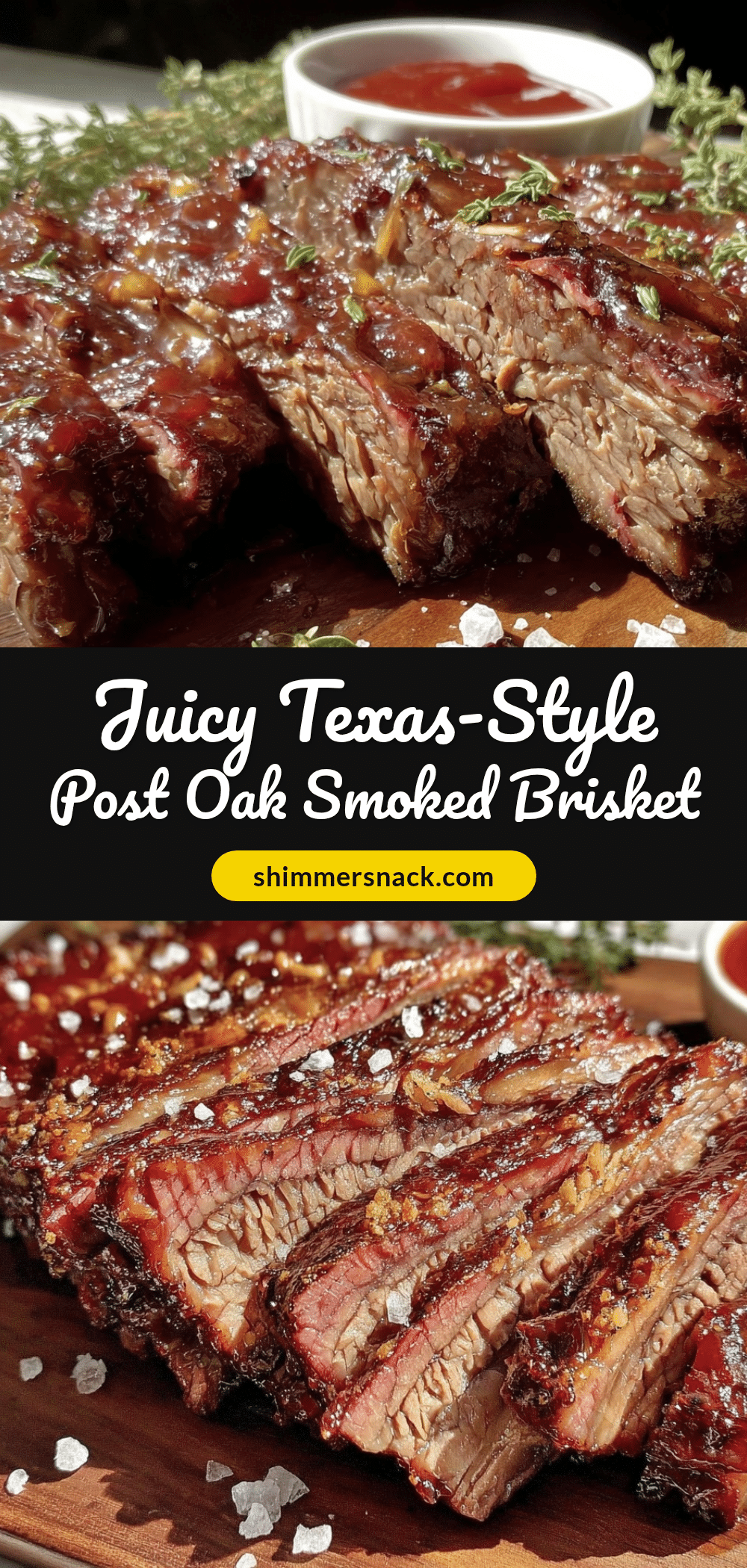
Best Texas-Style Brisket Recipe with Authentic Post Oak Smoke Made Easy
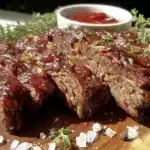
A slow-smoked Texas-style brisket recipe using authentic post oak wood for a tender, juicy, and flavorful barbecue experience. Simple ingredients and traditional techniques yield a perfect bark and smoky interior.
- Prep Time: 30 minutes
- Cook Time: 10-12 hours
- Total Time: 10 hours 30 minutes to 12 hours 30 minutes
- Yield: 8-10 servings 1x
- Category: Main Course
- Cuisine: Texan, American
Ingredients
- 5–6 pounds whole packer beef brisket, well-marbled
- 2 tablespoons coarse kosher salt
- 2 tablespoons coarse black pepper, freshly cracked
- 2–3 handfuls post oak wood chunks or chips, seasoned and dry
- 2 tablespoons yellow mustard
- 1 teaspoon garlic powder or onion powder (optional)
Instructions
- Trim the brisket fat cap down to about 1/4 inch thickness, removing silver skin and hard fat. (Approx. 15 minutes)
- Rub the brisket all over with yellow mustard as a binder. (5 minutes)
- Generously coat the brisket with kosher salt and cracked black pepper. Add garlic powder if using. Pat the rub in gently. (10 minutes)
- Light charcoal using a chimney starter and let burn down to glowing coals. Add post oak wood chunks on top to create steady smoke. Maintain smoker temperature at 225°F (107°C). (20-30 minutes)
- Place the brisket fat side up on the smoker, thicker end closer to heat source. Close lid and maintain steady temperature.
- Monitor every 45 minutes to 1 hour, adding charcoal or wood as needed. Spritz brisket with apple cider vinegar or water if it looks dry. Total cook time about 10-12 hours.
- When internal temperature reaches about 165°F (74°C), wrap brisket tightly in butcher paper or foil to retain moisture while allowing bark to breathe. Return to smoker.
- Continue smoking until internal temperature reaches 203°F (95°C). Use thermometer probe test for tenderness.
- Let brisket rest wrapped for at least 1 hour at room temperature.
- Slice against the grain in 1/4-inch thick slices and serve.
Notes
Maintain a consistent temperature around 225°F to avoid toughening the meat. Use small chunks of post oak to prevent bitterness. Wrap brisket at 165°F to lock in moisture without softening the bark. Rest brisket for at least 1 hour before slicing to retain juices. Avoid rushing the cooking or resting phases for best results.
Nutrition
- Serving Size: 4 ounces (113 grams)
- Calories: 325
- Sodium: 450
- Fat: 22
- Saturated Fat: 9
- Protein: 28
Keywords: Texas brisket, post oak smoke, barbecue, smoked brisket, slow cooked brisket, Texas barbecue, smoked meat, authentic brisket