Love this? Save it for later!
Share the inspiration with your friends
Introduction
“You know,” my neighbor Linda said one sunny Saturday morning, “I never thought I’d get into canning until last year.” Honestly, I wasn’t expecting much when she invited me over for a quick tour of her kitchen. But there she was, standing proudly next to rows of gleaming jars filled with deep red tomato sauce, each sealed perfectly using her new water bath canner. The smell was incredible—like summer captured in a jar. Turns out, Linda’s accidental discovery of a safe, easy canning method came after a string of kitchen chaos involving a burnt sauce, a forgotten simmer, and a fire alarm that sent her running out of her own house. Yet, from that mess, she perfected a recipe that’s now her go-to and mine too.
Maybe you’ve been there—wanting to save that fresh tomato flavor from your garden or farmer’s market haul but feeling overwhelmed by the canning process. I get it. The jargon, the safety rules, the fear of spoiling your hard work—it’s a lot. But let me tell you, this Easy Homemade Canning Tomato Sauce with Safe Water Bath Method is genuinely approachable, even if you’re new to home preservation. I’ve made plenty of messes myself (including once accidentally using a cracked bowl mid-prep—don’t ask), and this recipe stood strong through all my kitchen trials.
Why does the tomato sauce stay on my shelf year-round? Because it’s simple, reliable, and tastes like summer’s best gift whenever I pop the lid. Whether you’re canning for the first time or looking for a no-fuss, trustworthy recipe, this one’s designed to give you that confidence and delicious payoff without the headaches.
Why You’ll Love This Recipe
After testing several homemade tomato sauce recipes, tweaking water bath canning steps, and surviving a few kitchen mishaps, I’m confident this recipe will become a staple in your kitchen. Here’s why it stands out:
- Quick & Easy: The prep and cooking come together in about 45 minutes, making it perfect for an afternoon project or weekend batch.
- Simple Ingredients: No need for fancy spices or hard-to-find items—just fresh tomatoes, a handful of pantry staples, and a pinch of love.
- Perfect for Meal Prep: Canning means you can stash away sauce for cozy dinners, last-minute pasta nights, or homemade pizza parties.
- Crowd-Pleaser: Friends and family always ask for a jar, and I swear it tastes like it came from a specialty Italian market!
- Unbelievably Delicious: The slow simmer brings out a rich, balanced flavor that’s neither too tangy nor too sweet—just that perfect homemade tomato sauce harmony.
What makes this tomato sauce recipe different from the rest? It’s the safe water bath method paired with a foolproof seasoning balance. I’ve seen recipes that skimp on acidity or safety steps—this one respects both. Plus, I like to blend a small portion of cottage cheese into the sauce before canning (a little trick I picked up from a local chef to add creaminess without cream). Trust me, it’s a subtle magic touch.
If you’re anything like me, comfort food isn’t just about taste—it’s about feeling connected to home and family, even if that means a jumbled kitchen and the occasional spilled tomato seed. This tomato sauce recipe is all that and more.
What Ingredients You Will Need
This recipe uses simple, wholesome ingredients to deliver bold flavor and satisfying texture without the fuss. Most of these are pantry staples or fresh tomatoes you can find at any market. Feel free to swap where needed—I’ll highlight substitutions below.
- Fresh Tomatoes (about 10 pounds / 4.5 kg) – Roma or plum tomatoes work best for thicker sauce.
- Olive Oil (¼ cup / 60 ml) – I prefer extra virgin for its robust flavor.
- Onion (1 large, finely chopped) – Adds sweetness and depth.
- Garlic (4 cloves, minced) – For that classic savory punch.
- Fresh Basil (1 cup, chopped) – Optional but highly recommended for freshness.
- Salt (2 teaspoons) – Adjust to taste, preferably sea salt.
- Granulated Sugar (1 tablespoon) – Balances acidity; optional depending on tomato sweetness.
- Citric Acid (1 teaspoon per quart jar) – This is key for safe water bath canning to ensure acidity.
- Black Pepper (½ teaspoon) – Freshly ground preferred.
- Canned Tomato Paste (6 ounces / 170 grams) – Adds richness and thickness.
Substitution tips: Use coconut oil if you want a dairy-free, olive oil alternative. For a lower sodium option, reduce salt and add herbs like oregano or thyme to boost flavor. If you can’t find citric acid, bottled lemon juice (2 tablespoons per quart) works as a safe acidifier for canning. In summer, swap fresh basil for a teaspoon of dried herbs if you’re out.
Equipment Needed
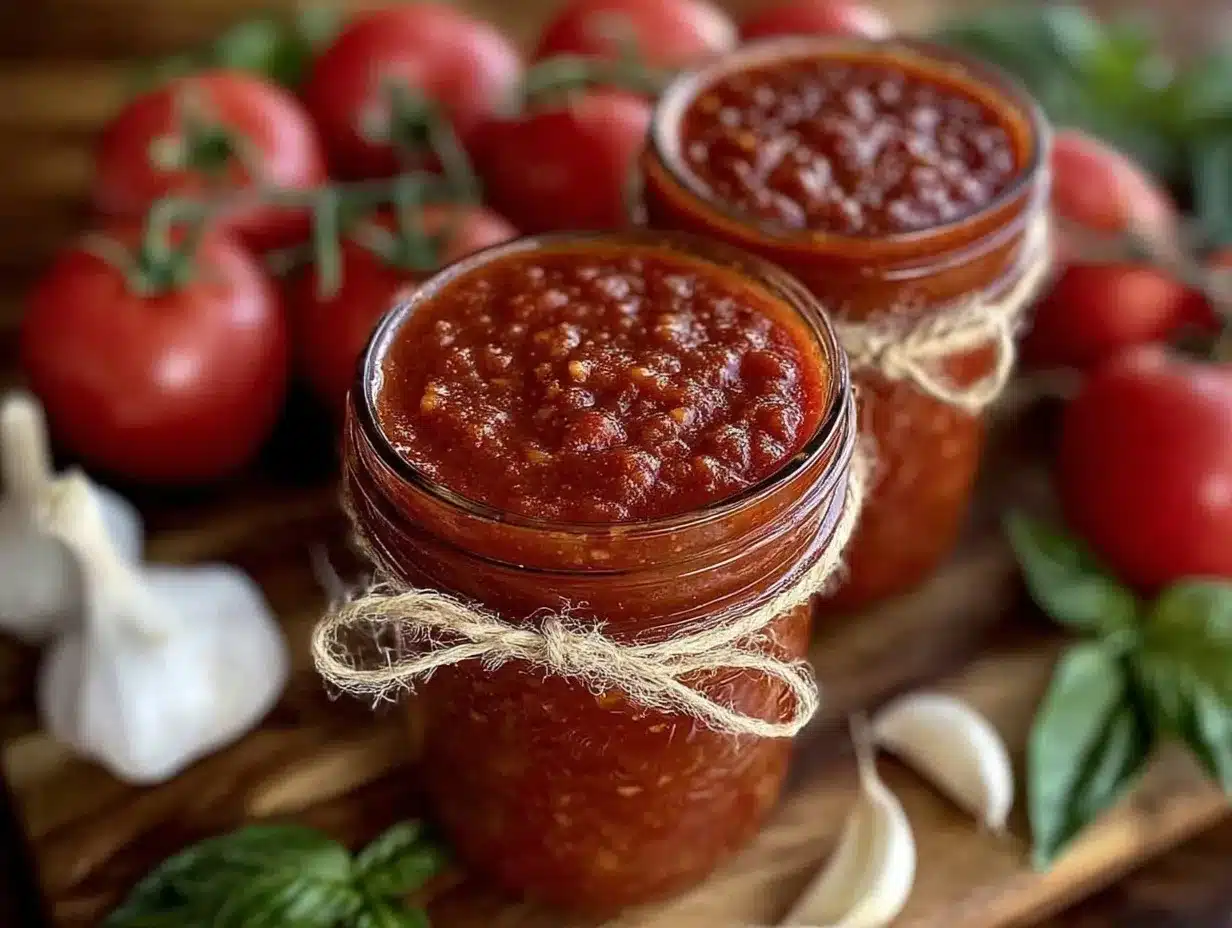
- Large Stockpot (at least 8-quart / 7.5-liter) – For simmering the sauce.
- Water Bath Canner or a large pot with a rack – Essential for the safe canning process. If you don’t have a canner, a deep pot with a fitted lid and a rack at the bottom will do.
- Wide-mouth Mason Jars (quart or pint size) – I recommend Ball or Kerr for reliable seals.
- Jar Lifter and Funnel – Makes filling and retrieving jars easy and safe.
- Blender or Immersion Blender – To smooth out the sauce if preferred.
- Cutting Board and Sharp Knife – For prepping tomatoes and aromatics.
In my experience, investing in a good-quality jar lifter is worth it. The last thing you want is slippery fingers while handling hot jars! Also, a wide-mouth funnel helps keep your workspace cleaner. If you’re on a budget, try borrowing a water bath canner from a friend or local community kitchen to get started.
Preparation Method
- Prepare the Tomatoes: Wash tomatoes thoroughly. Core and score a small “X” at the bottom of each. Drop them into boiling water for 30-60 seconds until skins loosen. Immediately transfer to an ice bath to cool. Peel off skins starting from the scored “X.” This step makes sure your sauce is smooth and free of bitter skins. (About 30 minutes)
- Chop and Simmer: Roughly chop peeled tomatoes. In your large stockpot, heat olive oil over medium heat. Add chopped onion and garlic, sauté until translucent and fragrant (about 5 minutes). Add tomatoes and bring to a simmer. Stir occasionally to prevent sticking. (10-15 minutes)
- Add Tomato Paste and Seasonings: Stir in tomato paste, salt, sugar, black pepper, and fresh basil. Simmer gently for 25-30 minutes, stirring every 10 minutes. The sauce should thicken and deepen in color. If you want a smoother sauce, use an immersion blender carefully to your desired texture. (30 minutes)
- Prepare Jars: While the sauce simmers, wash your Mason jars and lids in hot soapy water. Rinse well. Keep jars warm in a simmering water bath or oven at 200°F (93°C) to prevent cracking when filling.
- Add Citric Acid: Just before filling, add 1 teaspoon citric acid per quart jar directly into each jar. This is crucial for safe water bath canning to keep acidity levels safe.
- Fill Jars: Using the funnel, ladle hot tomato sauce into jars, leaving ½ inch (1.25 cm) headspace. Wipe rims with a clean damp cloth to ensure a good seal. Place lids and screw bands on fingertip tight (don’t over-tighten).
- Water Bath Canning: Place jars in the water bath canner with at least 1 inch (2.5 cm) of water above the tops of jars. Bring water to a rolling boil and process for 35 minutes for quarts (30 minutes for pints) at sea level. Adjust time for altitude accordingly.
- Cool and Store: Remove jars carefully with the jar lifter and place on a towel to cool undisturbed for 12-24 hours. You’ll hear the satisfying “pop” of lids sealing. Check seals by pressing the lid center—no movement means good seal.
If you notice a jar didn’t seal properly, refrigerate and use within a week or reprocess with a new lid. The sauce’s rich aroma and thick texture should signal you’ve nailed the process. If it smells off or looks bubbly, discard immediately.
Cooking Tips & Techniques
One tip I learned the hard way: don’t rush the simmer phase. Letting the sauce reduce slowly brings out that rich, deep flavor and prevents it from tasting watery. Also, always keep an eye on your water bath canner’s water level; evaporation can be sneaky and cause jars to crack if not covered properly.
Using citric acid instead of relying solely on lemon juice gives you more consistent acidity, which is safer for water bath canning. I keep a small container of food-grade citric acid on hand for this reason.
When peeling tomatoes, don’t skip the ice bath—it shocks the tomatoes and makes the skins slip off like magic. Skipping this step usually results in frustrating peeling and bitter bits in your sauce.
Pro tip: if you like a chunkier sauce, reserve some peeled tomatoes, chop them finely, and stir in at the end of simmering to keep their texture intact.
Lastly, always label your jars with the date. It’s tempting to just stack and forget, but knowing exactly when you canned makes meal planning easier and safer.
Variations & Adaptations
- Spicy Kick: Add red pepper flakes or a chopped jalapeño during the onion and garlic sauté to give the sauce a subtle heat.
- Herb Mix: Swap basil for a blend of oregano, thyme, and rosemary for a more Mediterranean vibe.
- Low Sodium: Omit salt entirely and add more garlic and fresh herbs for flavor punch without the sodium.
- Gluten-Free Thickener: If you want a thicker sauce without tomato paste, cook it down longer or stir in a teaspoon of cornstarch dissolved in water near the end.
- Personal Twist: I once stirred in a bit of grated carrot during simmering to add natural sweetness without extra sugar—a neat trick if your tomatoes are overly acidic.
For those who want to experiment, this recipe adapts well to slow cookers or pressure canning (with adjusted times). Just remember that water bath canning works best for high-acid foods like this tomato sauce.
Serving & Storage Suggestions
Serve your homemade tomato sauce warm over freshly cooked pasta, spoon over grilled chicken, or use as a base for pizza. It’s equally delicious chilled as a dipping sauce for breadsticks or roasted veggies.
Store canned jars in a cool, dark place like a pantry. Properly sealed jars can last up to one year, and the flavors actually deepen after a few months. Once opened, refrigerate and use within 5-7 days.
To reheat, pour sauce into a saucepan and warm over medium-low heat, stirring occasionally. Avoid microwaving directly in jars for safety.
You’ll notice the sauce thickens slightly after refrigeration; just stir in a splash of water or broth to loosen if desired.
Nutritional Information & Benefits
This tomato sauce is low in calories and fat but rich in vitamins A and C thanks to fresh tomatoes. Lycopene, a powerful antioxidant found in tomatoes, becomes more available as the sauce cooks slowly, supporting heart health. The garlic and olive oil add anti-inflammatory benefits and healthy fats.
Gluten-free, vegetarian, and dairy-free (unless you add that optional cottage cheese trick), this sauce fits many dietary needs. Just watch salt levels if you’re on a restricted diet.
From my nutritionist friend’s viewpoint, this homemade sauce is a wholesome alternative to many store-bought options loaded with preservatives and excess sugar.
Conclusion
If you’ve been hesitant about canning tomato sauce, this easy homemade recipe with a safe water bath method is your perfect starting point. It’s reliable, straightforward, and results in a sauce that tastes like summer in every jar. I love how it turns simple tomatoes into something that fills my kitchen with warmth and nostalgia.
Don’t be afraid to make it your own—with herbs, spice levels, or thickness tailored to your taste. And seriously, once you hear those lids pop, you’ll feel like a home preservation pro.
Give this recipe a try and let me know how your canning adventure goes—share your tweaks, success stories, or even those funny kitchen mishaps. I’m eager to hear how you make this sauce your own!
Frequently Asked Questions
Is water bath canning safe for tomato sauce?
Yes, as long as you add the proper acidifier like citric acid or bottled lemon juice, water bath canning is safe for tomato sauce. This recipe includes the necessary steps to keep your sauce shelf-stable.
Can I use any type of tomato for this sauce?
While you can use various tomatoes, Roma or plum tomatoes are preferred for their lower water content and richer flavor, which makes for a thicker sauce.
How long does canned tomato sauce last?
When properly canned and stored, the sauce can last up to one year. Always check seals before use and refrigerate after opening.
Can I freeze the sauce instead of canning?
Absolutely! Freezing is a great alternative if you don’t want to can. Use freezer-safe containers and leave some headspace as the sauce expands.
What if my jars didn’t seal properly?
If a jar fails to seal, refrigerate it and use the sauce within a week or reprocess with a new lid. Never consume sauce from a jar with a bulging lid or off smell.
For more home cooking inspiration, you might enjoy my favorite crispy garlic chicken recipe or the simple garlic parmesan roasted potatoes that pair beautifully with homemade tomato sauce dishes.
Pin This Recipe!
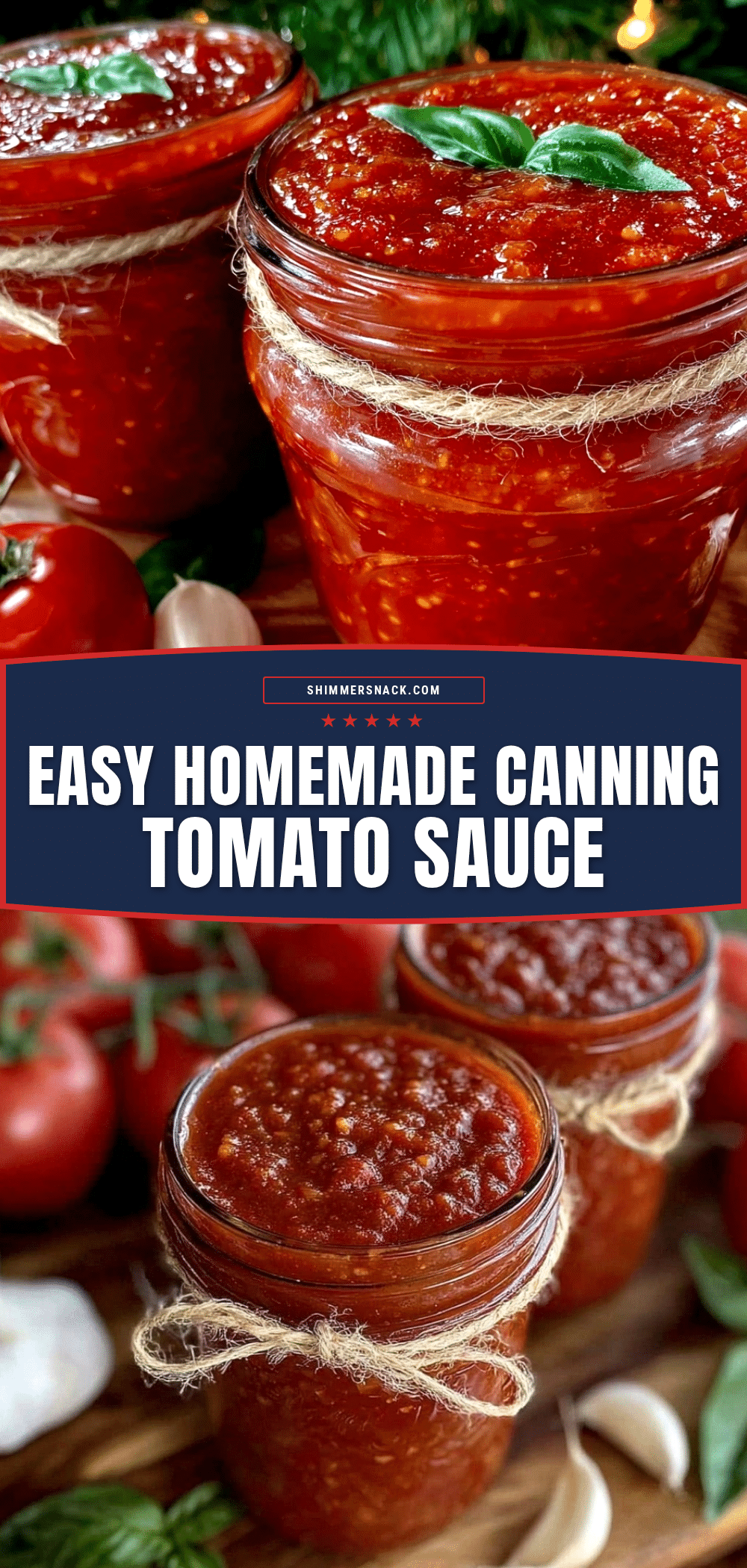
Easy Homemade Canning Tomato Sauce Recipe with Safe Water Bath Method
A simple, reliable homemade tomato sauce recipe perfect for water bath canning, capturing the fresh summer tomato flavor with a foolproof acidity balance and easy preparation.
- Prep Time: 30 minutes
- Cook Time: 45 minutes
- Total Time: 1 hour 15 minutes
- Yield: About 7 quarts 1x
- Category: Sauce, Canning
- Cuisine: Italian
Ingredients
- 10 pounds Roma or plum tomatoes
- 1/4 cup extra virgin olive oil
- 1 large onion, finely chopped
- 4 cloves garlic, minced
- 1 cup fresh basil, chopped (optional)
- 2 teaspoons sea salt
- 1 tablespoon granulated sugar (optional)
- 1 teaspoon citric acid per quart jar
- 1/2 teaspoon freshly ground black pepper
- 6 ounces canned tomato paste
Instructions
- Wash tomatoes thoroughly. Core and score a small “X” at the bottom of each. Drop them into boiling water for 30-60 seconds until skins loosen. Immediately transfer to an ice bath to cool. Peel off skins starting from the scored “X.” (About 30 minutes)
- Roughly chop peeled tomatoes. In a large stockpot, heat olive oil over medium heat. Add chopped onion and garlic, sauté until translucent and fragrant (about 5 minutes). Add tomatoes and bring to a simmer. Stir occasionally to prevent sticking. (10-15 minutes)
- Stir in tomato paste, salt, sugar, black pepper, and fresh basil. Simmer gently for 25-30 minutes, stirring every 10 minutes. Use an immersion blender if a smoother sauce is desired. (30 minutes)
- While the sauce simmers, wash Mason jars and lids in hot soapy water. Rinse well and keep jars warm in a simmering water bath or oven at 200°F (93°C).
- Just before filling, add 1 teaspoon citric acid per quart jar directly into each jar.
- Using a funnel, ladle hot tomato sauce into jars, leaving 1/2 inch headspace. Wipe rims with a clean damp cloth. Place lids and screw bands on fingertip tight.
- Place jars in the water bath canner with at least 1 inch of water above jar tops. Bring water to a rolling boil and process for 35 minutes for quarts (30 minutes for pints) at sea level. Adjust time for altitude accordingly.
- Remove jars carefully with a jar lifter and place on a towel to cool undisturbed for 12-24 hours. Check seals by pressing the lid center; no movement means a good seal.
Notes
Do not skip the ice bath after boiling tomatoes to easily peel skins. Use citric acid or bottled lemon juice to ensure safe acidity for water bath canning. Keep an eye on water level in the canner to prevent jars from cracking. Label jars with the canning date. If a jar doesn’t seal, refrigerate and use within a week or reprocess. For chunkier sauce, reserve some peeled tomatoes and add at the end of simmering.
Nutrition
- Serving Size: 1/2 cup (about 125 m
- Calories: 70
- Sugar: 6
- Sodium: 400
- Fat: 3.5
- Saturated Fat: 0.5
- Carbohydrates: 9
- Fiber: 2
- Protein: 2
Keywords: tomato sauce, canning, water bath canning, homemade sauce, preserving, easy tomato sauce, safe canning, summer tomatoes