Love this? Save it for later!
Share the inspiration with your friends
My abuela didn’t look at me when she said it. She was staring at the oven window like she could see into the soul of the dough, her hands dusted with flour, moving with a rhythm I never quite managed to replicate. That was it. No grand explanation of the Day of the Dead, no lecture on the history of the bread. Just a warning about timing. And honestly, I haven’t thought about pan de muerto the same way since.
It’s funny how a simple instruction sticks with you for decades. For years, I tried to make this bread using generic yeast packets and store-bought orange extract. It came out fine. Edible, even. But it lacked that specific, haunting aroma that fills a kitchen in late October or early November. It wasn’t until I stopped treating it like a science experiment and started treating it like a memory that it clicked. The dough needs to breathe. It needs to feel alive under your fingers before it goes into the heat.
There is something deeply comforting about the ritual of it. The kneading, the waiting, the shaping of the little bones and skulls that sit on top. It’s not just bread. It’s an offering. It’s a way to say hello to the ones who aren’t here anymore, but who are definitely in the room with you. I remember the first time I made it successfully, the house smelled like oranges and yeast, and for a moment, the sadness felt lighter. Like it had a place to go.
You know, people often ask if it’s hard to make. The answer is no, but it requires patience. You can’t rush the rise. You can’t rush the flavor. This best pan de muerto recipe is forgiving, but it demands your attention. It’s not something you throw together while watching TV. It’s something you make when you have time to think, or when you need to clear your head. The orange blossom glaze ties it all together, adding a floral sweetness that balances the rich, buttery dough. It’s the kind of bread that stays fresh for days, getting better as it sits, much like the memories it represents.
Why You’ll Love This Recipe
Let’s be honest, baking bread can feel intimidating if you aren’t used to working with yeast. But this recipe is designed for real life. I’ve tested this version dozens of times, tweaking the hydration and the resting times, until I landed on a method that is foolproof for home bakers. It’s not just about following instructions; it’s about understanding the feel of the dough.
- Quick & Easy Prep: While the dough needs time to rise, the actual hands-on time is manageable. It’s perfect for a quiet weekend morning or a slow Sunday afternoon when you want to create something meaningful.
- Simple Ingredients: You likely have most of this in your pantry. Flour, yeast, sugar, butter, eggs, and milk. The star is the orange blossom water, which you can find in most grocery stores now, but it’s the key to the authentic flavor.
- Perfect for Seasonal Celebrations: Whether you are celebrating Día de los Muertos, Halloween, or just love autumn baking, this bread fits right in. It brings a festive, cultural touch to your table without feeling out of place.
- Crowd-Pleaser: The smell alone will draw people in. Kids love the little bone shapes, and adults love the tender, sweet crumb. It’s always a hit at gatherings.
- Unbelievably Delicious: The combination of the soft, sweet dough and the crunchy, sugary topping is next-level comfort food. It’s not too sweet, just enough to satisfy a craving.
What makes this recipe different is the emphasis on the orange blossom water. Many recipes skip this or use just zest, but the water adds that floral depth that defines the authentic taste. It’s a small detail, but it makes all the difference. This isn’t just another sweet bread; it’s a tribute to tradition, made easy for your modern kitchen.
It’s the kind of bread that makes you slow down. In a world that moves fast, taking two hours to bake a loaf is a luxury. And when you break it open, the steam rising out, you’ll understand why this recipe stuck with me. It’s comfort food reimagined—warm, fragrant, and deeply satisfying.
What Ingredients You Will Need
This recipe relies on high-quality, wholesome ingredients to deliver that signature soft texture and bold, floral flavor. You don’t need fancy equipment or hard-to-find items, just the basics done right. The magic happens in the balance between the richness of the butter and the brightness of the orange.
- For the Dough:
- All-purpose flour: 4 to 4.5 cups (500-550g). I recommend King Arthur Flour for its consistent protein content, which helps the bread rise properly without being too dense.
- Active dry yeast: 2 packets (about 14g). Make sure it’s fresh; old yeast won’t rise the dough properly. Rapid-rise yeast works too, but you’ll need to adjust the resting time.
- Granulated sugar: 1/2 cup (100g). This feeds the yeast and adds sweetness. If you prefer less sweet, you can reduce to 1/3 cup.
- Unsalted butter: 1/2 cup (115g), softened. Room temperature butter mixes easier into the dough. Use high-quality butter for the best flavor.
- Milk: 1 cup (240ml), warmed. Whole milk is best for richness, but 2% works fine. Warm it to about 110°F (43°C)—not hot, or you’ll kill the yeast.
- Eggs: 2 large eggs, room temperature. One goes into the dough, one for the egg wash later.
- Orange blossom water: 2-3 tablespoons. This is the secret ingredient. Look for brands like La Tourangelle or local Mexican grocery store brands. It’s potent, so don’t overdo it.
- Salt: 1 teaspoon. Essential for balancing the sweetness.
- Orange zest: From 1 large orange. Adds a fresh citrus pop that complements the blossom water.
- For the Topping & Glaze:
- Granulated sugar: 1/2 cup (100g) for the topping.
- Unsalted butter: 2 tablespoons, melted, for the topping.
- Orange blossom water: 1 tablespoon, mixed with 1/4 cup powdered sugar for the glaze.
If you can’t find orange blossom water, you can substitute with a strong orange extract, but the flavor will be different. For a dairy-free version, swap the butter for coconut oil and the milk for oat or almond milk, though the texture will be slightly denser.
Equipment Needed
You don’t need a fancy stand mixer to make this bread, but it does help. A heavy-duty mixer with a dough hook is great for kneading, but you can easily do this by hand if you have the arm strength. A large mixing bowl is essential. I also recommend a pastry brush for applying the egg wash and the glaze. For shaping the bread, you’ll need a knife or kitchen shears to cut the “bones” and a small rolling pin. A baking sheet lined with parchment paper or a silicone mat is crucial for easy cleanup. An instant-read thermometer is helpful to check the milk temperature, ensuring it’s not too hot to kill the yeast. If you don’t have one, just touch the milk; it should feel warm like a baby’s bath, not hot.
Preparation Method
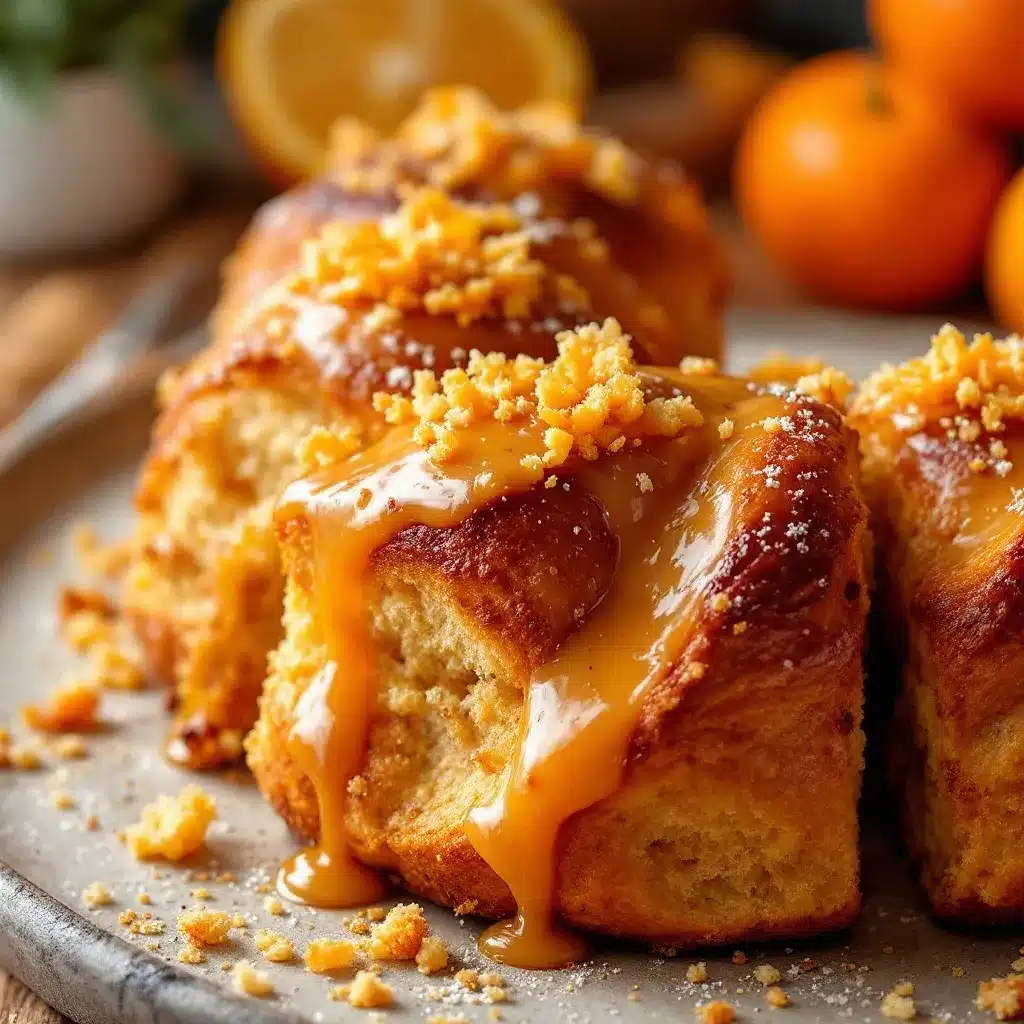
- Activate the Yeast (10 minutes): In a small bowl, combine the warm milk, 1 tablespoon of sugar, and the yeast. Stir gently and let it sit for 5-10 minutes until it becomes foamy. If it doesn’t foam, your yeast is dead, and you need to start over. This step ensures your bread will rise.
- Mix the Dough (5 minutes): In a large bowl, combine the flour, remaining sugar, salt, and orange zest. Add the activated yeast mixture, the egg, and the orange blossom water. Mix until a shaggy dough forms. If using a mixer, switch to the dough hook and mix on low speed.
- Knead the Dough (10 minutes): Add the softened butter gradually. Knead the dough until it is smooth and elastic. If kneading by hand, turn the dough out onto a floured surface and push it away with the heel of your hand, fold it over, and repeat. The dough should pass the “windowpane test”—stretch a small piece thin enough to see light through it without tearing. This takes about 10 minutes by hand.
- First Rise (1.5 – 2 hours): Place the dough in a lightly oiled bowl, turning once to coat. Cover with plastic wrap or a damp towel. Let it rise in a warm, draft-free place until doubled in size. This is the waiting game. Don’t rush it. The flavor develops during this time.
- Shape the Bread (15 minutes): Punch down the dough to release air. Divide it into three parts. Roll one part into a long log for the main loaf. Roll another into a smaller log for the cross on top. Cut the third into small pieces for the “bones” and a ball for the “skull.” Place the main log on a parchment-lined baking sheet. Arrange the cross and bones on top. You can press them gently into the dough so they stick. The skull goes in the center.
- Second Rise (45 minutes): Cover the shaped bread loosely and let it rise again until puffy. Preheat your oven to 350°F (175°C) during the last 15 minutes of this rise.
- Bake (25-30 minutes): Brush the bread with egg wash (1 egg beaten with 1 tbsp water). Bake for 25-30 minutes until golden brown. If the tops brown too quickly, cover with foil. The bread is done if it sounds hollow when tapped on the bottom.
- Glaze and Cool (1 hour): While the bread bakes, mix the powdered sugar, melted butter, and orange blossom water for the glaze. Once the bread is out of the oven, brush the warm bread with the glaze. Let it cool completely on a wire rack before slicing. This allows the crumb to set.
How do I know when the dough is ready?
The dough should be soft but not sticky. If it sticks to your hands, add a little more flour. If it’s too dry and cracking, add a splash of milk. Trust your touch.
Can I freeze the dough?
Yes! After the first rise, you can punch it down, shape it, and freeze it on the baking sheet. Once frozen, transfer to a bag. Thaw overnight in the fridge, then let it do the second rise before baking.
Cooking Tips & Techniques
One of the biggest mistakes people make is using milk that’s too hot. If it’s boiling, you’ll kill the yeast, and you’ll end up with a flat, dense brick. Use a thermometer or the wrist test. Another tip: don’t skip the windowpane test. Kneading properly develops gluten, which gives the bread its structure. If you skip this, the bread might collapse in the oven.
I also recommend shaping the bread on parchment paper. It makes transferring to the oven much easier and prevents sticking. When cutting the “bones,” use a sharp knife and make clean cuts. If the dough tears, just press it back together. It doesn’t have to be perfect. The beauty of pan de muerto is in its rustic, handmade look.
For a shinier crust, brush the bread with milk before baking instead of egg wash. But the egg wash gives that classic golden color. Also, keep an eye on your oven. Ovens vary, so rotate the pan halfway through baking if your oven has hot spots.
Variations & Adaptations
This recipe is versatile. For a gluten-free version, use a 1-to-1 gluten-free flour blend that includes xanthan gum. You may need to add a little more liquid, as GF flour absorbs more. For a lower-sugar option, reduce the sugar in the dough to 1/4 cup and skip the glaze, just brushing with melted butter after baking.
You can also add raisins or chopped orange peel to the dough for extra texture. If you want a richer bread, swap half the milk for heavy cream. For a savory twist, reduce the sugar and add rosemary or thyme to the dough, though this changes the traditional flavor profile significantly.
I once tried adding a layer of cream cheese filling, similar to cinnamon rolls, and it was delicious but heavy. Stick to the traditional style for the best balance. You can also shape the dough into individual rolls instead of one large loaf. This makes them easier to share and serve.
Serving & Storage Suggestions
Serve this bread warm, ideally with a cup of hot chocolate or café de olla. It’s perfect for breakfast or dessert. The texture is soft and cake-like, so it doesn’t need much accompaniment. Store leftovers in an airtight container at room temperature for up to 3 days. For longer storage, freeze the bread (without glaze) for up to 2 months. Thaw at room temperature and reheat in the oven for 5 minutes to refresh the crust. The flavors actually meld and improve after a day, making it even more fragrant.
Nutritional Information & Benefits
This bread is a source of carbohydrates and energy, making it a good treat for active days. The orange blossom water contains antioxidants, and the eggs provide protein. However, it is also rich in butter and sugar, so enjoy in moderation. It is not gluten-free or vegan unless modified. One slice (approx. 1/12 of the loaf) contains roughly 250 calories, 4g protein, 40g carbs, and 8g fat. It’s a indulgent treat, perfect for special occasions rather than daily consumption.
Conclusion
Making pan de muerto is more than just baking; it’s a way to connect with tradition and memory. This recipe is designed to be approachable, giving you that authentic, floral flavor without the stress. I hope you find joy in the process, from the kneading to the shaping. It’s a recipe that invites you to slow down and savor the moment. Please share your results with me in the comments! I’d love to see how you shaped your bread. If you try this, tag me on social media. Happy baking, and remember, the best ingredient is always love.
FAQs
What is pan de muerto?
It is a traditional Mexican sweet bread baked and eaten during the Day of the Dead celebrations (November 1st and 2nd). It is often shaped with bones and skulls to represent the departed.
Can I use instant yeast instead of active dry yeast?
Yes, you can use instant yeast. You can mix it directly with the flour without activating it in milk first. The rising time may be slightly faster.
Why is my bread dense?
This usually happens if the yeast was inactive (milk was too hot) or if the dough wasn’t kneaded enough. Ensure your yeast is foamy and knead until the dough is smooth and elastic.
How do I store the bread?
Store in an airtight container at room temperature for up to 3 days. Do not refrigerate, as it will dry out the bread faster.
Can I make this bread without orange blossom water?
You can use orange zest and a little orange extract, but the flavor will be less floral and authentic. Orange blossom water is the key to the traditional taste.
Pin This Recipe!
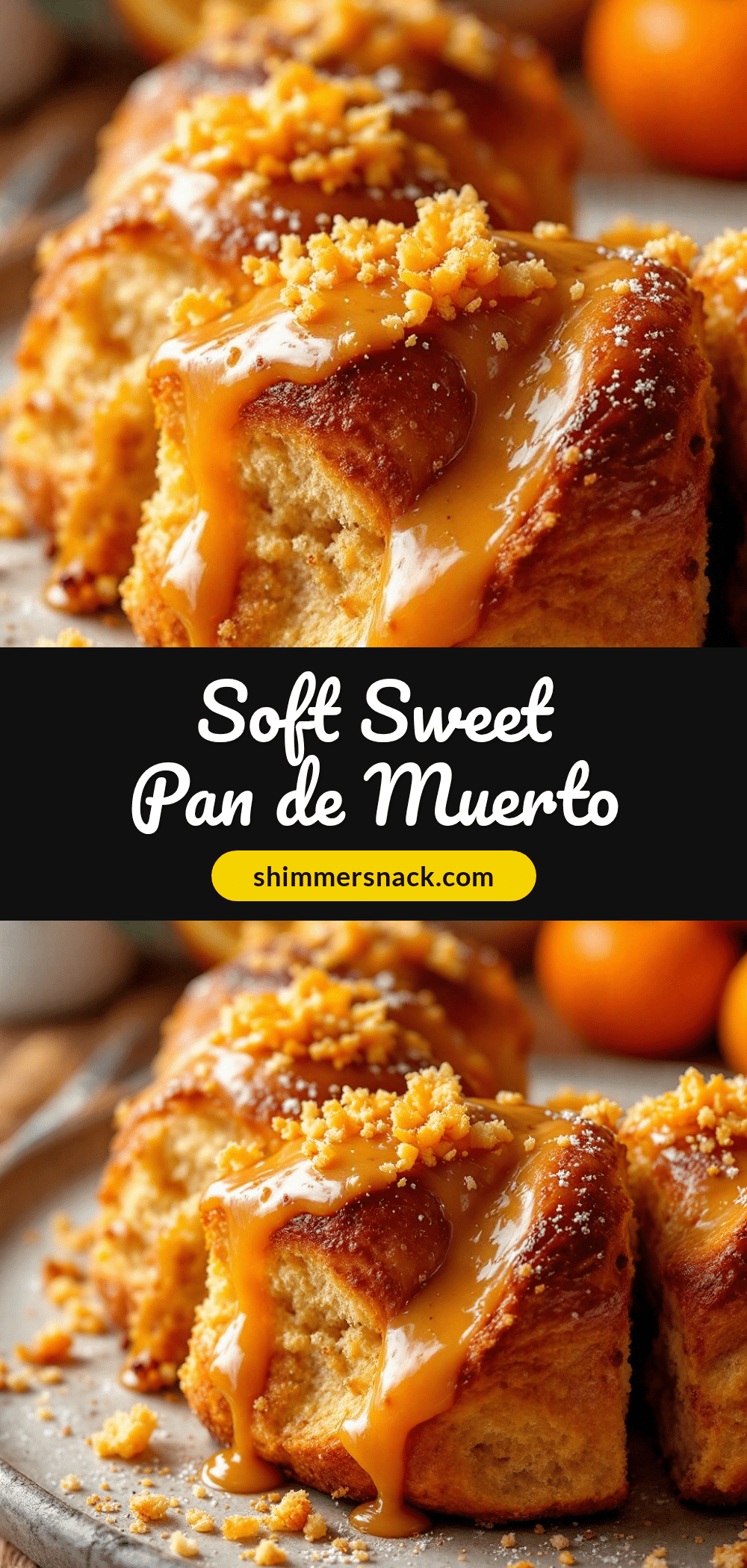
Best Pan de Muerto: Easy Mexican Bread
A traditional Mexican sweet bread baked for Día de los Muertos, featuring a soft, buttery dough infused with orange blossom water and topped with crunchy sugar bones and skulls.
- Prep Time: 45 minutes
- Cook Time: 30 minutes
- Total Time: 3 hours 15 minutes
- Yield: 1 loaf (approx. 12 servings) 1x
- Category: Dessert
- Cuisine: Mexican
Ingredients
- 4 to 4.5 cups (500-550g) all-purpose flour
- 2 packets (about 14g) active dry yeast
- 1/2 cup (100g) granulated sugar
- 1/2 cup (115g) unsalted butter, softened
- 1 cup (240ml) whole milk, warmed to 110°F (43°C)
- 2 large eggs, room temperature
- 2–3 tablespoons orange blossom water
- 1 teaspoon salt
- Zest of 1 large orange
- 1/2 cup (100g) granulated sugar (for topping)
- 2 tablespoons unsalted butter, melted (for topping)
- 1 tablespoon orange blossom water (for glaze)
- 1/4 cup powdered sugar (for glaze)
- 1 egg beaten with 1 tbsp water (for egg wash)
Instructions
- Activate the yeast: In a small bowl, combine warm milk, 1 tablespoon of sugar, and yeast. Let sit for 5-10 minutes until foamy.
- Mix the dough: In a large bowl, combine flour, remaining sugar, salt, and orange zest. Add the activated yeast mixture, one egg, and orange blossom water. Mix until a shaggy dough forms.
- Knead the dough: Add softened butter gradually. Knead for 10 minutes until smooth and elastic, passing the windowpane test.
- First rise: Place dough in a lightly oiled bowl, cover, and let rise in a warm place for 1.5-2 hours until doubled in size.
- Shape the bread: Punch down dough and divide into three parts. Roll one into a long log for the main loaf. Roll another into a smaller log for the cross. Cut the third into pieces for bones and a ball for the skull. Arrange on a parchment-lined baking sheet.
- Second rise: Cover shaped bread and let rise for 45 minutes until puffy. Preheat oven to 350°F (175°C) during the last 15 minutes.
- Bake: Brush bread with egg wash. Bake for 25-30 minutes until golden brown. Cover with foil if browning too quickly.
- Glaze and cool: Mix powdered sugar, melted butter, and orange blossom water for the glaze. Brush warm bread with glaze. Cool completely on a wire rack before slicing.
Notes
Ensure milk is not too hot (110°F) to avoid killing the yeast. The dough should pass the windowpane test for proper gluten development. Orange blossom water is key for authentic flavor; substitute with orange extract if necessary, though flavor will differ. Can be frozen after first rise or baked and frozen for up to 2 months.
Nutrition
- Serving Size: 1 slice (approx. 1/1
- Calories: 250
- Sugar: 20
- Sodium: 200
- Fat: 8
- Saturated Fat: 4
- Carbohydrates: 40
- Fiber: 1
- Protein: 4
Keywords: pan de muerto, mexican bread, day of the dead, sweet bread, orange blossom water, holiday baking, traditional recipe