Love this? Save it for later!
Share the inspiration with your friends
Introduction
I was standing in the middle of the grocery store parking lot last August, arms full of bags, when a car door slammed nearby and released this wave of warm, sweet-smelling air. It was just ordinary summer heat hitting asphalt, but for a split second, it smelled exactly like my neighbor Rose’s kitchen on a Saturday afternoon in 1998. I was twelve again, sitting on her cracked linoleum floor, watching her slide a baking sheet of cherry tomatoes into her ancient oven. She’d caught me peeking through her screen door and just waved me in like it was the most normal thing in the world. That woman could make anything taste like sunshine, but her tomato sauce? That was something else entirely. I didn’t even know what she was doing back then, honestly. I just knew my mom never made anything that smelled that good.
Rose passed away a few years ago, and I still haven’t found a store-bought sauce that comes close to what she used to pull out of that oven. So last week, I finally decided to stop chasing the memory and just recreate it myself. I bought five pounds of cherry tomatoes, cleared my Sunday afternoon, and let me tell you, the first batch came out way too watery. The second was better. The third? I actually cried a little. Not kidding. It was that close. This slow-roasted cherry tomato sauce is my attempt to bottle up that exact feeling, that warm, quiet Saturday afternoon in Rose’s kitchen, so I can open it in the middle of January when I need it most. You know that feeling when a recipe just clicks? This is that recipe.
Why You’ll Love This Recipe
This isn’t just another tomato sauce recipe that promises the world and delivers a bland, watery mess. I’ve tested this thing six times to get the roasting time and temperature just right. Here is why this one is different, and why it will become your go-to freezer staple:
- Hands-Off Cooking : The oven does all the heavy lifting. You toss everything on a sheet pan, walk away for two hours, and come back to pure gold. No standing over a hot stove stirring for an hour.
- Simple Ingredients : Cherry tomatoes, garlic, olive oil, salt, and a few herbs. That is it. No sugar, no canned paste, nothing you have to hunt down at a specialty store.
- Perfect for Freezing : This sauce was literally designed for the freezer. It thickens beautifully, holds its flavor for months, and tastes just as bright and fresh after thawing as the day you made it.
- Small Batch or Bulk : You can roast one pound for a quick pasta night or ten pounds for a winter’s worth of meals. The method scales perfectly.
- Unbelievably Versatile : Use it on pasta, pizza, eggs, roasted vegetables, or as a soup base. It is like having a secret weapon in your freezer.
What makes this recipe truly special is the roasting technique. By cooking the tomatoes low and slow at 300°F, you concentrate their natural sugars without burning them. The result is a sauce that tastes like it simmered all day, but with a bright, fresh acidity that canned tomatoes just can’t replicate. It is the kind of sauce that makes you close your eyes after the first bite, I’m serious. Perfect for those nights when you need comfort food but don’t have the energy to cook from scratch.
What Ingredients You Will Need
This recipe relies on a handful of high-quality ingredients to deliver that deep, complex flavor without any fuss. Most of these are pantry staples, which makes this perfect for last-minute sauce cravings.
- Cherry or grape tomatoes (3 pounds, halved): These are the star of the show. I prefer cherry tomatoes for their sweeter flavor and thicker skins, but grape tomatoes work great too. Look for firm, bright-colored tomatoes that feel heavy for their size. In peak summer, farmers market tomatoes are unbeatable. In winter, the grocery store pint containers still work perfectly.
- Garlic cloves (8-10, smashed): Smashing the cloves instead of mincing them lets the garlic infuse the oil without burning. I leave the skins on for roasting, then squeeze out the soft roasted garlic after. It adds a mellow, almost buttery sweetness.
- Extra-virgin olive oil (1/4 cup, plus more for drizzling): Use a good quality oil here, it matters. The oil carries the flavors and helps the tomatoes caramelize. I like California Olive Ranch for everyday cooking, but any fruity, medium-bodied oil works.
- Fresh basil leaves (1/2 cup, loosely packed): Fresh basil stirred in at the end keeps the sauce tasting bright and garden-fresh. Dried basil just doesn’t have the same pop.
- Fresh thyme sprigs (4-5 sprigs): Thyme adds an earthy, slightly floral note that complements the sweetness of the roasted tomatoes. Strip the leaves off before roasting or just pull out the stems after.
- Balsamic vinegar (1 tablespoon): This is my secret ingredient. A tiny splash of balsamic vinegar deepens the tomato flavor without making the sauce taste vinegary. It brightens everything up.
- Kosher salt (1 teaspoon, plus more to taste): Use kosher salt for even seasoning. I use Diamond Crystal, but any brand works. Start with less and adjust at the end.
- Black pepper (1/2 teaspoon, freshly ground): Freshly ground pepper adds a subtle warmth. Pre-ground pepper is fine in a pinch, but fresh really does make a difference here.
- Red pepper flakes (1/4 teaspoon, optional): For a little heat. I add them about halfway through roasting so the spice mellows into the background. Leave them out if you prefer a mild sauce.
- Optional: Onion powder (1/2 teaspoon): I add this when I want a deeper savory flavor without actually roasting onions. It is completely optional but gives the sauce a subtle backbone.
Equipment Needed
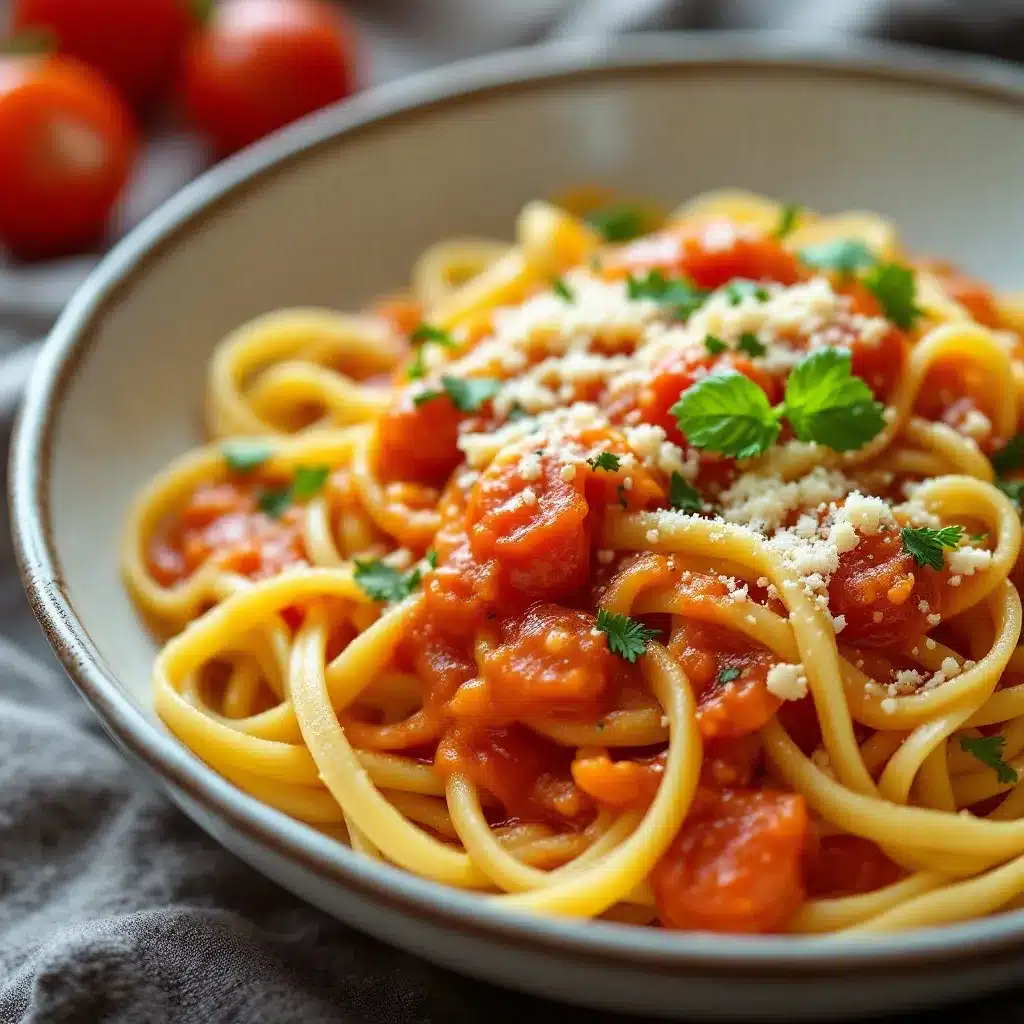
You don’t need a fancy kitchen to make this sauce, which is part of what I love about it. Here is what you will need:
- Large rimmed baking sheet (half-sheet pan, 18×13 inches): A rimmed sheet is crucial because the tomatoes release a lot of liquid as they roast. I use Nordic Ware brand, but any heavy-duty pan works. Avoid nonstick if possible, the dark coating can cause the tomatoes to burn before they caramelize.
- Parchment paper or silicone baking mat : This makes cleanup ridiculously easy and prevents the tomatoes from sticking. I prefer parchment paper because it lets the tomatoes brown better than silicone.
- Chef’s knife and cutting board : A sharp knife makes halving cherry tomatoes much less tedious. I use an 8-inch chef’s knife, but a paring knife works too. Just make sure it is sharp, dull knives crush the tomatoes.
- Large skillet or Dutch oven : For finishing the sauce after roasting. A wide skillet gives more surface area for the sauce to reduce. I use a 12-inch cast iron skillet.
- Immersion blender or regular blender : For blending the sauce to your preferred consistency. An immersion blender is easier and means less cleanup. A regular blender works, just let the sauce cool slightly first and blend in batches.
- Freezer-safe containers or bags : I use quart-sized freezer bags laid flat for easy stacking. Glass jars work too, but leave at least an inch of headspace for expansion.
Preparation Method
Alright, let’s get to the good part. This method is straightforward, but a few key steps make the difference between a good sauce and a great one. Take your time with the roasting, that is where the magic happens.
- Preheat your oven to 300°F (150°C) . I know 300°F seems low, but trust me on this. High heat will burn the sugars before the tomatoes have a chance to soften and concentrate. Low and slow is the way to go. Position your oven rack in the middle so the tomatoes cook evenly.
- Prepare the tomatoes : Rinse your cherry tomatoes and pat them dry. Halve each tomato lengthwise. This step is tedious, I won’t lie, but it is essential for even roasting. If you leave them whole, they will steam instead of caramelize. I usually put on a podcast and zone out for this part. It takes about 15 minutes for 3 pounds.
- Arrange on the baking sheet : Line your rimmed baking sheet with parchment paper. Arrange the tomato halves cut-side up in a single layer. They can be close together, but try not to overlap them too much. Overlapping leads to steaming, and we want roasting. Tuck the smashed garlic cloves and thyme sprigs in between the tomatoes.
- Drizzle with olive oil and season : Drizzle the 1/4 cup of olive oil evenly over the tomatoes. Use your hands or a pastry brush to make sure each tomato half gets a light coating of oil. Sprinkle with the kosher salt, black pepper, and red pepper flakes if using. Toss everything gently to combine, then rearrange the tomatoes cut-side up again.
- Roast for 2 hours : Place the baking sheet in the preheated oven and roast for 2 hours, undisturbed. About halfway through, you will notice the tomatoes have released a lot of liquid. This is normal. Do not stir them. Let the liquid cook off and the tomatoes begin to caramelize around the edges. Your kitchen will start smelling absolutely incredible around the 90-minute mark.
- Check for caramelization : After 2 hours, the tomatoes should look wrinkled, slightly browned around the edges, and the liquid should be mostly evaporated. If they still look wet and plump, give them another 15-20 minutes. Every oven runs a little differently. The goal is concentrated, jammy tomatoes, not dried-out ones.
- Cool slightly and remove aromatics : Let the baking sheet cool on a wire rack for about 10 minutes. Pick out the thyme sprigs and any garlic skins that have come loose. The roasted garlic cloves should be soft and golden. Leave them in the sauce, they are pure flavor.
- Transfer to a skillet : Carefully scrape all the roasted tomatoes, garlic, and any caramelized bits from the parchment into a large skillet or Dutch oven. Add the balsamic vinegar and fresh basil leaves. The basil will wilt into the sauce as it heats.
- Simmer and blend : Place the skillet over medium heat. Bring the sauce to a gentle simmer, then reduce the heat to low. Let it simmer for 5-7 minutes, stirring occasionally, until the flavors meld together. Remove from heat. Use an immersion blender to blend the sauce to your desired consistency. I like mine slightly chunky, so I pulse it a few times. For a completely smooth sauce, blend until silky.
- Taste and adjust : This is the most important step. Taste the sauce and adjust the seasoning. You might need a pinch more salt, a crack of black pepper, or an extra splash of olive oil. Remember that flavors dull when frozen, so season slightly more aggressively than you think you need.
- Cool completely : Let the sauce cool to room temperature before freezing. I spread it out on a plate to speed up the process. Never put warm sauce directly into the freezer, it will create ice crystals and affect the texture.
- Portion and freeze : Ladle the cooled sauce into freezer-safe containers or bags. I recommend 1-cup portions for easy thawing. If using bags, lay them flat in the freezer so they stack neatly. Label each bag with the date and contents. The sauce will keep for up to 6 months.
Cooking Tips & Techniques
I have made this sauce more times than I care to count, and I have made every mistake in the book. Here is what I have learned so you don’t have to repeat my errors:
Don’t skip the halving step. I know it is tedious, but whole cherry tomatoes will burst and steam in the oven, releasing too much liquid and never caramelizing properly. Halving them exposes the flesh to direct heat, which concentrates the sugars and gives you that deep, roasted flavor. I tried skipping this once when I was in a hurry, and the result was a watery, bland sauce that tasted more like steamed tomatoes than roasted ones.
Watch your oven temperature. Ovens can be wildly inaccurate. I have an oven thermometer hanging in mine because I learned the hard way that my oven runs about 25°F hot. If your tomatoes are browning too quickly after the first hour, reduce the temperature to 275°F. If they look pale and watery after 2 hours, crank it up to 325°F for the last 20 minutes. Trust your eyes and nose more than the dial.
Resist the urge to stir. I know it is tempting to check on them and give everything a good stir, but leave them alone. Stirring releases steam and prevents that beautiful caramelization from forming. The tomatoes need steady, uninterrupted heat to work their magic. I set a timer and walk away. Go fold laundry, read a book, anything.
Use the caramelized bits. Those brown, sticky bits stuck to the parchment paper are pure flavor. When you transfer the tomatoes to the skillet, scrape up every last bit with a spatula. I call them flavor crystals. They dissolve into the sauce and add incredible depth.
Season for the freezer. This is a pro tip I wish someone had told me years ago. Freezing dulls flavors, especially salt and herbs. When you taste the sauce before freezing, it should taste slightly more seasoned than you would normally prefer. When you thaw and reheat it, the flavors will come back into balance. I add about 25% more salt than I think I need.
Variations & Adaptations
One of the best things about this sauce is how adaptable it is. Here are a few ways I have tweaked it over the years:
Roasted Garlic and Herb Version : Add a whole head of garlic, cut in half crosswise, to the baking sheet alongside the tomatoes. Roast it with the tomatoes, then squeeze the caramelized cloves into the sauce before blending. The result is incredibly mellow and sweet. I also add a sprig of rosemary and some oregano for a more Italian-style sauce.
Spicy Arrabbiata Style : Double the red pepper flakes and add a whole dried chili pepper to the roasting pan. After roasting, remove the chili and blend as usual. The heat infuses the oil and gives the sauce a gentle, warming kick. I love this version for pasta all’arrabbiata or for spooning over crispy roasted potatoes.
Roasted Vegetable Medley : Add chopped bell peppers, zucchini, or eggplant to the baking sheet with the tomatoes. Roast everything together, then blend into a chunky sauce. This stretches the sauce further and adds extra nutrients. I did this last summer when my garden was overflowing with zucchini, and it was fantastic.
Dairy-Free Creamy Sauce : After blending, stir in 1/4 cup of full-fat coconut milk or cashew cream. It adds a luxurious, creamy texture without any dairy. The coconut flavor is subtle and actually complements the roasted tomatoes beautifully. My dairy-sensitive friends rave about this version.
Smoky Chipotle Twist : Add 1-2 chipotle peppers in adobo sauce to the skillet when you simmer the sauce. The smoky heat pairs surprisingly well with the sweet roasted tomatoes. Use this version for tacos, enchiladas, or over grilled chicken. It is completely different from the original but absolutely delicious.
Serving & Storage Suggestions
This sauce is incredibly versatile, but here are my favorite ways to use it:
Serving : Toss with al dente pasta and a generous sprinkle of Parmesan cheese. The sauce clings beautifully to every strand. I also love it spooned over creamy polenta, spread on homemade pizza dough, or drizzled over roasted vegetables. For a quick meal, I warm it up and serve it over fried eggs with crusty bread for dipping. It is also fantastic as a base for shakshuka.
Storage : Once the sauce has cooled completely, transfer it to airtight containers or freezer bags. I prefer quart-sized freezer bags laid flat, they stack perfectly and thaw quickly. Label each bag with the date and portion size. The sauce will keep in the refrigerator for up to 5 days or in the freezer for up to 6 months. For longer storage, vacuum-seal the sauce in bags, it will last up to a year.
Reheating : The best way to thaw the sauce is to transfer a frozen block to the refrigerator overnight. For a quick thaw, place the sealed bag in a bowl of warm water for about 30 minutes. Once thawed, reheat the sauce gently in a saucepan over low heat, stirring occasionally. Add a splash of water or pasta cooking water if the sauce seems too thick. The flavors actually deepen after freezing, so it will taste even better than when you first made it.
How flavors develop : I have noticed that this sauce tastes even better after a day or two in the refrigerator. The flavors meld and mellow, becoming more cohesive. The same happens after freezing and thawing. So don’t worry if it tastes a little bright and acidic right after making it. Give it time, it will settle into something beautiful.
Nutritional Information & Benefits
This sauce is not just delicious, it is genuinely good for you. Here is a rough breakdown per 1-cup serving:
- Calories : Approximately 120-140
- Fat : 8-10 grams (mostly from heart-healthy olive oil)
- Carbohydrates : 12-15 grams
- Fiber : 3-4 grams
- Sugar : 8-10 grams (natural sugars from tomatoes)
- Protein : 2-3 grams
- Sodium : 300-400 mg (adjust based on salt added)
- Vitamin C : 20% of daily value
- Vitamin A : 15% of daily value
- Potassium : 10% of daily value
Cherry tomatoes are packed with lycopene, a powerful antioxidant that is actually more bioavailable when tomatoes are cooked. The olive oil helps your body absorb the lycopene more effectively. Roasting also concentrates the nutrients, making this sauce a nutrient-dense addition to any meal. It is naturally vegan, gluten-free, and dairy-free, making it suitable for a wide range of dietary needs. I love knowing that I have a healthy, homemade option in my freezer that beats anything from a jar, hands down.
Conclusion
This slow-roasted cherry tomato sauce is more than just a recipe, it is a way to capture summer in a jar and save it for the cold, gray months ahead. It is the taste of a Saturday afternoon in Rose’s kitchen, the smell of tomatoes caramelizing in the oven, the satisfaction of knowing you made something beautiful from a handful of simple ingredients. I make this sauce every August when tomatoes are at their peak, and I freeze enough to last me through the winter. It is my little act of self-care, my way of preserving a season of abundance.
I hope you give this recipe a try and make it your own. Maybe you will add more garlic, or a pinch of sugar, or a handful of fresh herbs from your garden. That is the beauty of a good sauce, it invites you to play. I would love to hear how yours turns out. Did you try a variation? Did it remind you of someone’s kitchen? Drop a comment below and tell me about it. And if you freeze a batch for a rainy day, you will thank yourself later. I promise.
Frequently Asked Questions
Can I use regular tomatoes instead of cherry tomatoes?
Yes, you can. Roma or plum tomatoes work best because they have less water content. Cut them into 1-inch chunks and roast them the same way. You may need to add 15-20 minutes to the roasting time since larger pieces take longer to caramelize. Beefsteak tomatoes are too watery and will result in a thinner sauce.
Do I have to peel the tomatoes before roasting?
No, and that is one of the best parts of this recipe. Cherry tomato skins are thin and tender, especially after slow roasting. They blend completely into the sauce and add fiber and texture. No blanching, no peeling, no fuss.
Can I double this recipe?
Absolutely. Use two baking sheets and rotate them halfway through roasting. Make sure each sheet has the tomatoes in a single layer. Overcrowding will cause steaming instead of roasting. You can also scale it down to 1 pound of tomatoes for a small batch.
Why is my sauce watery?
This usually happens for two reasons: the tomatoes were not roasted long enough, or they were overlapping on the baking sheet. Make sure you roast until the liquid has mostly evaporated and the tomatoes look jammy. If your sauce is still watery after blending, simmer it in a skillet over medium-low heat for 10-15 minutes to reduce it further.
Can I can this sauce instead of freezing it?
I do not recommend canning this recipe as written. The low acid content of cherry tomatoes and the addition of olive oil and fresh herbs can create unsafe conditions for water bath canning. For pressure canning, you would need to follow a tested recipe specifically designed for that method. Freezing is the safest and easiest option for this sauce.
Pin This Recipe!
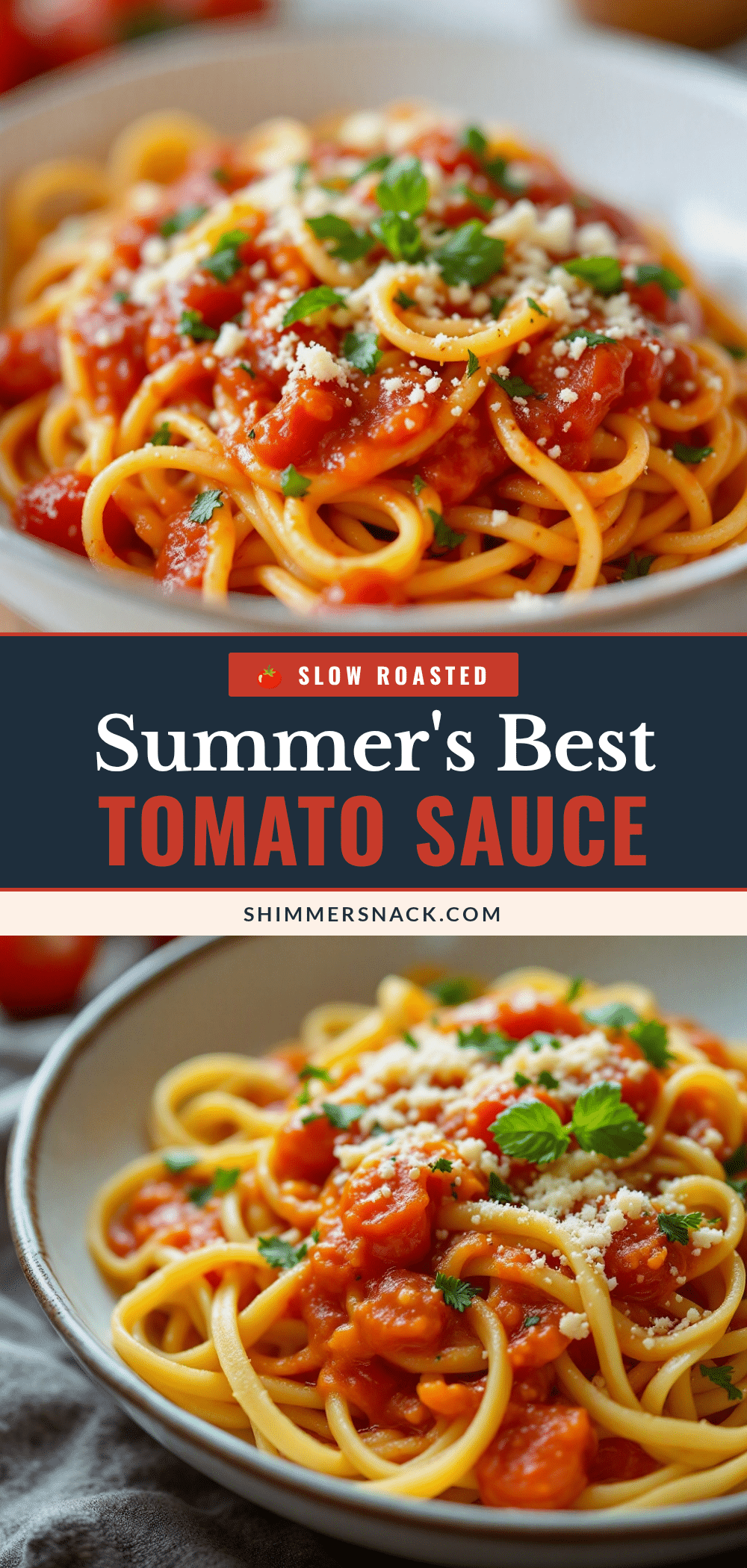
Best Slow-Roasted Cherry Tomato Sauce for Easy Freezing
This slow-roasted cherry tomato sauce captures the sweet, concentrated flavor of summer tomatoes with minimal effort. Perfect for freezing, it’s a versatile staple for pasta, pizza, eggs, and more.
- Prep Time: 15 minutes
- Cook Time: 2 hours 15 minutes
- Total Time: 2 hours 30 minutes
- Yield: 4 servings 1x
- Category: Sauce
- Cuisine: Italian
Ingredients
- 3 pounds cherry or grape tomatoes, halved
- 8–10 garlic cloves, smashed
- 1/4 cup extra-virgin olive oil, plus more for drizzling
- 1/2 cup fresh basil leaves, loosely packed
- 4–5 fresh thyme sprigs
- 1 tablespoon balsamic vinegar
- 1 teaspoon kosher salt, plus more to taste
- 1/2 teaspoon freshly ground black pepper
- 1/4 teaspoon red pepper flakes (optional)
- 1/2 teaspoon onion powder (optional)
Instructions
- Preheat your oven to 300°F (150°C). Position the oven rack in the middle.
- Rinse the cherry tomatoes and pat them dry. Halve each tomato lengthwise.
- Line a large rimmed baking sheet with parchment paper. Arrange the tomato halves cut-side up in a single layer. Tuck the smashed garlic cloves and thyme sprigs in between the tomatoes.
- Drizzle the 1/4 cup of olive oil evenly over the tomatoes. Use your hands or a pastry brush to coat each tomato half. Sprinkle with kosher salt, black pepper, and red pepper flakes (if using). Toss gently to combine, then rearrange the tomatoes cut-side up.
- Roast for 2 hours, undisturbed. The tomatoes should look wrinkled, slightly browned around the edges, and the liquid should be mostly evaporated. If still wet, roast for an additional 15-20 minutes.
- Let the baking sheet cool on a wire rack for about 10 minutes. Remove the thyme sprigs and any loose garlic skins. Leave the roasted garlic cloves in the sauce.
- Scrape all the roasted tomatoes, garlic, and caramelized bits into a large skillet or Dutch oven. Add the balsamic vinegar and fresh basil leaves.
- Place the skillet over medium heat. Bring to a gentle simmer, then reduce heat to low. Simmer for 5-7 minutes, stirring occasionally.
- Remove from heat. Use an immersion blender to blend the sauce to your desired consistency (slightly chunky or smooth).
- Taste and adjust seasoning. Season slightly more aggressively than you think you need, as flavors dull when frozen.
- Let the sauce cool completely to room temperature before freezing.
- Ladle the cooled sauce into freezer-safe containers or bags. Portion into 1-cup portions. Label with date and contents. Freeze for up to 6 months.
Notes
Don’t skip halving the tomatoes; whole tomatoes will steam instead of caramelize. Resist stirring during roasting to allow caramelization. Use the caramelized bits from the parchment for extra flavor. Season slightly more than you think you need before freezing, as freezing dulls flavors. For a creamy version, stir in 1/4 cup full-fat coconut milk or cashew cream after blending.
Nutrition
- Serving Size: 1 cup
- Calories: 130
- Sugar: 9
- Sodium: 350
- Fat: 9
- Saturated Fat: 1.5
- Carbohydrates: 13
- Fiber: 3.5
- Protein: 2.5
Keywords: slow-roasted cherry tomato sauce, freezer-friendly tomato sauce, homemade tomato sauce, cherry tomato recipe, easy tomato sauce