Love this? Save it for later!
Share the inspiration with your friends
Introduction
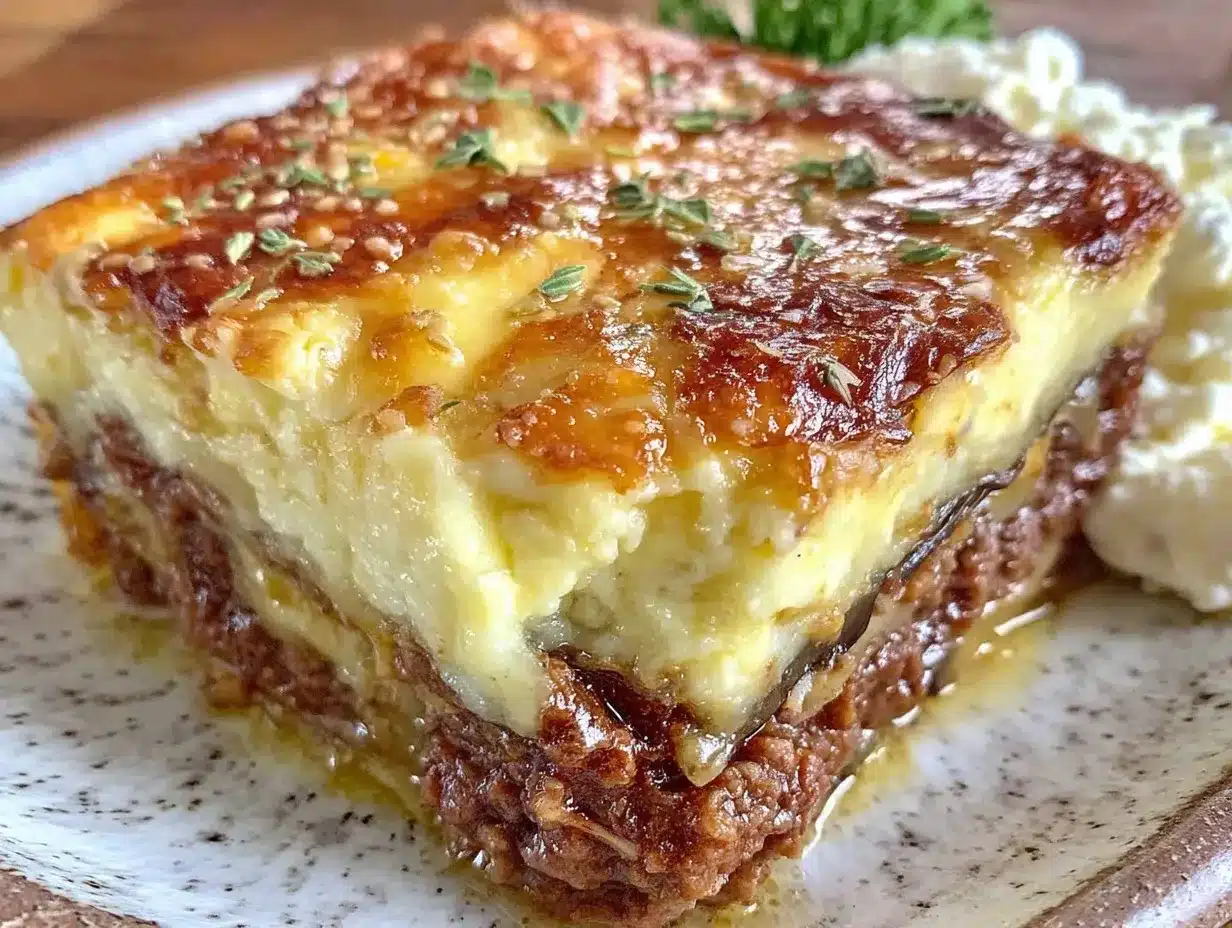
“You’ve got to try this,” my café owner friend, Dimitri, insisted one rainy Thursday afternoon in Athens. I was nursing a cup of strong coffee, watching raindrops race down the window, when he slid a steaming plate across the counter. The aroma was intoxicating—layers of tender eggplant, a rich, spiced meat sauce, all crowned with a velvety, creamy béchamel. Honestly, I wasn’t expecting much from this humble dish, but one bite and I was hooked.
That day, I learned that classic Greek moussaka is much more than just a casserole—it’s a story of tradition, comfort, and a little bit of kitchen magic. Dimitri confessed he’d inherited the recipe from his grandmother, who swore by slow-simmered meat sauce and the perfect béchamel balance. I remember spilling a bit of the sauce trying to capture the recipe on my phone (classic me!), but that mess was worth every second.
Maybe you’ve been there—craving something hearty yet elegant, something that feels like a warm hug on a plate. This creamy Greek moussaka with rich meat sauce is exactly that kind of dish. It’s the recipe I keep coming back to, especially when I want to impress friends or simply treat myself to a taste of Greece at home.
Why You’ll Love This Recipe
After testing countless versions of moussaka, this one stands out for a few reasons that I know you’ll appreciate:
- Quick & Easy: Comes together in about 90 minutes, perfect for when you want something special without spending all day in the kitchen.
- Simple Ingredients: Uses everyday pantry staples and fresh produce—no exotic trips to specialty stores needed.
- Perfect for Dinner Parties: It’s impressive but approachable, a guaranteed crowd-pleaser that’s both filling and flavorful.
- Creamy & Comforting: The béchamel topping is luxuriously smooth, making every bite melt in your mouth.
- Rich Meat Sauce: Slow-cooked with warm spices and tomatoes, it brings authentic Greek flavor right to your table.
This recipe isn’t just another moussaka—it’s the best version because of the perfectly balanced seasoning and the creamy béchamel that I blend to just the right silkiness. Honestly, it’s the kind of dish that makes you close your eyes after the first bite and say, “Yes, this is it.” Whether you’re hosting a family dinner or craving a soul-soothing meal, this is one recipe worth making again and again.
What Ingredients You Will Need
This classic creamy Greek moussaka recipe uses simple, wholesome ingredients that build layers of flavor and texture without fuss. Most are pantry staples, and the fresh components are easy to find year-round.
- For the Meat Sauce:
- 1 lb (450 g) ground beef or lamb (lamb adds authentic richness)
- 1 medium onion, finely chopped
- 3 cloves garlic, minced
- 1 can (14 oz / 400 g) crushed tomatoes
- 2 tbsp tomato paste (adds depth)
- 1/2 cup (120 ml) red wine (optional but recommended for flavor)
- 1 tsp ground cinnamon (key for that classic Greek aroma)
- 1/2 tsp ground allspice
- Salt and freshly ground black pepper, to taste
- 2 tbsp olive oil (preferably extra virgin for richness)
- Fresh parsley, chopped (for garnish)
- For the Vegetable Layers:
- 2 large eggplants, sliced 1/2 inch (1.25 cm) thick
- 2 medium potatoes, peeled and sliced 1/4 inch (0.6 cm) thick
- Olive oil for brushing and frying
- Salt, to taste
- For the Béchamel Sauce:
- 4 tbsp unsalted butter
- 4 tbsp all-purpose flour
- 3 cups (720 ml) whole milk, warmed
- 2 large eggs, beaten
- 1/2 cup (50 g) grated Parmesan or Kefalotyri cheese (adds a lovely sharpness)
- Nutmeg, a pinch (freshly grated if you have it)
- Salt and white pepper, to taste
Pro tip: When selecting eggplants, look for firm, glossy skin without blemishes. Smaller ones tend to be less bitter. For potatoes, waxy varieties hold up best during baking. I like using Kerrygold butter and Barilla tomato paste for consistent results.
Equipment Needed
- Large skillet or frying pan – for sautéing the meat sauce and frying eggplants
- Baking dish (about 9×13 inches / 23×33 cm) – to layer the moussaka
- Medium saucepan – for making béchamel sauce
- Whisk – essential for smooth béchamel
- Sharp knife and cutting board – for slicing vegetables
- Paper towels – to drain fried eggplants and potatoes
- Measuring cups and spoons – for accuracy
If you don’t have a skillet large enough for the eggplants, I’ve sometimes used the oven’s broiler to roast them lightly instead, which cuts down on oil. For béchamel, a non-stick saucepan helps prevent burning, but you can get great results with stainless steel if you stir continuously. Honestly, investing in a good whisk makes béchamel magic much less intimidating.
Preparation Method
- Prepare the Vegetables: Preheat your oven to 400°F (200°C). Slice the eggplants and potatoes evenly. Sprinkle salt on the eggplant slices and let them sit for 20 minutes to draw out bitterness, then rinse and pat dry with paper towels. Brush both eggplant and potato slices lightly with olive oil.
- Cook the Vegetables: Arrange eggplant slices on a baking sheet and roast for about 20 minutes, flipping halfway, until golden and tender. Fry potato slices in a skillet with olive oil until golden on both sides, then drain on paper towels. This two-step process ensures a tender but not soggy base.
- Make the Meat Sauce: Heat olive oil in a large skillet over medium heat. Sauté onions until translucent, about 5 minutes. Add garlic and cook for another minute. Add ground meat, breaking it up with a spoon, and cook until browned, about 8 minutes. Stir in tomato paste and cook for 2 minutes to deepen flavors.
- Pour in crushed tomatoes and red wine (if using). Add cinnamon, allspice, salt, and pepper. Simmer gently for 30 minutes, stirring occasionally, until thickened and fragrant. Taste and adjust seasoning as needed.
- Prepare the Béchamel Sauce: In a medium saucepan, melt butter over medium heat. Whisk in flour and cook for 2 minutes, stirring constantly to avoid lumps. Gradually whisk in warm milk, continuing to stir until sauce thickens and coats the back of a spoon, about 7-8 minutes.
- Remove from heat. Temper the beaten eggs by whisking in a small amount of béchamel, then slowly add eggs back into the sauce while whisking rapidly. Stir in cheese, nutmeg, salt, and white pepper.
- Assemble the Moussaka: In your baking dish, layer half the potatoes evenly on the bottom. Follow with half the eggplants, then spread the entire meat sauce over the vegetables. Repeat layers with remaining eggplant and potatoes, then pour béchamel sauce evenly on top, smoothing it out.
- Bake: Bake in the preheated oven at 350°F (175°C) for 45-50 minutes, until the béchamel is golden and bubbling. Let the moussaka rest for at least 20 minutes before slicing—this helps it hold together.
Note: If the béchamel looks too thick before baking, whisk in a splash of milk to loosen it. When layering, try not to press down too hard to keep those layers distinct. You’ll know it’s ready when the top turns a rich golden color and the edges gently bubble.
Cooking Tips & Techniques
Making moussaka can seem intimidating, but a few tips make all the difference:
- Don’t skip salting the eggplants: It draws out bitterness and prevents sogginess. Give them a good rinse after salting to keep saltiness balanced.
- Low and slow for the meat sauce: Let it simmer gently to deepen flavors and thicken perfectly. Rushing this step can leave it watery or bland.
- Watch your béchamel closely: Stir constantly to avoid lumps or burning. Using warm milk helps it come together smoothly.
- Use fresh nutmeg if possible: It adds a subtle warmth that’s crucial in béchamel.
- Rest before serving: I can’t stress this enough! Letting the moussaka sit after baking makes slicing cleaner and flavors meld better.
I once forgot to temper the eggs into the béchamel and ended up scrambling them—lesson learned the hard way! Also, multitasking by prepping your meat sauce while roasting veggies saves loads of time. Trust me, you’ll want to make this again and avoid any kitchen chaos.
Variations & Adaptations
This classic creamy Greek moussaka can be adapted to suit your taste or dietary needs:
- Vegetarian version: Swap the meat sauce for a hearty lentil or mushroom ragout with similar spices for that rich flavor.
- Low-carb option: Replace potatoes with thinly sliced zucchini or skip them altogether, focusing on eggplant layers.
- Spice it up: Add a pinch of cayenne or smoked paprika to the meat sauce for a subtle kick.
- Dairy-free béchamel: Use olive oil and flour to make a roux, then add unsweetened almond or oat milk, skipping the cheese and eggs.
- Personal favorite twist: I sometimes add a handful of grated nutty Kefalotyri cheese inside the layers for extra depth beyond the béchamel topping.
Serving & Storage Suggestions
Serve your creamy Greek moussaka warm or at room temperature—it’s never disappointing either way. I like pairing it with a crisp Greek salad and a glass of red wine for a balanced meal. Freshly chopped parsley sprinkled on top adds a bright contrast.
Leftovers keep well in the fridge for up to 3 days, covered tightly. Reheat gently in the oven at 325°F (160°C) to preserve texture—microwaving can make the béchamel rubbery. Moussaka freezes beautifully too; just wrap portions well and thaw overnight in the fridge before reheating.
The flavors actually deepen after a day or two, so if you can resist, it tastes even better the next day. I remember a lazy Sunday when I happily reheated the last piece with a side of Greek-style roasted vegetables—comfort food at its finest.
Nutritional Information & Benefits
A classic creamy Greek moussaka is a satisfying blend of protein, veggies, and dairy fats. Per serving (about 1/8 of the dish), it roughly contains:
- Calories: 450-550
- Protein: 25 g
- Carbohydrates: 30 g
- Fat: 25 g (mostly from olive oil and béchamel)
- Fiber: 5 g
Eggplants and tomatoes contribute antioxidants and fiber, while the meat provides iron and essential amino acids. Using olive oil supports heart health, and the dairy offers calcium. For those watching carbs, the potatoes can be swapped or reduced easily.
From a wellness perspective, this recipe feels indulgent without being overly processed or heavy on refined ingredients. It’s a dish that nourishes both body and soul, a real treat for cooler evenings or celebratory meals.
Conclusion
This classic creamy Greek moussaka with rich meat sauce is truly a recipe to cherish. It brings together familiar ingredients in a way that feels special and comforting all at once. Whether you’re new to Greek cooking or a seasoned fan, this dish invites you to slow down, savor, and enjoy the layers of flavor and texture.
Feel free to tweak it—maybe try swapping potatoes for zucchini, or adding your favorite herbs. For me, it’s a kitchen staple that never fails to impress guests or brighten a weeknight.
If you try this recipe, I’d love to hear how it turned out or any personal twists you made. Sharing food stories is the best part of cooking, isn’t it? So grab your skillet, roll up your sleeves, and make some magic with this creamy, rich, unforgettable moussaka.
FAQs about Classic Creamy Greek Moussaka
Can I make moussaka ahead of time?
Absolutely! It tastes even better the next day after the flavors meld. Just bake it, cool completely, cover, and refrigerate. Reheat in the oven before serving.
Is there an easy way to make the béchamel sauce lump-free?
Yes! Use warm milk and whisk constantly while gradually adding it to the roux. Also, temper the eggs before mixing to avoid scrambling.
Can I use ground turkey or chicken instead of beef or lamb?
You can, but lamb or beef gives that classic richness. If using poultry, you might want to add extra seasoning to boost flavor.
What’s the best way to slice and cook eggplant for moussaka?
Slice about 1/2 inch thick, salt them to remove bitterness, rinse, and either roast or lightly fry until tender and golden.
How do I prevent the moussaka from being watery?
Drain and dry vegetables well after salting and cooking. Also, simmer the meat sauce until thick, and don’t skip resting the casserole before serving.
Pin This Recipe!
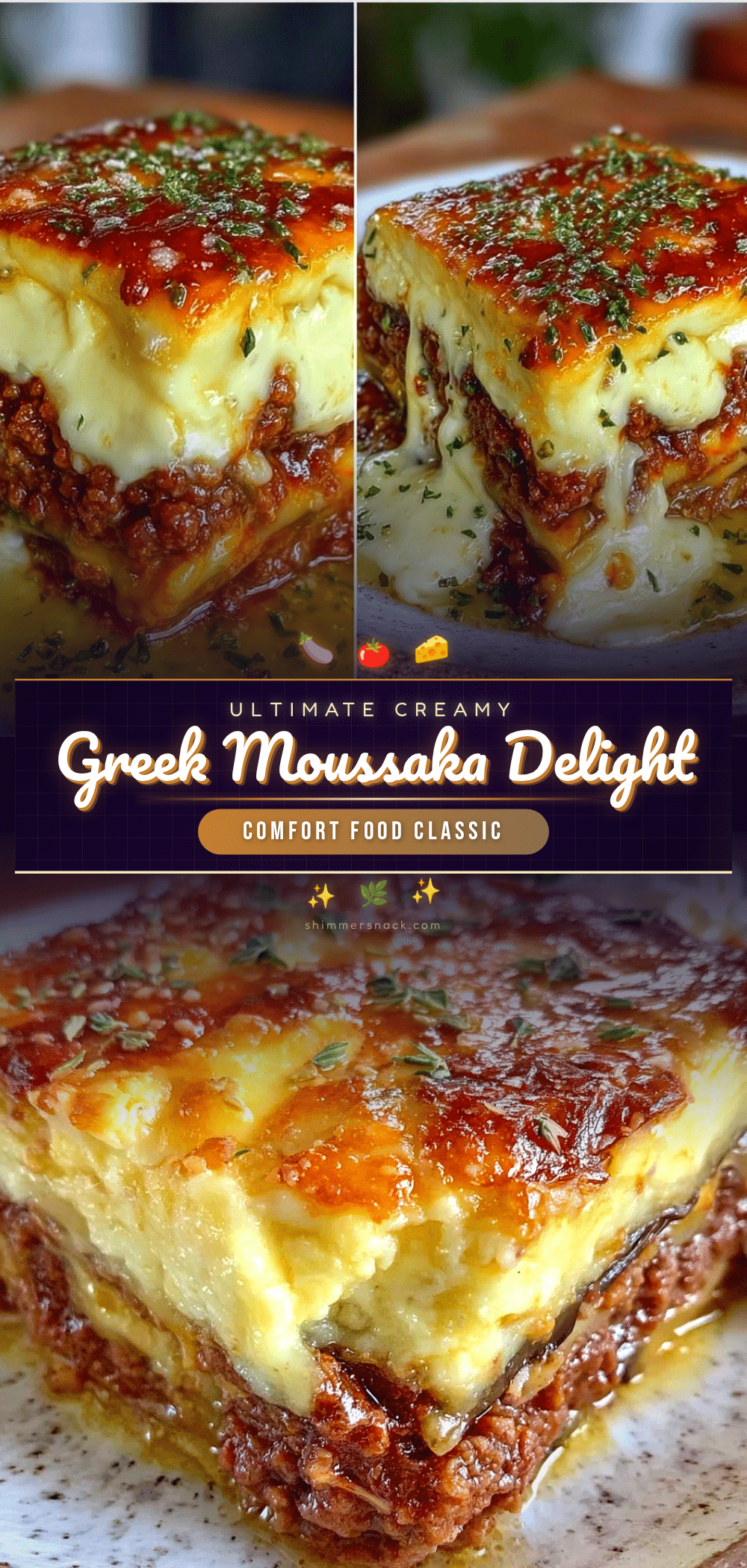
Classic Creamy Greek Moussaka Recipe Easy Homemade Rich Meat Sauce
A traditional Greek casserole featuring layers of tender eggplant, potatoes, and a rich, spiced meat sauce topped with a velvety béchamel sauce. This recipe is quick, easy, and perfect for dinner parties or comforting meals.
- Prep Time: 30 minutes
- Cook Time: 1 hour
- Total Time: 1 hour 30 minutes
- Yield: 8 servings 1x
- Category: Main Course
- Cuisine: Greek
Ingredients
- 1 lb (450 g) ground beef or lamb
- 1 medium onion, finely chopped
- 3 cloves garlic, minced
- 1 can (14 oz / 400 g) crushed tomatoes
- 2 tbsp tomato paste
- 1/2 cup (120 ml) red wine (optional)
- 1 tsp ground cinnamon
- 1/2 tsp ground allspice
- Salt and freshly ground black pepper, to taste
- 2 tbsp olive oil
- Fresh parsley, chopped (for garnish)
- 2 large eggplants, sliced 1/2 inch (1.25 cm) thick
- 2 medium potatoes, peeled and sliced 1/4 inch (0.6 cm) thick
- Olive oil for brushing and frying
- Salt, to taste
- 4 tbsp unsalted butter
- 4 tbsp all-purpose flour
- 3 cups (720 ml) whole milk, warmed
- 2 large eggs, beaten
- 1/2 cup (50 g) grated Parmesan or Kefalotyri cheese
- Nutmeg, a pinch
- Salt and white pepper, to taste
Instructions
- Preheat oven to 400°F (200°C). Slice eggplants and potatoes evenly. Sprinkle salt on eggplant slices and let sit for 20 minutes to draw out bitterness, then rinse and pat dry with paper towels. Brush eggplant and potato slices lightly with olive oil.
- Arrange eggplant slices on a baking sheet and roast for about 20 minutes, flipping halfway, until golden and tender. Fry potato slices in a skillet with olive oil until golden on both sides, then drain on paper towels.
- Heat olive oil in a large skillet over medium heat. Sauté onions until translucent, about 5 minutes. Add garlic and cook for another minute. Add ground meat, breaking it up with a spoon, and cook until browned, about 8 minutes. Stir in tomato paste and cook for 2 minutes.
- Pour in crushed tomatoes and red wine (if using). Add cinnamon, allspice, salt, and pepper. Simmer gently for 30 minutes, stirring occasionally, until thickened and fragrant. Adjust seasoning as needed.
- In a medium saucepan, melt butter over medium heat. Whisk in flour and cook for 2 minutes, stirring constantly to avoid lumps. Gradually whisk in warm milk, stirring until sauce thickens and coats the back of a spoon, about 7-8 minutes.
- Remove from heat. Temper beaten eggs by whisking in a small amount of béchamel, then slowly add eggs back into the sauce while whisking rapidly. Stir in cheese, nutmeg, salt, and white pepper.
- In a baking dish, layer half the potatoes evenly on the bottom. Follow with half the eggplants, then spread the entire meat sauce over the vegetables. Repeat layers with remaining eggplant and potatoes, then pour béchamel sauce evenly on top and smooth out.
- Bake in preheated oven at 350°F (175°C) for 45-50 minutes, until béchamel is golden and bubbling. Let rest for at least 20 minutes before slicing.
Notes
Salt eggplants and rinse to remove bitterness and prevent sogginess. Simmer meat sauce gently to deepen flavor and thicken. Stir béchamel constantly and use warm milk to avoid lumps. Temper eggs before adding to béchamel to prevent scrambling. Let moussaka rest after baking for cleaner slices and better flavor melding. If béchamel is too thick before baking, whisk in a splash of milk to loosen.
Nutrition
- Serving Size: About 1/8 of the dis
- Calories: 500
- Sugar: 6
- Sodium: 450
- Fat: 25
- Saturated Fat: 12
- Carbohydrates: 30
- Fiber: 5
- Protein: 25
Keywords: moussaka, Greek moussaka, creamy moussaka, meat sauce, béchamel, eggplant casserole, traditional Greek recipe