Love this? Save it for later!
Share the inspiration with your friends
The first ladle went into my bowl, and the whole kitchen just stopped. My phone buzzed an hour later. Can you send me that stew recipe? It was my sister, who had stopped by for a quick hello and ended up eating two bowls on my back porch. She’s not usually a stew person. I mean, she picks the vegetables out of soup. But this one got her.
Honestly, that moment surprised me more than it should have. I didn’t set out to make a masterpiece. I was just trying to use up the butternut squash I’d been ignoring on the counter and the bag of cannellini beans that had been sitting in my pantry for weeks. It was a Tuesday, I was tired, and my slow cooker was the only thing I had the energy to deal with.
I chopped a few things, tossed them in, and walked away. That’s the beauty of this whole thing. It does the work while you do literally anything else. And somehow, what came out of that pot was pure comfort. The kind of slow cooker fall vegetable and white bean stew that feels like a hug in a bowl. The vegetables melt into the broth, the beans make it hearty enough for dinner, and the smell that fills your house is ridiculous. It smells like autumn, honestly.
This recipe stuck because it’s not complicated. It doesn’t require a special trip to the store or a ton of knife skills. It just requires a little trust that simple ingredients, given enough time, will turn into something you’ll want to make again and again. And judging by the empty pot, I think it’s earned its spot.
Why You’ll Love This Recipe
I’ve made a lot of stews over the years. Some were too watery. Some were too salty. Some just felt like a sad bowl of warm vegetables. This one is different. It’s the one I keep coming back to, and I think you will too.
- Set It and Forget It : This is the ultimate hands-off meal. A little chopping, a quick sauté, and then the slow cooker handles everything. You can go take a nap, run errands, or catch up on your favorite show.
- Simple Pantry Ingredients : Nothing fancy here. You probably already have onions, garlic, and canned beans in your kitchen. The fresh vegetables are easy to find at any grocery store this time of year. No need to hunt down obscure spices.
- Perfect for Meal Prep : This stew tastes even better the next day. Make a big batch on Sunday, and you’ve got lunches or dinners ready for the whole week. It freezes beautifully, too.
- Crowd-Pleaser : I’ve served this to my family, to friends, and even to my picky neighbor. Everyone goes back for seconds. It’s hearty enough for meat-eaters and completely satisfying for vegetarians.
- Unbelievably Cozy : The broth gets rich and silky, the vegetables get tender, and the white beans add a creamy texture that makes this stew feel decadent. It’s the definition of comfort food.
What makes this version stand out from all the others? It’s the way the vegetables are treated. Instead of just dumping everything in raw, I take an extra ten minutes to sauté the aromatics and the tomato paste. This little step unlocks a depth of flavor that you just can’t get from throwing everything in the pot. It’s a small effort for a massive payoff.
This isn’t just another vegetable stew. It’s the one that makes you close your eyes after the first bite. It’s healthier than a creamy soup but just as satisfying. And it’s the perfect thing to make when you need a little warmth on a chilly day.
What Ingredients You Will Need
This recipe uses simple, wholesome ingredients to deliver bold flavor and satisfying texture without the fuss. Most of these are pantry staples or easy to find at your local market.
- Butternut Squash (1 medium, peeled and cubed into 1-inch pieces) – Adds natural sweetness and a creamy texture when it breaks down. I prefer buying pre-cut cubes to save time, but a whole squash is cheaper. Look for one that feels heavy for its size.
- Carrots (3 large, peeled and sliced into half-moons) – They add a subtle sweetness and hold their shape well during the long cook time. I like using rainbow carrots for a prettier presentation.
- Celery (3 ribs, sliced) – The classic aromatic base. It adds a savory, slightly peppery note that balances the sweetness of the squash.
- Yellow Onion (1 large, diced) – The foundation of almost every good stew. It gets soft and sweet as it cooks.
- Garlic (4 cloves, minced) – Because garlic makes everything better. Use fresh for the best flavor.
- Cannellini Beans (2 cans, drained and rinsed) – These creamy white beans are the heart of the stew. They add protein and fiber, making this a complete meal. You can also use Great Northern beans or navy beans.
- Diced Fire-Roasted Tomatoes (1 can, 14.5 ounces) – They add a smoky depth that regular canned tomatoes just can’t match. I recommend Muir Glen for the best flavor.
- Vegetable Broth (4 cups, low-sodium) – The base of the stew. Use a good quality broth here, as it makes a big difference. I like Better Than Bouillon for its rich flavor.
- Tomato Paste (2 tablespoons) – This is the secret to a deeply flavored broth. Sautéing it with the onions unlocks its umami goodness.
- Dried Thyme (1 teaspoon) – Earthy and slightly floral. It pairs beautifully with the squash and beans.
- Dried Rosemary (1/2 teaspoon, crushed) – Piney and aromatic. Go easy, as rosemary can be overpowering.
- Bay Leaf (1) – Adds a subtle, almost tea-like flavor. Remember to remove it before serving.
- Kale (3 cups, roughly chopped, stems removed) – Stirred in at the end, it adds a pop of green and a slight bitterness that cuts through the richness. Lacinato kale is my favorite, but curly kale works too.
- Olive Oil (2 tablespoons) – For sautéing. Use a good extra virgin olive oil for the best flavor.
- Salt and Black Pepper (to taste) – Don’t be shy. Seasoning in layers is key to a flavorful stew.
Ingredient Substitutions : If you can’t find butternut squash, use sweet potatoes or pumpkin. For a different green, try spinach or Swiss chard, but add them in the last 5 minutes. If you want a gluten-free option, this recipe is naturally gluten-free. For a lower-sodium version, use no-salt-added broth and beans.
Equipment Needed
You don’t need a professional kitchen to make this stew. Here’s what you’ll need:
- Slow Cooker (5 to 6-quart) – This is the star of the show. Any brand works, but I’ve had great luck with my Cuisinart. It heats evenly and doesn’t scorch the edges.
- Large Skillet – For sautéing the aromatics. A 12-inch skillet is perfect. If you have a Dutch oven, you can even do everything in one pot before transferring to the slow cooker.
- Sharp Chef’s Knife – A good knife makes chopping vegetables so much easier. I use a Victorinox and it’s never let me down.
- Cutting Board – A large wooden or plastic board for all that chopping.
- Wooden Spoon – For stirring the sautéed vegetables.
- Measuring Cups and Spoons – For accurate measurements.
- Can Opener – A simple tool, but a good one saves you from frustration.
- Vegetable Peeler – For the carrots and squash.
Budget-Friendly Alternative : If you don’t have a slow cooker, you can make this stew in a large Dutch oven on the stovetop. Just simmer it on low for about 45 minutes to an hour, or until the vegetables are tender. You can also use an Instant Pot on the slow cook setting.
Maintenance Tip : To keep your slow cooker in good shape, always let it cool completely before washing. Most inserts are dishwasher safe, but hand washing with a soft sponge will help the ceramic coating last longer.
Preparation Method
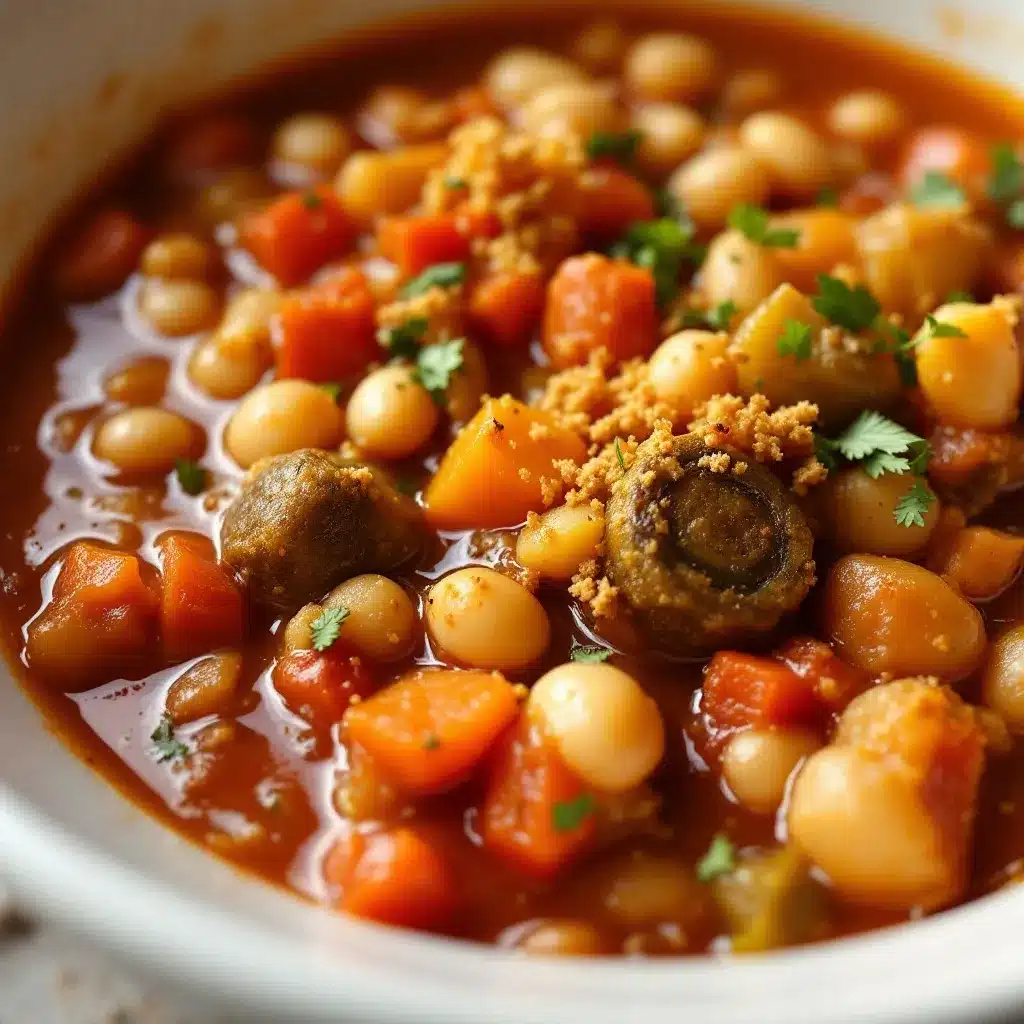
Let’s get cooking. This process is straightforward, but I’ll share all the little tricks I’ve learned along the way.
- Prep the Vegetables (15 minutes): Peel and cube the butternut squash into 1-inch pieces. Peel and slice the carrots into half-moons. Slice the celery. Dice the onion. Mince the garlic. Having everything ready before you start cooking makes the process so much smoother. I like to put all the chopped vegetables in a big bowl.
- Sauté the Aromatics (8 minutes): Heat the olive oil in a large skillet over medium heat. Add the diced onion and cook for 4-5 minutes, until it becomes soft and translucent. Don’t rush this step. You want the onions to sweat, not brown. Add the minced garlic, dried thyme, and crushed rosemary. Cook for another minute until the garlic is fragrant.
- Add the Tomato Paste (2 minutes): Push the onions and garlic to the side of the skillet. Add the tomato paste to the empty space and let it cook for about a minute, stirring constantly. This is called “blooming” the tomato paste, and it deepens the flavor significantly. It will turn a darker shade of red and smell amazing. Stir it into the onions.
- Deglaze the Pan (1 minute): Pour about 1/2 cup of the vegetable broth into the hot skillet. Use your wooden spoon to scrape up any browned bits stuck to the bottom. That’s pure flavor. Pour this mixture into the slow cooker.
- Layer the Ingredients (5 minutes): Add the cubed butternut squash, sliced carrots, sliced celery, drained and rinsed cannellini beans, fire-roasted diced tomatoes (with their juices), and the remaining vegetable broth to the slow cooker. Add the bay leaf. Give everything a good stir to combine.
- Season and Cook (1 minute): Add a generous pinch of salt and a few cracks of black pepper. Remember, you can always add more later, so start with about 1 teaspoon of salt. Cover the slow cooker with the lid.
- Cook Low and Slow (6-8 hours on LOW or 3-4 hours on HIGH): This is where the magic happens. Cooking on LOW is my preference because it gives the vegetables more time to soften and the flavors to meld. The stew is ready when the butternut squash is fork-tender. It should easily break apart when you press it with a spoon.
- Add the Kale (10 minutes before serving): About 10 minutes before you’re ready to eat, stir in the roughly chopped kale. It will wilt quickly into the hot broth. Cover the slow cooker again and let it sit for 10 minutes. This keeps the kale bright green and slightly tender, not mushy.
- Taste and Adjust (2 minutes): Remove the bay leaf. Give the stew a final taste. This is the most important step. Does it need more salt? A pinch of red pepper flakes for heat? A squeeze of lemon juice for brightness? Adjust the seasoning to your liking.
- Serve (1 minute): Ladle the stew into bowls. Garnish with a drizzle of good olive oil, a sprinkle of fresh parsley, or a grating of Parmesan cheese if you’re feeling fancy.
Cooking Tips & Techniques
I’ve made this stew more times than I can count, and I’ve learned a few things the hard way. Let me save you the trouble.
Don’t Skip the Sauté : I know it’s tempting to just dump everything in the slow cooker and walk away. I’ve done it. And the stew was fine. But it wasn’t great. Sautéing the onions, garlic, and tomato paste unlocks a depth of flavor that you just can’t get from the slow cooker alone. It’s a non-negotiable step for me now.
Cut Vegetables Evenly : This is a simple tip, but it matters. If your squash cubes are different sizes, some will turn to mush while others are still hard. Aim for 1-inch pieces for everything. I use a ruler sometimes. No shame.
Watch the Salt : Canned beans and broth already contain salt. So be careful when you’re seasoning. I always use low-sodium versions to have more control. Start with a light hand and add more at the end if needed.
My Biggest Failure : The first time I made this, I added the kale at the very beginning. Big mistake. After 8 hours in the slow cooker, it was a sad, brown, slimy mess. It tasted fine, but it looked terrible. Adding it at the end keeps it vibrant and fresh.
Thicken the Broth : If you like a thicker stew, you have a few options. You can mash some of the beans against the side of the pot before adding the kale. This releases their starch and naturally thickens the broth. Or, you can make a cornstarch slurry (1 tablespoon cornstarch mixed with 2 tablespoons cold water) and stir it in during the last 30 minutes.
Timing is Everything : This stew is incredibly forgiving. It can sit on the “warm” setting for an extra hour without any issues. The flavors will actually get better. Just don’t let it cook on HIGH for too long, or the vegetables will get too soft.
Variations & Adaptations
One of the best things about this stew is how easy it is to make it your own. Here are a few ways I’ve adapted it over the years.
- Add Protein : For a heartier meal, add cooked Italian sausage or shredded rotisserie chicken. Stir them in during the last 30 minutes of cooking. I’ve also added a cup of cooked lentils for extra fiber.
- Make it Spicy : If you like a little heat, add a pinch of red pepper flakes along with the garlic. You can also stir in a diced jalapeño or a teaspoon of smoked paprika for a smoky kick. It’s a great way to warm up on a cold day.
- Seasonal Swaps : This recipe is perfect for fall, but it’s adaptable. In the spring, swap the butternut squash for asparagus and peas. In the summer, use zucchini and fresh tomatoes. The base technique stays the same.
- Herb Variations : Not a fan of rosemary? Use a teaspoon of dried oregano or marjoram instead. Fresh herbs are wonderful, too. Add a few sprigs of fresh thyme in step 5 and remove them before serving.
- My Favorite Twist : I once added a tablespoon of balsamic vinegar at the very end, right before serving. It added a subtle tanginess that brightened up the whole dish. I do it every time now. It’s a small change that makes a big difference.
Serving & Storage Suggestions
This stew is a meal in itself, but the right sides can make it even better.
Serving Temperature : Serve it piping hot, straight from the slow cooker. Let it sit for a few minutes after adding the kale so the flavors settle.
Presentation : Ladle the stew into deep bowls. I like to top it with a drizzle of good olive oil, a few cracks of black pepper, and a sprinkle of fresh parsley. A dollop of pesto or a spoonful of gremolata is also amazing.
What to Serve With It : A crusty piece of sourdough bread is my go-to for dipping. It’s perfect for soaking up the broth. I also love serving it with a simple green salad dressed with a lemon vinaigrette. The acidity cuts through the richness of the stew. If you’re in the mood for something extra, try it alongside a batch of easy crispy sourdough focaccia for the ultimate carb-on-carb comfort.
Storage Instructions : Store leftovers in an airtight container in the refrigerator for up to 5 days. The flavors actually get better as they meld together. This stew is a meal prep superstar.
Freezing Instructions : This stew freezes beautifully. Let it cool completely, then transfer it to freezer-safe containers or zip-top bags. It will keep for up to 3 months. Thaw overnight in the refrigerator before reheating.
Reheating Tips : Reheat the stew gently on the stovetop over medium-low heat, stirring occasionally. You can also reheat it in the microwave in 1-minute intervals. If the stew has thickened too much, add a splash of broth or water to thin it out. The kale might lose a bit of its vibrant color, but the flavor will still be fantastic.
How Flavors Develop : I’m always amazed at how much better this stew tastes on day two. The vegetables continue to absorb the broth, and the herbs meld together into a more complex flavor. It’s the perfect make-ahead meal.
Nutritional Information & Benefits
This stew isn’t just delicious. It’s packed with good-for-you ingredients that make you feel great after eating it.
Estimated Nutritional Values (per serving, based on 6 servings) :
- Calories: 285
- Protein: 12g
- Fat: 6g
- Carbohydrates: 48g
- Fiber: 14g
- Sugar: 12g
- Sodium: 580mg
Health Benefits : Butternut squash is packed with vitamin A, which is great for your eyes and immune system. The white beans are a fantastic source of plant-based protein and fiber, which helps keep you full and satisfied. Kale is a superfood loaded with vitamins C and K. This stew is naturally gluten-free, dairy-free, and vegan, making it a great option for a wide range of dietary needs.
Dietary Considerations : This recipe is naturally gluten-free, dairy-free, and vegan. For a lower-carb option, reduce the amount of butternut squash and add more non-starchy vegetables like zucchini or cauliflower. The high fiber content makes it a gut-friendly meal, too.
Potential Allergens : This recipe is free from the top eight allergens (dairy, eggs, peanuts, tree nuts, fish, shellfish, soy, and wheat). However, always check the labels on your canned goods and broth to be sure.
My Wellness Perspective : I love that this stew is both indulgent and healthy. It feels like comfort food, but it’s actually nourishing my body. It’s the kind of meal I can eat without any guilt, and it always leaves me feeling warm and satisfied.
Conclusion
This slow cooker fall vegetable and white bean stew is everything I want in a fall recipe. It’s cozy, it’s easy, and it’s packed with flavor. The best part? It practically makes itself. You get to enjoy the incredible aroma filling your house without spending hours in the kitchen.
I hope you give this recipe a try. Don’t be afraid to customize it based on what you have in your fridge or what you’re craving. That’s the beauty of a good stew. And if you make it, I’d love to hear how it turns out. Did you add a different herb? Did you serve it with something special? Let me know in the comments below.
If you’re looking for more cozy fall meals, you might also love this cozy slow cooker pumpkin chili or this homemade tomato basil soup. Both are perfect for chilly days.
Happy cooking, friends. I hope this stew brings you as much warmth and comfort as it’s brought me.
Frequently Asked Questions
Can I use a different type of bean?
Absolutely. Great Northern beans, navy beans, or even chickpeas would work wonderfully. The key is to use a bean that holds its shape during the long cook time. Avoid using black beans or kidney beans, as their flavor might be too strong.
Can I make this stew on the stovetop instead of a slow cooker?
Yes! This is a great option if you don’t have a slow cooker. After sautéing the aromatics, add all the ingredients (except the kale) to a large Dutch oven. Bring it to a boil, then reduce the heat to low, cover, and simmer for 45-60 minutes, or until the vegetables are tender. Stir in the kale and cook for 5 more minutes.
Do I have to use kale? Can I use spinach instead?
You can definitely use spinach instead of kale. However, spinach wilts much faster, so add it in the last 2-3 minutes of cooking. Just stir it in until it’s wilted. Swiss chard is another great option.
Can I add meat to this stew?
Of course. Cooked Italian sausage, shredded rotisserie chicken, or even diced bacon would be delicious additions. Add the meat during the last 30 minutes of cooking to warm it through without overcooking it.
How can I make the stew thicker?
There are a few easy ways to thicken this stew. You can mash some of the beans against the side of the pot with a spoon. You can also make a cornstarch slurry (1 tablespoon cornstarch mixed with 2 tablespoons cold water) and stir it in during the last 30 minutes of cooking. Another option is to puree a cup of the stew in a blender and stir it back in.
Pin This Recipe!
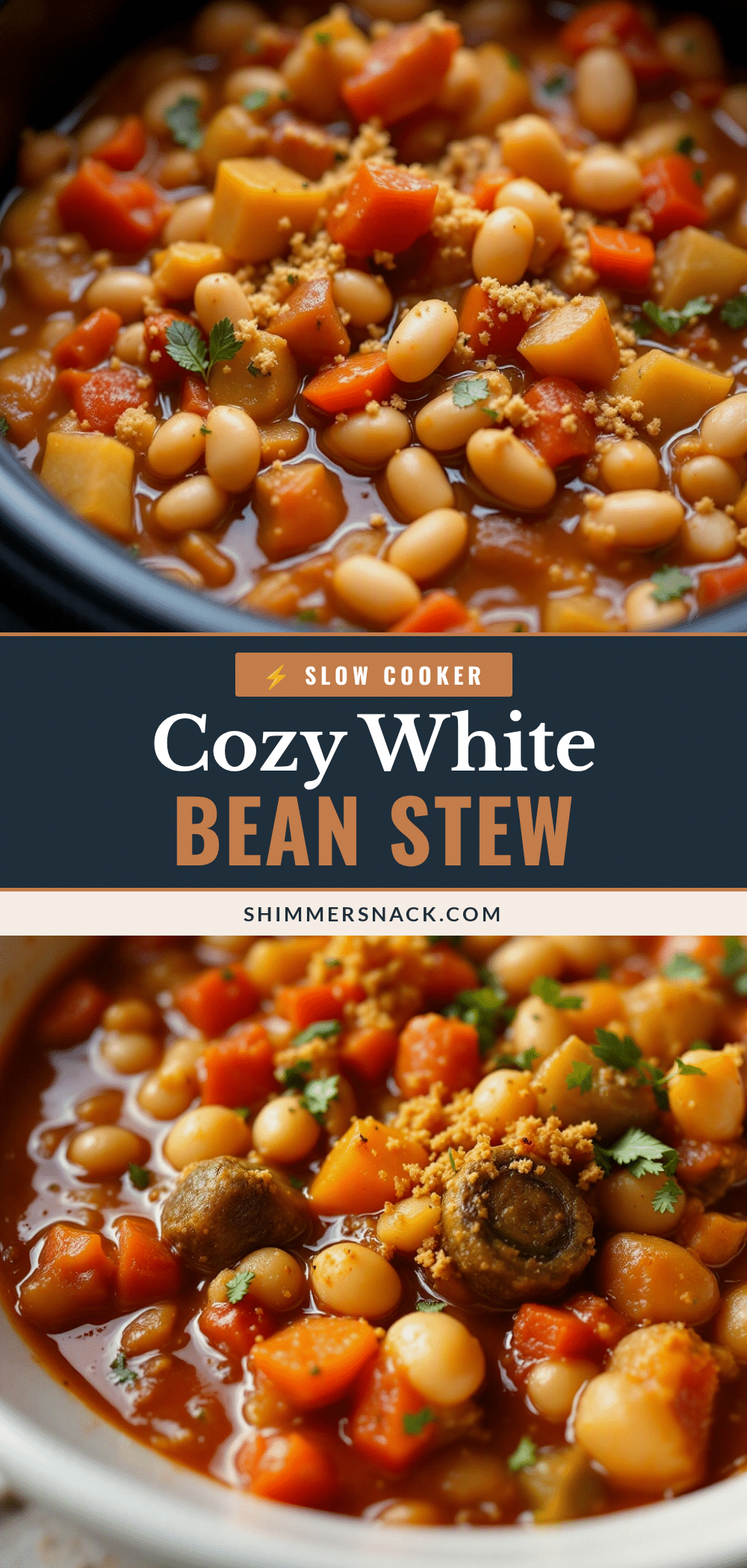
Cozy Slow Cooker Fall Vegetable and White Bean Stew

A hearty, hands-off slow cooker stew featuring tender butternut squash, creamy white beans, and a rich, savory broth. Perfect for cozy fall nights, this vegan and gluten-free meal is packed with flavor and requires minimal effort.
- Prep Time: 15 minutes
- Cook Time: 6 hours 10 minutes
- Total Time: 6 hours 25 minutes
- Yield: 6 servings 1x
- Category: Main Course
- Cuisine: American
Ingredients
- 1 medium butternut squash, peeled and cubed into 1-inch pieces
- 3 large carrots, peeled and sliced into half-moons
- 3 ribs celery, sliced
- 1 large yellow onion, diced
- 4 cloves garlic, minced
- 2 cans (15 ounces each) cannellini beans, drained and rinsed
- 1 can (14.5 ounces) fire-roasted diced tomatoes
- 4 cups low-sodium vegetable broth
- 2 tablespoons tomato paste
- 1 teaspoon dried thyme
- 1/2 teaspoon dried rosemary, crushed
- 1 bay leaf
- 3 cups kale, roughly chopped, stems removed
- 2 tablespoons olive oil
- Salt and black pepper to taste
Instructions
- Prep the Vegetables (15 minutes): Peel and cube the butternut squash into 1-inch pieces. Peel and slice the carrots into half-moons. Slice the celery. Dice the onion. Mince the garlic.
- Sauté the Aromatics (8 minutes): Heat the olive oil in a large skillet over medium heat. Add the diced onion and cook for 4-5 minutes until soft and translucent. Add the minced garlic, dried thyme, and crushed rosemary. Cook for another minute until fragrant.
- Add the Tomato Paste (2 minutes): Push the onions and garlic to the side of the skillet. Add the tomato paste and cook for about a minute, stirring constantly, until it darkens and becomes fragrant. Stir into the onions.
- Deglaze the Pan (1 minute): Pour about 1/2 cup of the vegetable broth into the hot skillet. Use a wooden spoon to scrape up any browned bits. Pour this mixture into the slow cooker.
- Layer the Ingredients (5 minutes): Add the cubed butternut squash, sliced carrots, sliced celery, drained and rinsed cannellini beans, fire-roasted diced tomatoes (with their juices), and the remaining vegetable broth to the slow cooker. Add the bay leaf. Stir to combine.
- Season and Cook (1 minute): Add a generous pinch of salt and a few cracks of black pepper (about 1 teaspoon salt). Cover the slow cooker with the lid.
- Cook Low and Slow (6-8 hours on LOW or 3-4 hours on HIGH): Cook until the butternut squash is fork-tender.
- Add the Kale (10 minutes before serving): About 10 minutes before serving, stir in the roughly chopped kale. Cover and let it sit for 10 minutes until wilted.
- Taste and Adjust (2 minutes): Remove the bay leaf. Taste and adjust seasoning with more salt, pepper, red pepper flakes, or a squeeze of lemon juice if desired.
- Serve (1 minute): Ladle the stew into bowls. Garnish with a drizzle of olive oil, fresh parsley, or grated Parmesan cheese if desired.
Notes
Don’t skip sautéing the aromatics and tomato paste—it deepens the flavor significantly. Cut vegetables evenly (1-inch pieces) for consistent cooking. Add kale at the end to keep it vibrant. For a thicker stew, mash some beans against the pot or use a cornstarch slurry. This stew tastes even better the next day and freezes well for up to 3 months.
Nutrition
- Serving Size: 1 serving (about 1.5
- Calories: 285
- Sugar: 12
- Sodium: 580
- Fat: 6
- Saturated Fat: 1
- Carbohydrates: 48
- Fiber: 14
- Protein: 12
Keywords: slow cooker stew, fall vegetable stew, white bean stew, vegan stew, gluten-free stew, butternut squash stew, cozy fall recipe