Love this? Save it for later!
Share the inspiration with your friends
You know how sometimes you make a dish that looks like a disaster until the very last second? This is not one of those times. From the moment the butternut squash hits the blender, you are looking at a liquid gold that rivals the best pumpkin spice lattes, but savory, obviously. The color is intense. It is that deep, sunset orange that makes you pause and wonder if you bought the right vegetable.
I remember the first time I tried to make mac and cheese with vegetables. It was a disaster. The squash was chunky. The cheese was separated into a greasy mess that looked like it had been sitting under a heat lamp for three hours. I stared at it and almost threw it in the trash. Honestly, who wants to eat sad, separated dairy?
That failure stuck with me. I kept going back to the idea that squash and cheese should be best friends. They are both creamy. They are both rich. They both taste like autumn wrapped in a blanket. So I started experimenting. I roasted the squash until it was caramelized. I blended it until it was silkier than any lotion I own. I found the right cheese blend that wouldn’t break under the heat.
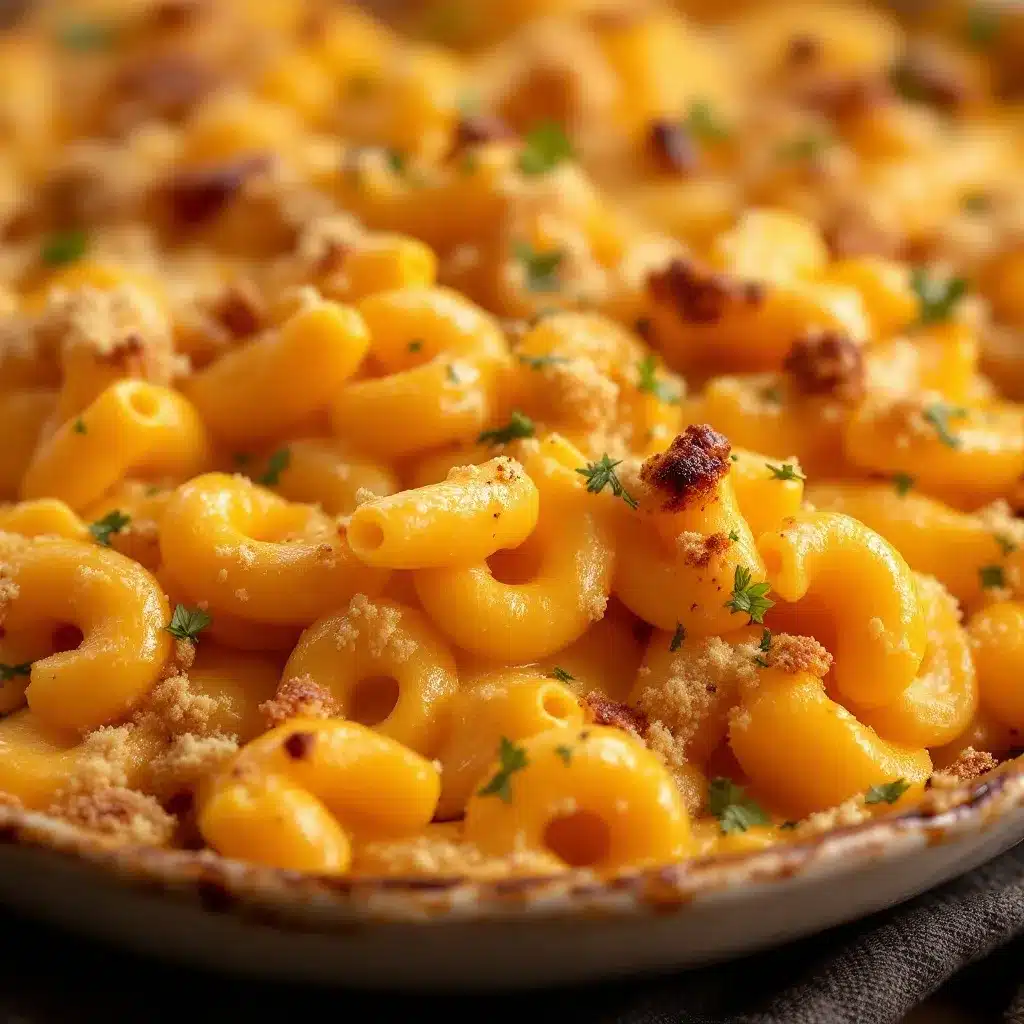
Now, when I pull this Creamy Butternut Squash Mac and Cheese Bake out of the oven, the steam carries this sweet, nutty scent that instantly calms my brain. It is not just dinner. It is a mood. It is the feeling of walking through a pumpkin patch when the air gets crisp and you are ready to go home and do nothing.
The texture is the main event here. You lift the fork and the cheese pulls in long, slow strands. The pasta holds onto the sauce like it is afraid to let go. It is heavy, but in a good way. Like a warm hug from someone who knows you had a long week.
I make this when the leaves are turning brown. I make it when I need something that feels fancy but doesn’t require me to stand over a stove for four hours. It is simple. It is honest. It is the kind of food that makes you close your eyes and just breathe.
Why You’ll Love This Recipe
Let’s be real for a second. Regular mac and cheese is great. But it can get heavy. It can leave you feeling sluggish by 3 PM. This version changes the game because it uses butternut squash as the base for the sauce. You get that incredible creaminess without needing a pound of heavy cream or a cup of flour to thicken it up. The squash does the work for you. It adds body, color, and a subtle sweetness that balances the sharp cheddar perfectly.
Here is why this bake is going to become a staple in your weekly rotation:
- Velvety Texture Without the Guilt: The sauce is blended so smooth you won’t believe it is vegetable-based. It feels indulgent, like a high-end restaurant dish, but it is actually packed with fiber and vitamins.
- Simple, Wholesome Ingredients: You don’t need a fancy grocery store for this. You likely have the squash, the pasta, and the cheese already. It uses pantry staples that you trust, like savory stuffed acorn squash variations, to create a comforting meal.
- Perfect for Fall Gatherings: Whether it is a casual Tuesday night or a Halloween party, this dish fits right in. It pairs beautifully with other seasonal favorites, much like how perfect roasted delicata squash shines on its own, but here it is the star of the pasta dish.
- Crowd-Pleaser Status: Even the pickiest eaters usually can’t tell the difference at first bite. The sweetness of the squash masks the veggie taste, leaving just the creamy, cheesy flavor they love.
- One-Bowl Blend Magic: The secret is in the blender. By pureeing the roasted squash with milk and spices, you create an emulsion that stays smooth even after baking. No lumps. No separation. Just pure comfort.
This recipe isn’t just good—it is the kind that makes you close your eyes after the first bite. It’s comfort food reimagined—healthier, faster, but with the same soul-soothing satisfaction. It is perfect for impressing guests without stress, or turning a simple meal into something memorable.
What Ingredients You Will Need
This recipe uses simple, wholesome ingredients to deliver bold flavor and satisfying texture without the fuss. The magic happens because the butternut squash replaces the traditional roux (butter and flour) usually found in béchamel sauces. This means fewer steps and less chance of lumps forming. We are relying on the natural starches and sugars of the squash to create that thick, luxurious coat for every noodle.
You do not need anything exotic. Here is what you need to gather for this bake:
For the Squash Base
- Butternut Squash: One large squash, peeled and cubed. I recommend buying it already peeled if you can find it, but if not, a sharp knife and some elbow grease will get the job done. Look for a squash that feels heavy for its size—that means it is full of moisture and sweetness.
- Unsalted Butter: Two tablespoons. Just enough to sauté the aromatics and add a little richness to the puree.
- Yellow Onion: One medium onion, finely diced. This adds a savory backbone to the sweet squash.
- Garlic: Three cloves, minced. Don’t skimp on the garlic. It provides the necessary punch to cut through the creaminess.
- Chicken or Vegetable Broth: One cup. Use a low-sodium version so you can control the salt level. Cozy Instant Pot sausage and white bean soup uses a similar broth base, so if you have some leftover, it works here too.
- Spices: One teaspoon of smoked paprika, half a teaspoon of nutmeg, and half a teaspoon of dried thyme. The nutmeg is non-negotiable; it tastes like holiday magic.
For the Cheese Sauce
- Milk: One cup of whole milk. Whole milk gives you the best fat content for a glossy sauce. If you need dairy-free, oat milk works surprisingly well here.
- Sharp Cheddar Cheese: Two cups, freshly shredded. I cannot stress this enough—do not buy pre-shredded cheese. It has anti-caking agents that stop it from melting properly. Buy a block and shred it yourself.
- Monterey Jack Cheese: One cup, freshly shredded. This cheese has a lower melting point and adds that stretchy, gooey texture we crave.
For the Pasta and Topping
- Elbow Macaroni: One pound. Elbows are best because they hold the sauce in their curves. You can use cavatappi or shells if you prefer, but elbows are the classic choice.
- Panko Breadcrumbs: One cup. These give you that crucial crunch on top.
- Garlic Powder: One teaspoon, mixed with the breadcrumbs.
- Optional Garnish: Fresh parsley or chives for a pop of green color.
Equipment Needed
You don’t need a professional kitchen to make this, but having the right tools helps. The most important item is a high-speed blender or a standard blender. You need to get that squash completely smooth. If you use a food processor, it might get too thick and jam the blades. A blender with a tamper is ideal, but you can work around it by adding broth slowly.
You will also need a large stockpot for boiling the pasta. A 12-inch skillet is good for sautéing the onions and garlic. For the bake itself, a 9×13 inch baking dish is standard. If you don’t have one, you can use two smaller casserole dishes.
I also recommend a microplane zester or grater for the nutmeg. Freshly grated nutmeg tastes completely different from the powder in the shaker. It is brighter and more aromatic. It makes a small difference that you will notice.
If you are making the squash from scratch, a sharp chef’s knife and a sturdy cutting board are essential. Butternut squash is hard. Use a rocking motion with your knife to get through the skin. Safety first, please.
For the topping, a small mixing bowl is all you need to toss the breadcrumbs with butter and garlic powder. You can use your hands to mix it, which feels more satisfying than using a spoon anyway.
Preparation Method
Let’s get into the nitty-gritty. This process is straightforward, but timing is everything. You want the pasta ready just as the sauce is ready to combine.
Step 1: Roast the Squash
Preheat your oven to 400°F (200°C). Line a large baking sheet with parchment paper. Peel the butternut squash and remove the seeds. Cut the flesh into 1-inch cubes. Toss them on the baking sheet with a little olive oil, salt, and pepper. Roast for 25-30 minutes until they are tender and slightly caramelized at the edges. This step concentrates the flavor. You are not just boiling them; you are roasting them. This adds a depth of flavor that boiling just can’t match. Let them cool slightly before blending.
Step 2: Make the Squash Puree
Transfer the roasted squash cubes into your blender. Add the milk, half the broth, and the spices (paprika, nutmeg, thyme). Blend on high until completely smooth. This might take a minute. Stop and scrape down the sides if needed. You want a silky, orange liquid. If it is too thick, add the rest of the broth. Taste it now. It should be sweet and savory. Adjust salt if necessary.
Step 3: Sauté the Aromatics
While the squash roasts, melt the butter in a large skillet over medium heat. Add the diced onion and cook for 5 minutes until soft and translucent. Add the minced garlic and cook for another minute until fragrant. Do not burn the garlic. It turns bitter quickly. Pour in a little of the squash puree to deglaze the pan, scraping up any brown bits from the bottom. These bits are flavor bombs.
Step 4: Combine the Sauce
Pour the entire blender mixture into the skillet with the onions. Stir well. Turn the heat to low. Let it simmer gently for 5 minutes. It will thicken slightly. This is your base sauce. It is not the final cheese sauce yet. It is the vegetable foundation.
Step 5: Cook the Pasta
Bring a large pot of salted water to a boil. Add the elbow macaroni. Cook it according to the package directions, but take it out one minute before it is fully al dente. We want it to finish cooking in the oven. Drain the pasta and set it aside. Do not rinse it. The starch helps the sauce stick.
Step 6: Assemble the Bake
In a large mixing bowl, combine the cooked pasta and the warm squash sauce. Stir until every noodle is coated. Now, fold in half of the shredded cheddar and all of the Monterey Jack. The residual heat will start to melt the cheese. Pour this mixture into your greased 9×13 baking dish.
Step 7: Top and Bake
Spread the remaining cheddar cheese evenly over the top. In a small bowl, mix the panko breadcrumbs with garlic powder and melted butter (or olive oil for dairy-free). Sprinkle this mixture over the cheese. Bake at 375°F (190°C) for 20-25 minutes. You want the top to be golden brown and crispy, and the sauce to be bubbling around the edges.
Step 8: Rest and Serve
Let the bake rest for 10 minutes before serving. This allows the sauce to set slightly so it doesn’t run everywhere when you scoop it. It also lets the flavors meld together. Garnish with fresh herbs if you like.
Cooking Tips & Techniques
The biggest mistake people make with vegetable-based mac and cheese is not blending the squash enough. If there are chunks, the sauce will be grainy. You want it to be like custard. If your blender is weak, you may need to strain the puree through a fine-mesh sieve to remove any fibrous bits. It is an extra step, but it guarantees a restaurant-quality texture.
Another tip is about the cheese. Always grate your own cheese. Pre-shredded cheese is coated in cellulose, which is a anti-caking agent. This prevents the cheese from melting smoothly. Instead of a creamy sauce, you get a gritty, separated mess. It is frustrating, but it is a hard lesson I learned early on. Buy a block of sharp cheddar and Monterey Jack and grate it yourself. It takes five minutes and makes a huge difference.
When roasting the squash, do not overcrowd the baking sheet. If the pieces are touching, they will steam instead of roast. You want them to brown. That caramelization adds a nutty flavor that complements the cheese. Spread them out in a single layer with a little space between each cube.
For the pasta, salting the water is crucial. It should taste like the sea. This seasons the pasta from the inside out. Since the sauce is already seasoned, you don’t need to add extra salt to the pasta water, but it helps with texture.
If you are making this ahead of time, you can assemble the bake (without the breadcrumb topping) and refrigerate it. When you are ready to eat, let it come to room temperature for 30 minutes, then bake as directed, adding the breadcrumbs in the last 15 minutes of baking. This prevents the breadcrumbs from getting soggy.
Variations & Adaptations
This recipe is very flexible. You can tweak it to fit your dietary needs or taste preferences.
Gluten-Free Option
Simply swap the elbow macaroni for a gluten-free brand. Brown rice pasta or chickpea pasta works well here. Just be careful not to overcook it, as gluten-free pasta can become mushy faster. Use gluten-free panko breadcrumbs for the topping. You can find these in most grocery stores now.
Dairy-Free Version
Use olive oil instead of butter. Swap the milk for unsweetened oat milk or cashew milk. For the cheese, use a high-quality vegan cheddar and Monterey Jack alternative. Brands like Violife or Daiya have improved significantly and melt reasonably well. You might need to add a teaspoon of nutritional yeast to boost the “cheesy” flavor.
Protein Boost
Add cooked chicken breast, shredded turkey, or crispy bacon bits to the mix. This turns the side dish into a main course. I often add leftover roast chicken from Sunday dinner. It pairs beautifully with the sweet squash. You can also add sautéed kale or spinach for extra greens. The wilted greens add a nice color contrast and earthy flavor.
Spicy Twist
If you like heat, add a pinch of cayenne pepper or red pepper flakes to the sauce. Or, swap the cheddar for a pepper jack cheese. This adds a kick that cuts through the richness of the squash.
Seasonal Swap
In the winter, you can use pumpkin puree instead of butternut squash. It will be slightly sweeter and softer, so you may need less liquid. In the spring, you could try a carrot and ginger version, though the flavor profile will change significantly.
Serving & Storage Suggestions
This bake is best served warm, straight from the oven. The contrast between the hot, gooey interior and the crunchy topping is the best part. Serve it with a simple green salad dressed with a lemon vinaigrette. The acidity of the salad cuts through the richness of the cheese, balancing the meal. A glass of crisp white wine, like a Pinot Grigio, also pairs well.
For leftovers, store the bake in an airtight container in the refrigerator for up to four days. The flavors actually get better after a day or two as they have time to meld. To reheat, you can microwave individual portions for 2-3 minutes. However, the texture of the breadcrumbs may soften. For the best results, reheat in the oven at 350°F (175°C) for 15-20 minutes. This helps crisp up the topping again.
You can also freeze this bake. Assemble it completely, including the topping, and freeze it unbaked. Wrap it tightly in plastic wrap and foil. When ready to eat, thaw it in the fridge overnight and bake as directed, adding 10-15 minutes to the cooking time. The pasta may become slightly softer after freezing, but it is still delicious.
Nutritional Information & Benefits
This dish is not just comfort food; it is also nutritious. Butternut squash is rich in Vitamin A, which is great for eye health and immune function. It is also high in fiber, which aids digestion and keeps you feeling full longer. Compared to traditional mac and cheese, this version has less saturated fat if you use moderate amounts of cheese and rely on the squash for creaminess.
One serving (approximately 1.5 cups) contains roughly 450-500 calories, depending on the cheese and pasta brands used. It provides about 20-25 grams of protein and 60-70 grams of carbohydrates. The fiber content is around 5-7 grams per serving, which is significant.
For those watching their sodium, use low-sodium broth and control the salt added during cooking. The natural sweetness of the squash means you often need less salt to make the dish taste good.
If you have nut allergies, be sure to check your breadcrumb brand, as some are processed in facilities that handle nuts. Oats are a safe alternative for the topping if you use certified gluten-free oats.
Conclusion
This Creamy Butternut Squash Mac and Cheese Bake is more than just a recipe. It is a celebration of autumn flavors in a bowl. It proves that you can eat vegetables and still feel indulgent. The creamy sauce, the cheesy pull, and the crunchy topping create a sensory experience that is hard to beat.
I hope you try this recipe. It is forgiving, delicious, and perfect for sharing. Don’t be afraid to experiment with the spices or add-ins. Make it your own. If you make it, I would love to hear how it turned out. Leave a comment below with your thoughts or any variations you tried.
Share this with a friend who loves mac and cheese. They will be impressed. And remember, cooking is about joy. So enjoy every bite.
Frequently Asked Questions
Can I use fresh butternut squash instead of roasted?
You can, but roasting adds a depth of flavor that boiling or steaming does not. If you use fresh squash, steam it until very tender, then blend it with a little extra milk or broth to get the right consistency. Roasting is worth the extra time.
Why is my cheese sauce separated?
This usually happens if the cheese is added to a sauce that is too hot, or if you use pre-shredded cheese. Always add cheese off the heat or on very low heat. Shred your own cheese to avoid anti-caking agents that prevent proper melting.
Can I make this in a slow cooker?
Yes. Cook the pasta separately. Blend the squash with milk and spices and heat in the slow cooker. Stir in the cheese at the end on the “Keep Warm” setting. Add the pasta and topping at the last minute, or serve the topping on the side.
What pasta works best?
Elbows are classic, but cavatappi, shells, or penne all work well. The key is to choose a pasta with curves or nooks that can hold the thick sauce.
Is this recipe gluten-free?
Not by default, as it uses regular pasta and breadcrumbs. To make it gluten-free, use gluten-free pasta and gluten-free panko breadcrumbs. The rest of the ingredients are naturally gluten-free.
Pin This Recipe!
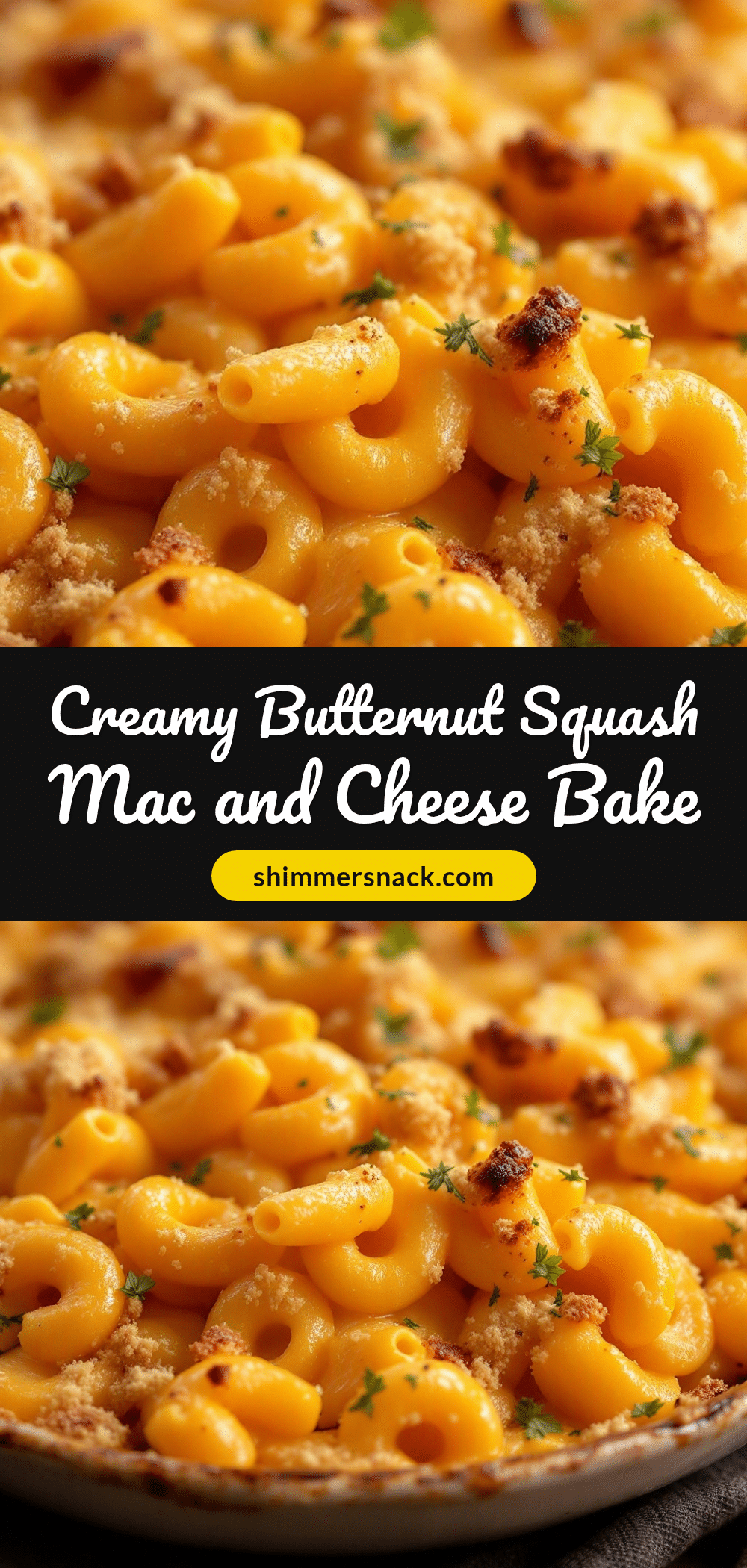
Creamy Butternut Squash Mac and Cheese Bake

A comforting, velvety mac and cheese bake that uses roasted butternut squash as the base for a rich, creamy sauce, eliminating the need for heavy cream or flour while delivering a savory, autumn-inspired meal.
- Prep Time: 20 minutes
- Cook Time: 65 minutes
- Total Time: 85 minutes
- Yield: 8 servings 1x
- Category: Main Course
- Cuisine: American
Ingredients
- 1 large butternut squash, peeled and cubed
- 2 tablespoons unsalted butter
- 1 medium yellow onion, finely diced
- 3 cloves garlic, minced
- 1 cup chicken or vegetable broth (low-sodium)
- 1 teaspoon smoked paprika
- 0.5 teaspoon nutmeg
- 0.5 teaspoon dried thyme
- 1 cup whole milk
- 2 cups sharp cheddar cheese, freshly shredded
- 1 cup Monterey Jack cheese, freshly shredded
- 1 pound elbow macaroni
- 1 cup panko breadcrumbs
- 1 teaspoon garlic powder
- Olive oil, salt, and pepper for roasting squash
- Fresh parsley or chives for garnish (optional)
Instructions
- Preheat oven to 400°F (200°C). Line a baking sheet with parchment paper.
- Toss cubed butternut squash with olive oil, salt, and pepper. Roast for 25-30 minutes until tender and caramelized. Let cool slightly.
- Transfer roasted squash to a blender. Add milk, half the broth, and spices (paprika, nutmeg, thyme). Blend until completely smooth.
- Melt butter in a large skillet over medium heat. Sauté onion for 5 minutes until soft. Add garlic and cook for 1 minute.
- Deglaze the pan with a little squash puree, scraping up brown bits.
- Pour the remaining squash puree into the skillet. Simmer on low for 5 minutes to thicken slightly.
- Boil elbow macaroni in salted water until one minute before al dente. Drain and set aside.
- In a large bowl, combine cooked pasta and warm squash sauce. Fold in half the cheddar and all the Monterey Jack.
- Pour mixture into a greased 9×13 inch baking dish.
- Top with remaining cheddar cheese.
- Mix panko breadcrumbs with garlic powder and melted butter (or olive oil). Sprinkle over the cheese.
- Bake at 375°F (190°C) for 20-25 minutes until top is golden brown and sauce is bubbling.
- Let rest for 10 minutes before serving.
Notes
Always shred your own cheese to avoid anti-caking agents that prevent proper melting. Do not overcrowd the baking sheet when roasting squash to ensure caramelization. For a gluten-free version, use gluten-free pasta and panko. For dairy-free, use oat milk and vegan cheese alternatives.
Nutrition
- Serving Size: 1.5 cups
- Calories: 475
- Sugar: 8
- Sodium: 600
- Fat: 18
- Saturated Fat: 9
- Carbohydrates: 65
- Fiber: 6
- Protein: 22
Keywords: butternut squash, mac and cheese, vegetarian, fall recipes, comfort food, baked pasta, healthy mac and cheese, gluten-free option