Love this? Save it for later!
Share the inspiration with your friends
I burned the pecans every single time until I finally got this right.
It wasn’t even close. The first three times I attempted a winter salad with toasted nuts, I left the pan for “just a second” to grab a knife or check the oven. That second was all it took to turn golden, buttery nuts into bitter, charcoal-stained debris. I threw them out, started over, and repeated the cycle. It was frustrating, honestly. I wanted that crunch. I wanted the earthy depth of toasted pecans to contrast with the sharp, salty feta and the sweet pop of pomegranate arils.
Let’s face it, winter produce can feel heavy. We want comfort, but we also want something that doesn’t weigh us down like a brick. I was trying to create a dish that felt festive enough for a holiday gathering but simple enough for a Tuesday night when I just didn’t have the energy to cook a roast. The solution wasn’t complicated, but the technique required patience I didn’t have at first.
The breakthrough happened when I realized the nuts needed to be toasted separately from the salad assembly, and I needed to keep them moving. Constant motion. Low heat. It sounds basic, but getting the balance right between caramelization and burning is tricky. Once I nailed the toast, everything else clicked. The creamy cheese, the crisp greens, the juicy fruit—it all came together in a way that felt intentional. This crispy pomegranate winter salad with feta and pecans became my go-to. It’s bright, it’s textured, and it actually tastes like winter without feeling like it.
I still keep a close eye on the pan now. Old habits die hard. But the result is worth the vigilance. Every bite has that perfect snap, followed by the melt of cheese and the burst of fruit. It’s a flavor profile I’ve come to rely on, especially when the days are short and the mood needs lifting.
Why You’ll Love This Recipe
This recipe isn’t just another green salad tossed with some fruit and called it a day. It’s a study in texture and contrast, refined through trial and error. I’ve tested this combination dozens of times, adjusting the ratio of oil to vinegar and swapping out greens to see what held up best. The result is a dish that stands on its own as a main course but also shines as an impressive side. Here is why this specific combination works so well:
- Quick & Easy: You can have this on the table in under 20 minutes. The only active time is toasting the nuts and chopping the fruit, which happens while the rest of the ingredients are prepped. It’s perfect for busy weeknights or when you need a quick meal that still feels special.
- Simple Ingredients: You likely have most of this in your kitchen already. Pecans, feta, pomegranates, and basic greens are pantry or fridge staples. No fancy grocery trips needed for obscure items.
- Perfect for Winter Gatherings: This salad bridges the gap between casual and elegant. It’s great for holiday brunches, potlucks, or cozy dinners where you want something light but substantial.
- Crowd-Pleaser: Even people who claim they “don’t like salads” usually love this one. The sweetness of the pomegranate and the richness of the feta appeal to almost everyone.
- Unbelievably Delicious: The texture combo is next-level comfort food. You get the crunch of the nuts, the creaminess of the cheese, the snap of the greens, and the juiciness of the fruit all in one bite.
What makes this crispy pomegranate winter salad with feta and pecans different from the rest is the emphasis on the toasted nuts. Most recipes just sprinkle raw nuts on top. Toasting them changes the entire flavor profile, adding a smoky, buttery note that ties the whole dish together. It’s a small step that makes a huge difference.
Connecting emotionally, this recipe is the kind that makes you close your eyes after the first bite. It’s comfort food reimagined—lighter, faster, but with the same soul-soothing satisfaction. It’s perfect for impressing guests without stress, or turning a simple meal into something memorable. It feels like a hug in a bowl, but fresh.
What Ingredients You Will Need
This recipe uses simple, wholesome ingredients to deliver bold flavor and satisfying texture without the fuss. The beauty of a winter salad is that it relies on the natural qualities of seasonal produce. The pomegranates add sweetness and color, the feta adds salt and creaminess, and the pecans add crunch and depth. Most of these items are available year-round, but winter is when pomegranates are at their peak sweetness.
For the Salad Base
- Arugula (3-4 ounces): I prefer arugula for its peppery bite, which cuts through the richness of the cheese and nuts. Baby spinach is a milder alternative if you prefer something softer.
- Mixed Greens (2-3 ounces): A handful of baby kale or spring mix adds volume and a different texture. It helps balance the heavier ingredients.
- Pomegranate Arils (1 cup): Fresh or frozen arils work well. If using frozen, thaw them slightly so they aren’t icy. Look for bright red, plump seeds for the best flavor.
- Feta Cheese (1/2 cup, crumbled): I recommend using a block of feta and crumbling it yourself rather than buying pre-crumbled. Pre-crumbled often has anti-caking agents that prevent it from melting properly. Look for sheep’s milk feta for a richer taste.
- Cured Apricots (1/4 cup, chopped): This is an optional but highly recommended addition. The chewy sweetness of dried apricots complements the pomegranate beautifully. If you can’t find them, dried cranberries or cherries are good substitutes.
For the Toasted Pecans
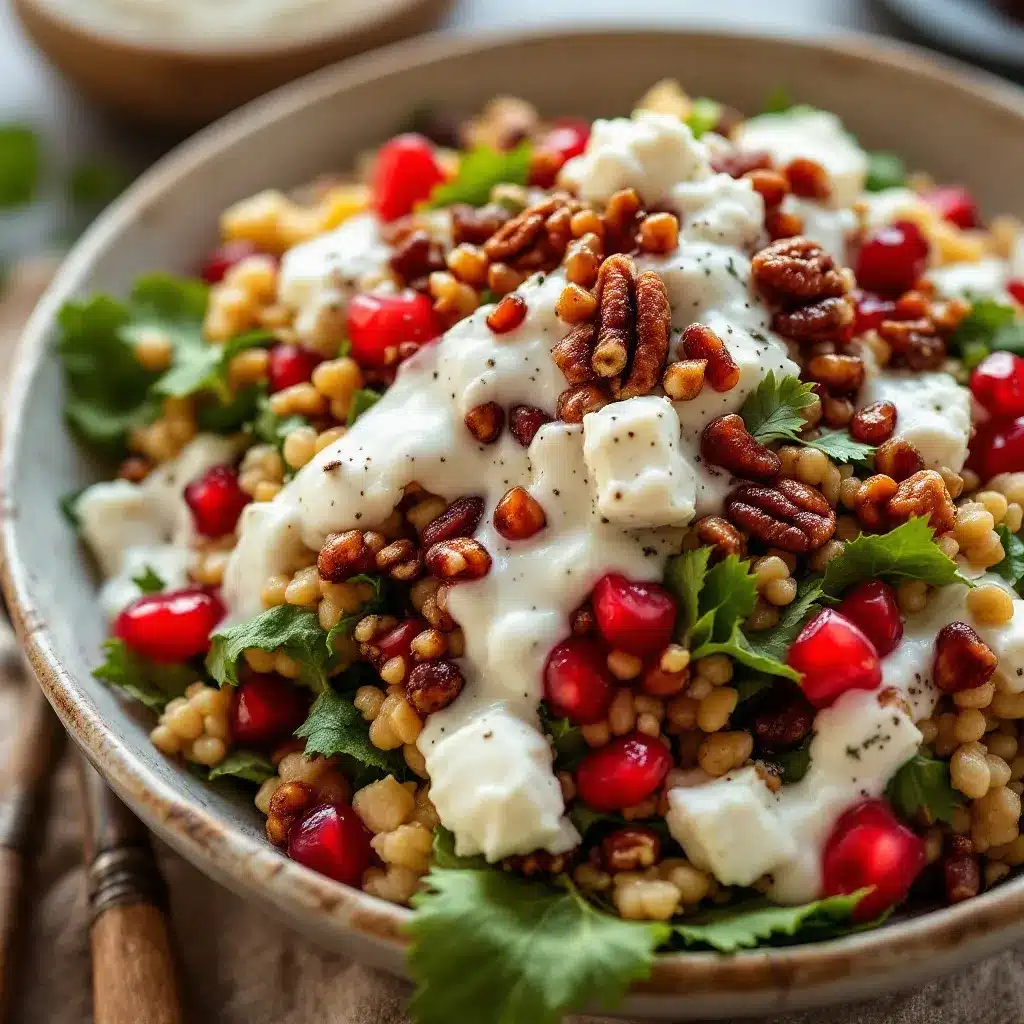
- Pecan Halves (1 cup): Use raw pecans. Pre-toasted pecans won’t have the same fresh crunch. Look for pecans that are not rancid or oily.
- Unsalted Butter (2 tablespoons): Butter adds a rich, nutty flavor as it toasts. Olive oil works too, but butter gives it a more indulgent taste.
- Salt (1/4 teaspoon): A pinch of flaky sea salt added after toasting enhances the nutty flavor.
For the Dressing
- Extra Virgin Olive Oil (3 tablespoons): Use a good quality oil. It’s the base of the dressing, so it should taste good on its own.
- Apple Cider Vinegar (1 tablespoon): The acidity balances the sweetness of the fruit and the saltiness of the cheese. Apple cider vinegar adds a subtle autumnal flavor.
- Honey (1 teaspoon): Just a touch to round out the acidity. Adjust based on how sweet your pomegranates are.
- Dijon Mustard (1/2 teaspoon): This helps emulsify the dressing and adds a mild tang.
- Black Pepper (1/4 teaspoon): Freshly cracked black pepper adds a nice heat.
If you need a dairy-free option, you can swap the feta for a vegan feta alternative made from tofu or almonds. For a nut-free version, you can skip the pecans and add sunflower seeds or pumpkin seeds for crunch.
Equipment Needed
You don’t need much to make this salad, which is part of its appeal. A large mixing bowl is essential for tossing the salad evenly. I use a wide, shallow bowl because it makes it easier to toss without spilling. If you don’t have a large bowl, you can assemble it directly in a serving platter.
A small skillet is required for toasting the pecans. I prefer a stainless steel or cast iron skillet because they distribute heat evenly. Non-stick pans work too, but you need to be careful not to scratch them. A medium heat setting is key; you don’t want the pan so hot that the butter burns immediately.
A microplane or fine grater is helpful if you want to add a bit of orange zest to the dressing. It adds a bright, citrusy note that pairs well with the pomegranate. If you don’t have one, a regular grater works fine, just be careful not to get the white pith.
For storage, an airtight container is best. If you’re prepping this ahead, keep the dressing separate until serving to prevent the greens from wilting. I keep a set of small glass containers for this purpose. They stack well in the fridge and don’t retain odors like plastic can.
Budget-friendly tip: You don’t need fancy salad tongs. A pair of clean kitchen spoons works perfectly for tossing. Also, buying pecans in bulk is often cheaper than buying small jars. Just store them in an airtight container in the fridge to keep them fresh.
Preparation Method
Making this crispy pomegranate winter salad with feta and pecans is straightforward, but timing is everything. You want the nuts to be warm and fragrant when you add them to the salad. Here is how to do it step by step.
Step 1: Prep the Ingredients (5 minutes)
Start by washing and drying your greens. Make sure they are completely dry, or the dressing will slide right off. If using fresh pomegranates, cut them in half and tap the back with a spoon over a bowl to release the arils. If using pre-packaged arils, just measure them out. Crumble the feta cheese into small pieces. Chop the dried apricots if you are using them. Set everything aside in separate bowls or on plates.
Step 2: Toast the Pecans (5-7 minutes)
Heat your skillet over medium heat. Add the butter and let it melt. Once the butter is foaming slightly, add the pecans. Spread them out in a single layer. Cook, stirring constantly, for about 5 to 7 minutes. You want them to turn golden brown and become fragrant. Watch them closely because they can go from perfect to burnt very quickly. Remove the pan from the heat immediately once they are done. Transfer the pecans to a plate lined with a paper towel to drain any excess butter. Sprinkle with a pinch of salt while they are still warm.
Step 3: Make the Dressing (2 minutes)
In a small bowl or jar, combine the olive oil, apple cider vinegar, honey, Dijon mustard, and black pepper. Whisk vigorously or shake the jar until the mixture is emulsified and slightly thickened. Taste and adjust. If it’s too sour, add a bit more honey. If it’s too sweet, add a splash more vinegar.
Step 4: Assemble the Salad (3 minutes)
In your large mixing bowl, add the arugula and mixed greens. Drizzle about half of the dressing over the greens and toss gently to coat. Add the pomegranate arils and chopped apricots. Toss again to distribute the fruit evenly. Transfer the salad to a serving platter.
Step 5: Finish and Serve (2 minutes)
Scatter the crumbled feta cheese over the top. Sprinkle the toasted pecans generously over the salad. Drizzle the remaining dressing over everything. Serve immediately while the pecans are still slightly warm and crisp. If you let it sit too long, the nuts will lose their crunch and the greens will wilt.
Tip: If you are serving this as a side dish, you can double the recipe. If it’s a main course, the quantities listed are perfect for two people. Adjust accordingly.
Cooking Tips & Techniques
Toasting nuts is the most critical part of this recipe, and it’s where most people go wrong. The key is constant stirring. Nuts have a high oil content, which means they conduct heat quickly. If you stop stirring, one side will burn while the other is still pale. I like to keep the pan on the burner but move it off the heat every 30 seconds to prevent hot spots. This gives you more control.
Another common mistake is over-dressing the greens. Winter greens like arugula can become soggy quickly if they are coated in too much liquid. Dress them lightly before adding the heavy toppings like cheese and nuts. This way, the greens stay crisp, and the toppings get their own coating of dressing when you eat them.
When buying pomegranates, look for ones that feel heavy for their size. This indicates they are full of juice. The skin should be deep red and firm. If it’s soft or has cracks, it might be overripe or dried out. If you can’t find fresh pomegranates, frozen arils are a great alternative. Just make sure to thaw them partially so they aren’t freezing cold, which can wilt the greens.
For the feta, I always recommend buying a block and crumbling it yourself. Pre-crumbled feta is coated in potato starch to keep it from clumping, which prevents it from melting and blending with the dressing. Hand-crumbled feta has a better texture and melts slightly into the warm nuts, creating little pockets of creamy flavor.
If you are making this ahead of time, keep the components separate. Store the dressed greens in one container, the fruit and cheese in another, and the nuts in a third. Combine them just before serving. This ensures maximum crunch and freshness. It’s a small extra step, but it makes a huge difference in the final result.
Variations & Adaptations
This recipe is quite versatile, and you can tweak it to suit your preferences or dietary needs. Here are a few variations I’ve tried that work well.
Gluten-Free Option: This recipe is naturally gluten-free, but always check your ingredients. Some pre-crumbled cheeses or dried fruits might have added gluten. Stick to whole, unprocessed ingredients to be safe.
Dairy-Free Option: Swap the feta for a dairy-free alternative. Cashew-based feta works surprisingly well and has a similar tangy flavor. You can also use crumbled tofu seasoned with lemon juice and nutritional yeast for a protein boost.
Protein-Packed Version: Add grilled chicken breast or roasted chickpeas to make this a heartier meal. Spiced chickpeas with cumin and paprika would complement the pomegranate beautifully. Grilled chicken adds a savory element that balances the sweetness.
Seasonal Swap: In the spring, you can swap the pomegranate for fresh strawberries or raspberries. In the summer, try adding fresh figs. The concept remains the same, but the flavor profile changes with the seasons. I love using figs in the fall; they add a different kind of sweetness that pairs well with the pecans.
Spicy Twist: Add a pinch of red pepper flakes to the dressing or sprinkle some crushed red pepper over the finished salad. The heat contrasts nicely with the creamy feta and sweet fruit. It adds a layer of complexity that I find really satisfying.
I once tried adding candied ginger to this salad, and it was a hit. The spicy-sweet flavor of the ginger complemented the pomegranate and pecans in a way I didn’t expect. It’s worth experimenting with if you like bold flavors.
Serving & Storage Suggestions
This salad is best served immediately after assembly. The contrast between the warm, toasted pecans and the cool, crisp greens is what makes it special. If you are hosting a dinner party, you can prep all the ingredients ahead of time and assemble the salad just before serving. This keeps everything fresh and crisp.
For storage, any leftovers should be kept in an airtight container in the refrigerator. The dressed greens will last for about one to two days. However, the texture will change, and the greens may become slightly wilted. The pecans will lose their crunch if they are stored with the salad, so it’s best to store them separately. If you have leftover toasted pecans, keep them in a sealed container at room temperature for up to a week.
To reheat, you don’t really want to reheat a salad. But if you want to warm the pecans again, you can toast them briefly in a dry pan or the oven. Add them to the salad just before eating. The feta and fruit will keep well in the fridge, but the overall dish is best fresh.
This salad pairs well with a variety of main courses. It’s great alongside roasted meats, grilled fish, or even a hearty grain bowl. For beverages, a crisp white wine like Sauvignon Blanc or a light red like Pinot Noir complements the flavors well. If you prefer non-alcoholic options, sparkling water with a splash of lemon juice is refreshing and clean.
The flavors develop over time, especially the sweetness of the pomegranate melding with the dressing. If you let it sit for an hour, the salad becomes more cohesive, though it loses some of its crispness. It’s a trade-off between convenience and texture.
Nutritional Information & Benefits
This salad is not only delicious but also packed with nutrients. Pomegranates are rich in antioxidants, particularly punicalagins, which have anti-inflammatory properties. They are also a good source of vitamin C and fiber. Pecans are high in healthy monounsaturated fats, which are good for heart health. They also provide magnesium and zinc, which support immune function.
Feta cheese adds protein and calcium to the dish. While it is higher in sodium, a little goes a long way, so you can enjoy the flavor without overdoing it. Arugula is low in calories but high in vitamins K and A, which support bone health and vision. The olive oil in the dressing provides additional healthy fats and helps absorb the fat-soluble vitamins from the vegetables.
Overall, this salad is a balanced meal that provides a good mix of macronutrients. It’s gluten-free and can be made dairy-free or vegan with simple substitutions. It’s a great option for anyone looking for a healthy, satisfying meal that doesn’t compromise on flavor. From a wellness perspective, it’s a light yet nourishing choice that supports overall health.
Conclusion
This crispy pomegranate winter salad with feta and pecans is a dish that I think you’ll come back to again and again. It’s simple, but the combination of flavors and textures makes it feel special. I love how it balances sweetness, saltiness, and crunch in every bite. It’s a testament to the idea that good cooking doesn’t have to be complicated.
I encourage you to try this recipe and customize it to your liking. Add more fruit, swap the cheese, or adjust the dressing to your taste. Cooking is about experimentation, and this salad is a great canvas for that. I’d love to hear how it turns out for you. Leave a comment below with your thoughts or any variations you tried.
If you make this, share a photo on social media and tag me. I love seeing how you interpret recipes. And if you have friends who love winter salads, share this post with them. It’s a dish that’s perfect for sharing.
Thanks for reading, and happy cooking. I hope this salad brings a little brightness to your winter table.
Frequently Asked Questions
Can I use dried cranberries instead of pomegranate arils?
Yes, dried cranberries are a great substitute. They offer a similar tartness and chewy texture. Just keep in mind that they are sweeter than fresh pomegranate arils, so you might want to reduce the honey in the dressing slightly.
How do I keep the pecans crunchy?
The key is to toast them just before serving and store them separately if you are prepping ahead. Moisture is the enemy of crunch, so keep them in an airtight container until you are ready to add them to the salad.
Can I make this salad ahead of time?
You can prep the ingredients ahead of time, but it’s best to assemble the salad just before serving. If you dress the greens too early, they will wilt. Keep the dressing, greens, fruit, cheese, and nuts separate until you are ready to eat.
What type of feta works best?
Sheep’s milk feta has a richer, creamier flavor that pairs well with the sweetness of the pomegranate. However, cow’s milk feta is also a good option if you prefer a tangier taste. Avoid pre-crumbled feta if possible.
Is this salad gluten-free?
Yes, this salad is naturally gluten-free. Just make sure to check the labels on any packaged ingredients like dried fruit or cheese to ensure they haven’t been processed in a facility that handles gluten.
Pin This Recipe!
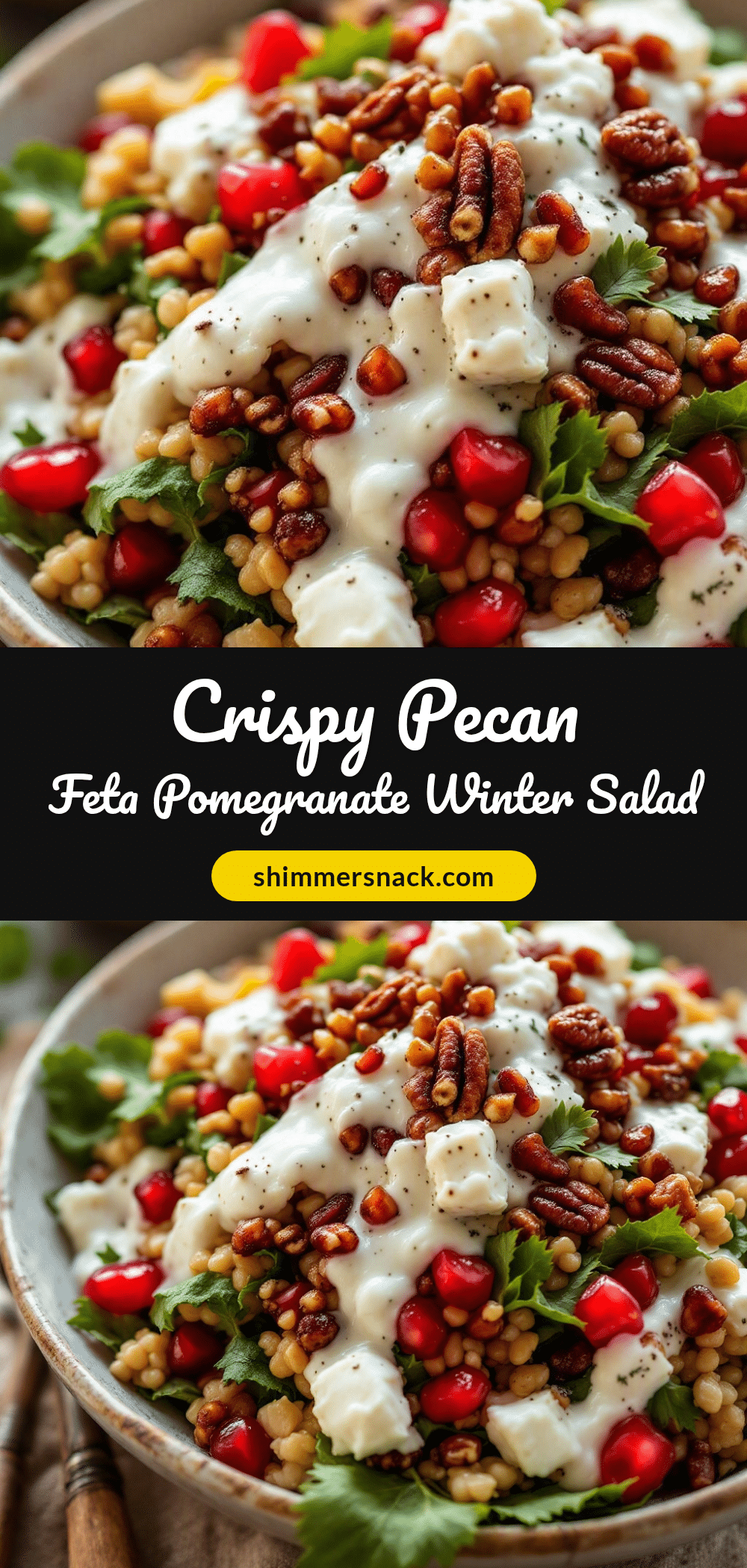
Crispy Pomegranate Winter Salad with Feta and Pecans
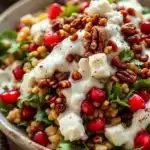
A bright, textured winter salad featuring peppery arugula, sweet pomegranate arils, salty feta cheese, and perfectly toasted buttery pecans. This dish offers a perfect balance of flavors and is ready in under 20 minutes.
- Prep Time: 5 minutes
- Cook Time: 7 minutes
- Total Time: 12 minutes
- Yield: 2 servings 1x
- Category: Salad
- Cuisine: American
Ingredients
- 3–4 ounces arugula
- 2–3 ounces mixed greens (baby kale or spring mix)
- 1 cup pomegranate arils (fresh or frozen)
- 1/2 cup feta cheese, crumbled
- 1/4 cup cured apricots, chopped (optional)
- 1 cup raw pecan halves
- 2 tablespoons unsalted butter
- 1/4 teaspoon flaky sea salt
- 3 tablespoons extra virgin olive oil
- 1 tablespoon apple cider vinegar
- 1 teaspoon honey
- 1/2 teaspoon Dijon mustard
- 1/4 teaspoon freshly cracked black pepper
Instructions
- Wash and thoroughly dry the arugula and mixed greens. If using fresh pomegranates, cut in half and tap to release arils. Crumble feta and chop apricots. Set aside.
- Heat a small skillet over medium heat. Add butter and melt until foaming. Add pecans in a single layer and cook, stirring constantly, for 5-7 minutes until golden brown and fragrant.
- Immediately remove pecans from heat and transfer to a paper towel-lined plate to drain excess butter. Sprinkle with salt while warm.
- In a small bowl or jar, whisk together olive oil, apple cider vinegar, honey, Dijon mustard, and black pepper until emulsified. Adjust sweetness or acidity to taste.
- In a large mixing bowl, toss greens with about half of the dressing. Add pomegranate arils and apricots, tossing gently to distribute.
- Transfer salad to a serving platter. Top with crumbled feta and toasted pecans. Drizzle with remaining dressing and serve immediately.
Notes
Toast pecans separately and keep them in an airtight container until serving to maintain crunch. Do not dress greens too early to prevent wilting. For a dairy-free version, swap feta for vegan alternatives. For a nut-free version, use sunflower or pumpkin seeds.
Nutrition
- Serving Size: 2 servings
- Calories: 450
- Sugar: 14
- Sodium: 580
- Fat: 38
- Saturated Fat: 10
- Carbohydrates: 22
- Fiber: 5
- Protein: 12
Keywords: winter salad, pomegranate salad, feta salad, toasted pecans, healthy salad, quick dinner, gluten-free, holiday side dish