Love this? Save it for later!
Share the inspiration with your friends
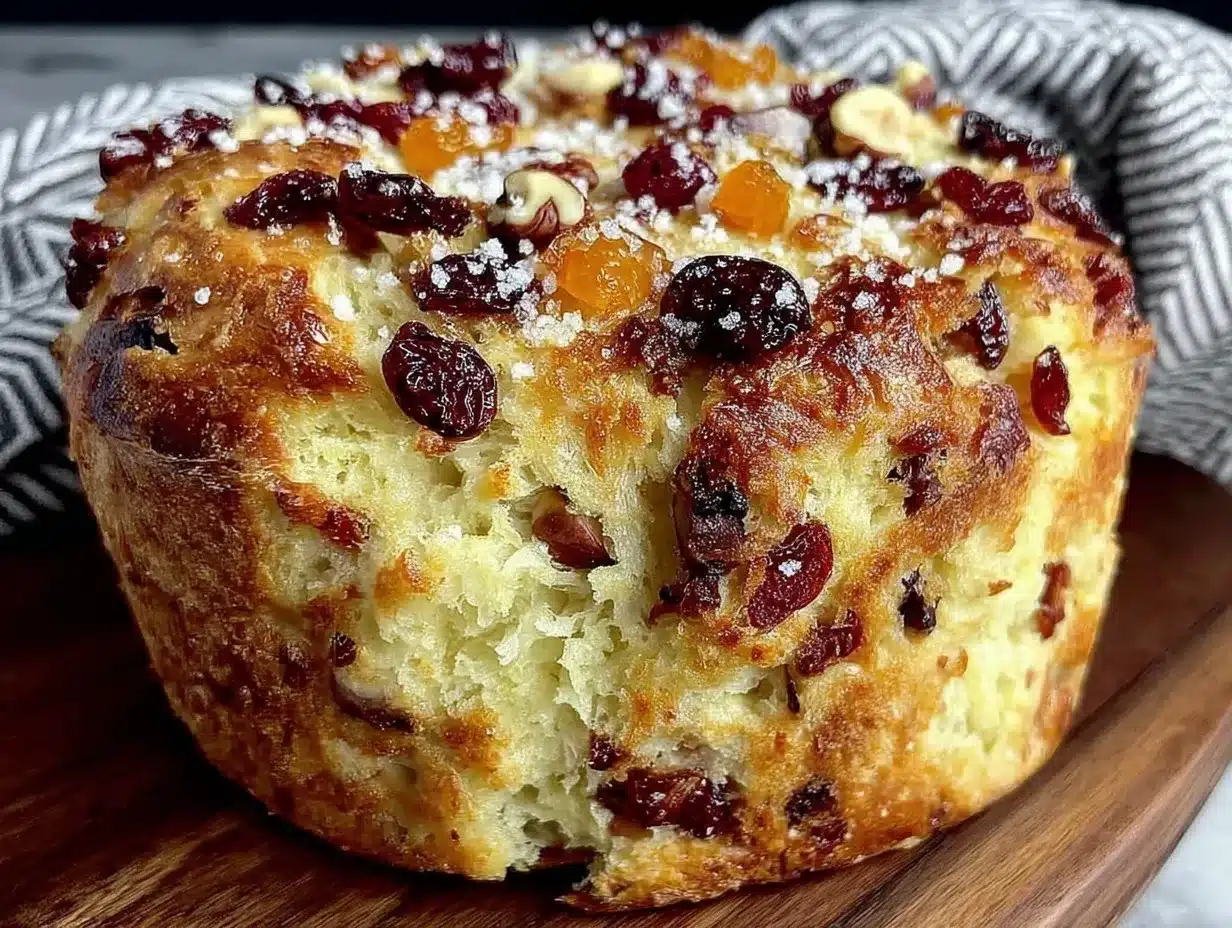
“You know that moment when a simple smell can throw you back in time?” Well, that happened to me last spring. I was wandering through a local Italian market on a bright Saturday morning, and the scent of warm, sweet bread filled the air. It wasn’t just any bread—it was this incredible fluffy Italian Easter bread with candied fruits and nuts, sitting pretty in a wicker basket by the window. I wasn’t expecting to find such a treasure tucked away in that corner, but there it was, calling me in like an old friend.
Honestly, I almost forgot my shopping list as I chatted with the shop owner, who shared how this bread is a springtime staple in her family. She told me how it’s more than a bread—it’s a symbol of celebration, tradition, and community. That day, I left with not only a loaf but also the recipe scribbled on a folded note. I made a bit of a mess trying it out myself—the dough stuck to my fingers, and I forgot to set the timer once—but the result was beyond worth it. The bread was soft and airy, with just the right sweetness from candied fruits and a satisfying crunch from toasted nuts.
Maybe you’ve been there—wanting to bake something festive but not too complicated, something that feels like a warm hug from the past. This fluffy Italian Easter bread recipe is exactly that kind of comfort, and I can’t wait for you to make it your own.
Why You’ll Love This Recipe
After making this fluffy Italian Easter bread with candied fruits and nuts several times, I have to say it’s become a go-to for holiday mornings and special occasions alike. It’s that kind of recipe you can trust to impress without stress.
- Quick & Easy: You can have this bread ready in about 3 hours total, including rising time—a breeze for a weekend baking project.
- Simple Ingredients: No fancy or hard-to-find items here. Pantry staples like flour, sugar, and yeast combine with easily sourced candied fruits and nuts.
- Perfect for Easter & More: This bread brings festive flair to Easter brunches, but honestly, it’s great any time you want a sweet, soft treat.
- Crowd-Pleaser: Kids love the colorful candied fruits, and adults appreciate the nutty crunch and soft texture.
- Unbelievably Delicious: The subtle sweetness and rich texture make every bite feel like a celebration.
What makes this Italian Easter bread stand out? It’s all about balancing that signature fluffiness with bursts of candied fruit sweetness and toasted nut crunch. The secret lies in a slightly enriched dough that’s gentle to work with but yields a tender crumb. Plus, the traditional braided shape adds a beautiful, rustic touch that’s as charming as it is tasty.
Honestly, this recipe isn’t just another holiday bread—it’s the kind of loaf that makes you close your eyes after the first bite and smile. Whether you’re baking for family, friends, or just indulging yourself, it’s a recipe that keeps coming back to your kitchen year after year.
What Ingredients You Will Need
This fluffy Italian Easter bread recipe uses straightforward ingredients that come together to create a soft, flavorful loaf. Most are pantry staples, and you can swap a few items if needed without losing the magic.
- All-purpose flour – 4 cups (480 g), the backbone of the bread for structure and softness.
- Granulated sugar – 1/2 cup (100 g), for gentle sweetness without overpowering.
- Active dry yeast – 2 1/4 teaspoons (one packet), to give the bread its signature rise and fluffiness.
- Warm whole milk – 1 cup (240 ml), warmed to about 110°F (43°C), helps activate the yeast and enriches the dough.
- Unsalted butter – 1/4 cup (60 g), softened, adds richness and tenderness.
- Large eggs – 2, room temperature, for moisture and structure.
- Salt – 1 teaspoon, balances sweetness and enhances flavor.
- Candied fruits mix – 3/4 cup (120 g), chopped, such as citron, orange peel, and cherries. I recommend looking for a brand that uses real fruit for the best texture.
- Chopped nuts – 1/2 cup (60 g), toasted walnuts or almonds add a lovely crunch and depth.
- Vanilla extract – 1 teaspoon, for subtle aromatic warmth.
- Optional: Zest of one lemon or orange for a fresh citrus note.
Feel free to swap whole milk with almond or oat milk for a dairy-free twist. For gluten sensitivity, almond flour could be experimented with, but keep in mind the texture will differ quite a bit. Fresh seasonal fruits like chopped dried apricots can replace candied fruits if you want a less sugary option.
Equipment Needed
- Large mixing bowl: For combining and proofing the dough comfortably. I like glass or stainless steel for easy cleaning.
- Measuring cups and spoons: Precise measurements are key for the perfect rise.
- Stand mixer with dough hook (optional): Helpful if you want to save some arm strength, but kneading by hand works just fine.
- Baking sheet or loaf pan: You can shape the bread into a braid on a baking sheet or use a round pan for a different look.
- Kitchen towel or plastic wrap: To cover the dough while it rises, keeping it moist and warm.
- Pastry brush: For brushing egg wash to get that shiny golden crust.
If you don’t have a stand mixer, I recommend just using your hands—it’s a wonderfully tactile experience, and honestly, kneading the dough can be a bit of a stress reliever. For those on a budget, any basic mixing bowl and baking sheet will do; no fancy equipment needed.
Preparation Method
- Activate the yeast: In a small bowl, combine the warm milk (110°F/43°C) with 1 tablespoon of sugar and the active dry yeast. Let it sit for about 5-7 minutes until it’s foamy. This step ensures your yeast is alive and ready to work its magic.
- Mix the dough: In a large bowl, whisk together the flour, remaining sugar, and salt. Add the softened butter, eggs, vanilla extract, and optional citrus zest. Pour in the yeast mixture. Stir with a wooden spoon until the dough begins to come together.
- Knead the dough: Transfer the dough to a lightly floured surface. Knead for 8-10 minutes until smooth and elastic. If you’re using a stand mixer, knead with the dough hook on medium speed for about 6 minutes. The dough should be soft but not sticky. If it’s too sticky, sprinkle a little flour, but be careful not to add too much.
- Incorporate fruits and nuts: Gently fold in the chopped candied fruits and toasted nuts until evenly distributed. This is where your bread gets its festive color and delightful texture.
- First rise: Place the dough in a greased bowl, cover with a kitchen towel or plastic wrap, and let it rise in a warm spot for 1 to 1.5 hours, or until doubled in size. I like to set mine near a sunny window or on top of the fridge.
- Shape the bread: Punch down the dough gently to release air. Divide it into three equal pieces. Roll each into a long strand about 16 inches (40 cm) long. Braid the strands loosely and pinch the ends together to seal.
- Second rise: Place the braid on a parchment-lined baking sheet. Cover again and let it rise for 30-40 minutes until puffy.
- Egg wash & bake: Preheat the oven to 350°F (175°C). Brush the bread with beaten egg for a shiny, golden crust. Bake for 25-30 minutes, rotating halfway, or until the top is deep golden and a skewer inserted comes out clean.
- Cool: Let the bread cool on a wire rack for at least 30 minutes before slicing. This prevents a doughy texture and lets flavors settle.
If you notice the bread browning too fast, tent it loosely with foil. Also, don’t skip the egg wash—it’s worth the extra step for that irresistible crust.
Cooking Tips & Techniques
Working with enriched dough can be a bit tricky, but here are some tips I’ve learned through trial and error that make this fluffy Italian Easter bread a breeze:
- Yeast activation: The milk temperature is crucial. Too hot, and you kill the yeast; too cold, and it won’t activate. Aim for that warm, bathwater feel around 110°F (43°C).
- Kneading by hand: If you’re new to kneading, think of it like folding and pressing the dough repeatedly. It builds gluten, which gives the bread its fluffy structure. Don’t rush this part.
- Incorporating fruits and nuts: Fold them in gently. Overmixing after adding these can bruise the fruit or break nuts into tiny bits, which affects texture.
- Proofing environment: Dough loves warmth and humidity. If your kitchen is cold, place the dough inside an oven with just the light on, or near a warm appliance.
- Egg wash application: Brush gently to avoid deflating the risen dough. Use a light hand for an even, glossy finish.
- Don’t rush cooling: Cutting too soon can make the bread gummy. Patience here pays off.
Once, I accidentally left my dough uncovered during the rise—hello, dry crust! Learned the hard way that keeping it well-covered is non-negotiable for softness.
Variations & Adaptations
This Italian Easter bread recipe is flexible and can be tailored to your taste or dietary needs.
- Gluten-Free Version: Try a blend of gluten-free flours like rice and tapioca flour. Add xanthan gum for structure and increase the liquid slightly. The texture will be different but still delicious.
- Vegan Adaptation: Replace butter with coconut oil or vegan margarine, use plant-based milk, and swap eggs for flax eggs (1 tablespoon flaxseed meal + 3 tablespoons water per egg).
- Flavor Twist: Add spices like cinnamon or nutmeg for warmth, or swap candied fruits for dried cranberries and orange zest for a fresh burst.
- Cooking method: Instead of braiding, form small rolls or buns for individual servings, adjusting baking time accordingly.
- Nut-Free Option: Omit nuts or replace with sunflower seeds or pumpkin seeds for crunch without allergens.
One time, I swapped in dried apricots and toasted pecans for a fall-inspired spin—it was a hit at my book club! Feel free to get creative and make it your own.
Serving & Storage Suggestions
This bread is best enjoyed fresh but also holds up well for a couple of days.
- Serving: Serve at room temperature, sliced thick with a smear of butter or honey. It pairs beautifully with coffee or a light herbal tea.
- Storage: Wrap tightly in plastic wrap or store in an airtight container. It stays fresh for up to 3 days at room temperature.
- Freezing: Slice before freezing for easy grab-and-go portions. Thaw at room temperature or warm gently in the oven at 300°F (150°C) for 5-7 minutes.
- Flavor development: The bread softens and flavors meld beautifully after a day, making it great for next-day breakfasts or snacks.
Nutritional Information & Benefits
One slice (about 80g) of this fluffy Italian Easter bread contains approximately:
| Calories | 220 |
|---|---|
| Carbohydrates | 40g |
| Protein | 5g |
| Fat | 5g |
| Fiber | 1.5g |
| Sugar | 12g |
The candied fruits provide antioxidants and natural sweetness, while the nuts add heart-healthy fats and protein. This bread fits well into a balanced diet when enjoyed in moderation. For those watching sugar intake, reducing the candied fruits or substituting with unsweetened dried fruit is a good option.
Conclusion
Fluffy Italian Easter bread with candied fruits and nuts isn’t just a recipe—it’s a little celebration wrapped in dough. It brings together warmth, tradition, and a touch of sweetness that makes every bite special. Whether it’s your first time making it or you’ve been baking this bread for years, it’s easy to customize to your taste and occasion.
I love how this bread fills the kitchen with a comforting aroma and brightens any table with its festive colors. Honestly, every time I make it, I’m reminded of those sunny market mornings and the joy of sharing something homemade.
If you try this recipe, I’d love to hear how it turns out for you—feel free to share your tweaks or photos in the comments below. Here’s to many happy baking adventures ahead!
Frequently Asked Questions
Can I make this bread ahead of time?
Yes! You can prepare the dough the night before and let it rise slowly in the fridge overnight. Just bring it back to room temperature before shaping and baking.
What if I don’t have candied fruits?
You can substitute with dried fruits like raisins, currants, or chopped dried apricots. Just keep in mind that dried fruits are less sweet and may change the texture slightly.
How do I know when the bread is fully baked?
The crust should be deep golden brown, and a skewer inserted in the center should come out clean. The loaf should sound hollow when tapped on the bottom.
Can I use instant yeast instead of active dry yeast?
Yes, instant yeast works fine. Use about 2 teaspoons and mix it directly with the dry ingredients, then add warm milk and other wet ingredients.
How long does the dough need to rise?
Typically, the first rise takes about 1 to 1.5 hours until doubled in size, and the second rise after shaping takes another 30 to 40 minutes. Rise times can vary depending on room temperature.
By the way, if you enjoy baking breads with rich textures, you might appreciate the tips I shared in my soft and chewy cinnamon rolls post. Also, this Italian Easter bread pairs wonderfully with a simple homemade limoncello lemon custard for a fresh, zesty twist at dessert or brunch.
Pin This Recipe!
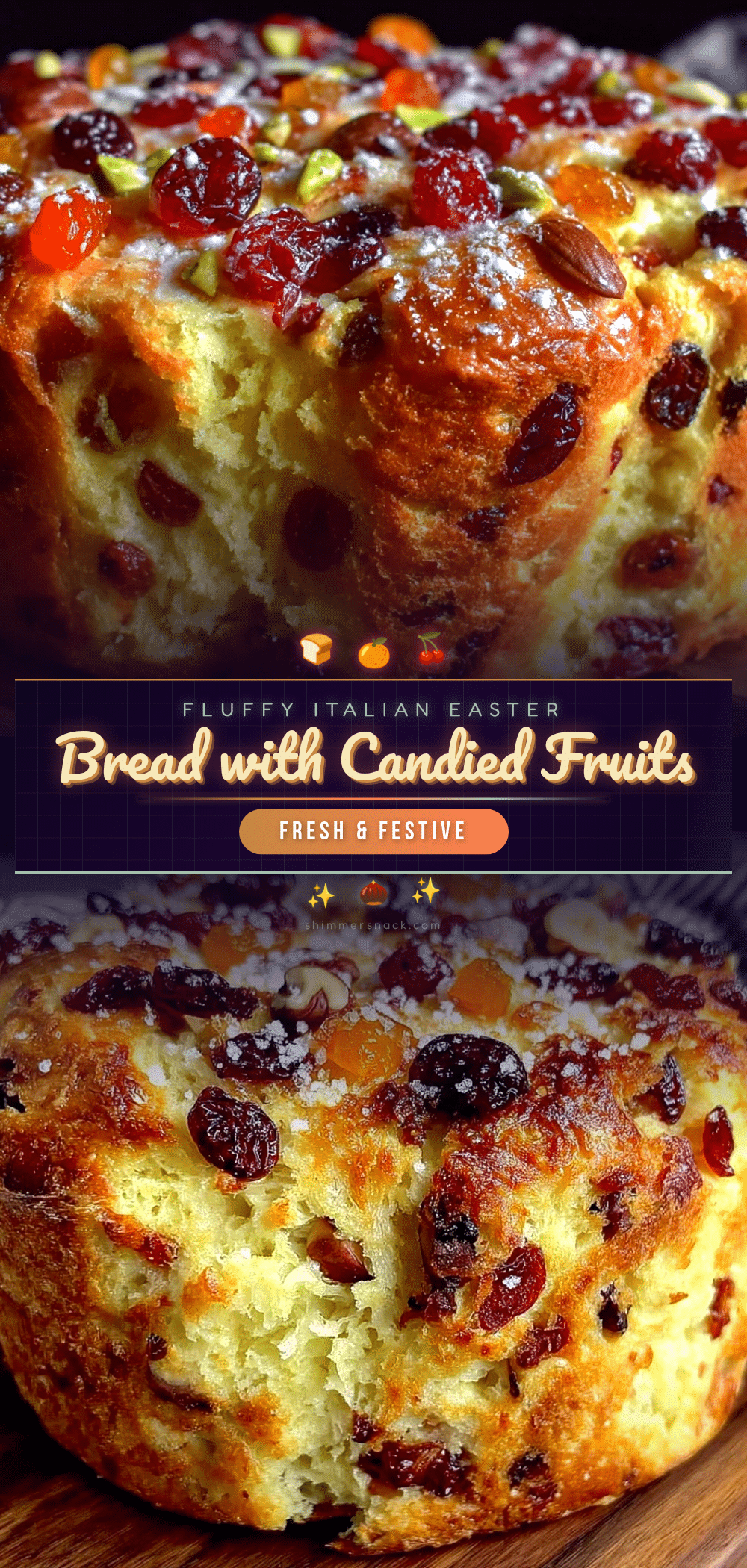
Fluffy Italian Easter Bread Recipe with Candied Fruits and Nuts Easy and Perfect

A soft, airy Italian Easter bread enriched with candied fruits and toasted nuts, perfect for festive occasions and holiday mornings. This recipe balances subtle sweetness with a tender crumb and a beautiful braided shape.
- Prep Time: 30 minutes
- Cook Time: 30 minutes
- Total Time: 3 hours
- Yield: 1 loaf (about 12 servings) 1x
- Category: Bread
- Cuisine: Italian
Ingredients
- 4 cups all-purpose flour (480 g)
- 1/2 cup granulated sugar (100 g)
- 2 1/4 teaspoons active dry yeast (one packet)
- 1 cup warm whole milk (240 ml), about 110°F (43°C)
- 1/4 cup unsalted butter (60 g), softened
- 2 large eggs, room temperature
- 1 teaspoon salt
- 3/4 cup candied fruits mix (120 g), chopped (e.g., citron, orange peel, cherries)
- 1/2 cup chopped nuts (60 g), toasted walnuts or almonds
- 1 teaspoon vanilla extract
- Optional: zest of one lemon or orange
Instructions
- Activate the yeast: In a small bowl, combine warm milk (110°F/43°C) with 1 tablespoon sugar and active dry yeast. Let sit 5-7 minutes until foamy.
- Mix the dough: In a large bowl, whisk flour, remaining sugar, and salt. Add softened butter, eggs, vanilla extract, and optional citrus zest. Pour in yeast mixture and stir until dough begins to form.
- Knead the dough: On a lightly floured surface, knead 8-10 minutes until smooth and elastic. Or use a stand mixer with dough hook on medium speed for 6 minutes. Dough should be soft but not sticky.
- Incorporate fruits and nuts: Gently fold in chopped candied fruits and toasted nuts evenly.
- First rise: Place dough in greased bowl, cover with towel or plastic wrap, and let rise in warm spot 1 to 1.5 hours until doubled.
- Shape the bread: Punch down dough, divide into three equal pieces. Roll each into 16-inch strands. Braid loosely and pinch ends to seal.
- Second rise: Place braid on parchment-lined baking sheet, cover, and let rise 30-40 minutes until puffy.
- Egg wash & bake: Preheat oven to 350°F (175°C). Brush bread with beaten egg. Bake 25-30 minutes, rotating halfway, until deep golden and skewer comes out clean.
- Cool: Let bread cool on wire rack at least 30 minutes before slicing.
Notes
Milk temperature is crucial for yeast activation; aim for about 110°F (43°C). Knead dough until smooth and elastic but avoid adding too much flour. Fold fruits and nuts gently to avoid bruising. Cover dough during rises to prevent dry crust. Use egg wash for a shiny golden crust. Cool bread fully before slicing to avoid gummy texture. Tent with foil if browning too fast.
Nutrition
- Serving Size: 1 slice (about 80g)
- Calories: 220
- Sugar: 12
- Fat: 5
- Carbohydrates: 40
- Fiber: 1.5
- Protein: 5
Keywords: Italian Easter bread, fluffy bread, candied fruits bread, nut bread, holiday bread, braided bread, festive bread