Love this? Save it for later!
Share the inspiration with your friends
Introduction
“I never thought vegetable scraps could lead to anything special until last September,” I confessed to my friend as we stood by the kitchen sink, surrounded by an eclectic mix of wilted kale stems, tomato tops, and onion skins. It was one of those late summer days when the garden was winding down, and my fridge was full of leftovers that didn’t quite make the cut for dinner. Honestly, I almost tossed them all into the compost, but something about that pile of scraps whispered, “Don’t waste me.”
That evening, with a cracked ceramic pot handed down from my grandmother—who, by the way, swore by “waste nothing” cooking—I threw the colorful bits into simmering water. The sizzle, the gentle bubbling, and the aroma that filled the kitchen reminded me of lazy Sunday afternoons spent helping my neighbor, Mrs. Calderon, who always had a pot of homemade broth simmering on her stove. Maybe you’ve been there too, where the simplest kitchen moments turn into treasured memories.
What started as an experiment turned into a ritual. That first batch of wholesome end-of-summer vegetable stock was rich, comforting, and surprisingly complex. It’s become my go-to base for soups, risottos, and even sauces, especially when the garden’s bounty starts to fade, and I’m left with nothing but scraps. Let me tell you, this recipe has saved many meals and made me feel like a kitchen magician—transforming what others might throw away into pure gold.
Why You’ll Love This Recipe
Making vegetable stock from scraps isn’t just about being thrifty—it’s about making something delicious and nourishing out of what you already have. After many tries, here’s why this wholesome end-of-summer vegetable stock has earned a permanent spot in my cooking routine:
- Quick & Easy: You can have this stock simmering in under an hour, perfect for those impromptu cooking sessions when you need a flavorful base fast.
- Simple Ingredients: No special trips to specialty stores; your kitchen scraps and pantry staples are all you need.
- Perfect for Seasonal Cooking: It captures the essence of late summer produce, making it ideal for cozy fall soups and stews.
- Crowd-Pleaser: The rich, layered flavors consistently impress family and friends—even those who claim they don’t like vegetable broth.
- Unbelievably Delicious: The natural sweetness from carrot peels, the earthiness of mushroom stems, and the subtle tang of tomato tops create a stock that feels hearty and soulful.
What makes this recipe stand apart is the way it respects the ingredients’ seasonality and embraces imperfection. You don’t need perfect vegetables, just thoughtful scraps. Plus, I’ve tested it thoroughly (including one frantic night when I almost ran out of broth for my creamy mushroom risotto), and trust me—it works every time. This isn’t just another stock recipe; it’s the one that brings warmth and depth to your meals without fuss.
What Ingredients You Will Need
This wholesome end-of-summer vegetable stock recipe uses simple, wholesome ingredients to deliver bold flavor and satisfying texture without the fuss. Most of these are pantry staples or scraps you likely have on hand. The beauty is in the flexibility—feel free to mix and match based on what’s left in your kitchen.
- Vegetable Scraps (about 6 cups / 1.4 liters): peels, ends, and trimmings from carrots, celery, onions, tomatoes, bell peppers, zucchini, and mushrooms
- Onion: 1 medium onion, quartered (adds depth and natural sweetness)
- Carrots: 2 medium carrots, peeled and chopped (or just use peelings)
- Celery stalks: 2 stalks, roughly chopped (for that classic savory backbone)
- Garlic: 3 cloves, smashed (gives a gentle aromatic punch)
- Fresh herbs: 2 sprigs thyme, 1 bay leaf, and a handful of parsley stems (optional but recommended for complexity)
- Black peppercorns: 1 teaspoon whole (adds a subtle warmth)
- Water: 8 cups (2 liters) filtered or spring water
- Olive oil: 1 tablespoon (optional, for sautéing scraps before simmering to boost flavor)
If you want, you can add a splash of apple cider vinegar (about 1 teaspoon) to help extract minerals and nutrients from the vegetables. I recommend using organic, firm vegetables whenever possible, but honestly, this recipe shines because it makes use of what you have, not what you need to buy. For mushroom stems, I often save the ends from my garlic mushroom pasta nights to add a rich umami note.
Equipment Needed

- Large stockpot or heavy-bottomed pot: At least 6-quart (5.7 liters) capacity for even simmering. I prefer enameled cast iron for its heat retention but a stainless steel pot works fine.
- Fine mesh strainer or cheesecloth: To strain the stock and remove all the solids for a clear broth. I use a reusable nylon strainer to avoid waste.
- Cutting board and sharp knife: For chopping veggies and scraps. Keeping a dedicated board for scraps helps speed things up.
- Measuring cups and spoons: For accurate water and seasoning additions.
- Large bowl or container: To collect and store your vegetable scraps ahead of time. I keep a zip-top bag in the freezer for scraps if I’m not making stock immediately.
If you don’t have a large stockpot, a slow cooker can be a handy alternative—you can set it and forget it for several hours. Just be sure to strain carefully to avoid any bits in your finished stock. Also, cleaning your strainer promptly helps prevent stubborn residue buildup.
Preparation Method
- Collect your vegetable scraps. Gather about 6 cups (1.4 liters) of mixed vegetable ends, peels, and trimmings. Avoid anything bitter like broccoli stalks or cruciferous vegetables, which can overpower the stock. Rinse scraps lightly if needed to remove dirt.
- Prepare fresh vegetables. Roughly chop 1 medium onion, 2 carrots, and 2 celery stalks. Smash 3 garlic cloves with the side of your knife to release flavor.
- Optional sauté step. Heat 1 tablespoon olive oil in your stockpot over medium heat. Add the onion, carrot, and celery pieces, stirring occasionally for about 5 minutes until they start to soften and smell sweet. This step deepens the stock’s flavor but can be skipped if you’re short on time.
- Add the scraps and seasonings. Toss in your vegetable scraps, smashed garlic, 2 sprigs of thyme, 1 bay leaf, a handful of parsley stems, and 1 teaspoon black peppercorns.
- Pour in water. Add 8 cups (2 liters) of filtered water, making sure the vegetables are fully submerged. If you want, add 1 teaspoon apple cider vinegar here to help draw out minerals.
- Bring to a simmer. Increase heat to medium-high until the liquid just starts to bubble, then reduce to low to maintain a gentle simmer. Avoid boiling vigorously, which can make the stock cloudy and bitter.
- Simmer gently for 45-60 minutes. Stir occasionally and skim off any foam or scum that rises to the surface. The kitchen will fill with a cozy, vegetal aroma—that’s your cue that things are going well.
- Strain the stock. Using a fine mesh strainer lined with cheesecloth or a clean kitchen towel, pour the stock into a large bowl or heatproof container. Press gently on the solids to extract all the liquid, but don’t overdo it to avoid bitterness.
- Cool and store. Let the stock cool to room temperature before refrigerating or freezing. It keeps well in the fridge for up to 5 days or in the freezer for 3 months.
Quick tip: If you forget to add the herbs at the start, toss them in during the last 10 minutes of simmering for a fresher flavor. And don’t throw those strained scraps away—compost them or add them to your garden!
Cooking Tips & Techniques
Honestly, making stock from scraps is forgiving, but a few tricks make it even better:
- Choose scraps wisely. Avoid bitter vegetables like cabbage or brussels sprouts. Onion skins add color and nutrients but don’t use waxed or spoiled veggies.
- Keep the simmer low. A rolling boil can break down starches and proteins too aggressively, clouding your stock and giving it a bitter edge.
- Skim frequently. Foam on the surface usually means impurities, and removing it keeps your stock clear and clean-tasting.
- Don’t salt the stock. Salt too early can concentrate as the stock reduces and throw off your final dish’s seasoning.
- Save your scraps. I keep a dedicated container in the fridge for vegetable ends until it fills up, then make a batch of stock. It’s an easy habit that cuts waste significantly.
- Use fresh herbs sparingly. Too many herbs can overpower the delicate vegetable flavors. Parsley stems and thyme sprigs do the trick perfectly.
One time I forgot to strain the stock before refrigerating and ended up with a cloudy broth that tasted a bit ‘off.’ Lesson learned: strain while the liquid is hot for the clearest results!
Variations & Adaptations
This vegetable stock is incredibly flexible, so you can tailor it to your needs and preferences easily:
- Low-sodium or no-salt version: Simply omit salt completely; season your dishes later with more control.
- Gluten-free option: Naturally gluten-free, just avoid adding soy sauce or any seasoning containing gluten if you adjust the recipe.
- Spice it up: Add a small piece of dried chili or a few coriander seeds for a subtle kick or warmth.
- Seasonal swaps: Use fresh summer herbs like basil or oregano in place of thyme in late summer batches for a brighter flavor.
- My personal twist: Sometimes I toss in a small piece of kombu seaweed to boost umami without overpowering the veggie notes. It’s a little secret I picked up from a friend’s Japanese kitchen.
If you prefer a richer stock, roast the vegetable scraps in the oven at 400°F (200°C) for 20 minutes before simmering. It adds a toasty depth perfect for heartier soups.
Serving & Storage Suggestions
This wholesome end-of-summer vegetable stock shines as a base for countless dishes. Serve it warm as a simple broth, or build upon it with your favorite soups, stews, risottos, and sauces. I like to ladle it over cooked grains or use it to poach vegetables for a gentle flavor boost.
Store your stock in airtight containers in the refrigerator for up to 5 days. For longer storage, freeze it in mason jars or ice cube trays for convenient portion sizes—perfect for when you only need a little bit.
When reheating, heat gently over medium-low so the flavors stay fresh and vibrant. Overheating can dull the delicate notes.
The flavor actually deepens after a day or two in the fridge, so if you have time, let it rest before using it in your favorite recipes. It’s a small patience bonus that pays off.
Nutritional Information & Benefits
This vegetable stock is low in calories but packed with vitamins and minerals extracted from the fresh vegetables and scraps. It’s a natural source of antioxidants and fiber, especially if consumed soon after preparation.
Because it’s homemade, you avoid additives, preservatives, and excess sodium often found in store-bought broths. It fits well into vegan, vegetarian, gluten-free, and low-fat diets.
Some key benefits include hydration from the broth, gentle digestion support, and a nutrient boost from the vitamins in carrot, celery, onion, and herbs. I appreciate how it feels nourishing without weighing me down—perfect for those busy end-of-summer days when you want wholesome but light meals.
Conclusion
Wholesome end-of-summer vegetable stock from scraps is one of those recipes that makes you feel good on so many levels—environmentally, nutritionally, and emotionally. It’s a gentle reminder that great cooking doesn’t need to be complicated or wasteful. Honestly, it’s become my little kitchen secret that turns humble scraps into a delicious foundation for countless meals.
Feel free to personalize it based on what you love and what’s on hand. Maybe you’ll start your own scrap-saving habit and find joy in these simple, soulful moments. If you try this recipe, I’d love to hear how it goes for you—drop a comment with your favorite variations or any funny kitchen mishaps you had along the way. Happy cooking, and here’s to making magic from the everyday!
FAQs
What vegetable scraps should I avoid when making stock?
Avoid scraps from cruciferous vegetables like broccoli, cauliflower, or Brussels sprouts as they can make the stock bitter. Also, skip anything moldy or overly wilted.
Can I use frozen vegetable scraps for this stock?
Yes! Freezing scraps as you collect them is a great way to save and use them later. Just thaw before simmering for best flavor extraction.
How long can I store homemade vegetable stock?
Keep it refrigerated for up to 5 days or freeze for up to 3 months. Always store in airtight containers for freshness.
Is this stock suitable for vegans and vegetarians?
Absolutely. This recipe contains only vegetables and herbs, making it perfect for vegan and vegetarian diets.
Can I add salt while making the stock?
It’s best not to salt the stock during cooking. Add salt later when you use the stock in soups or dishes to control seasoning better.
Pin This Recipe!
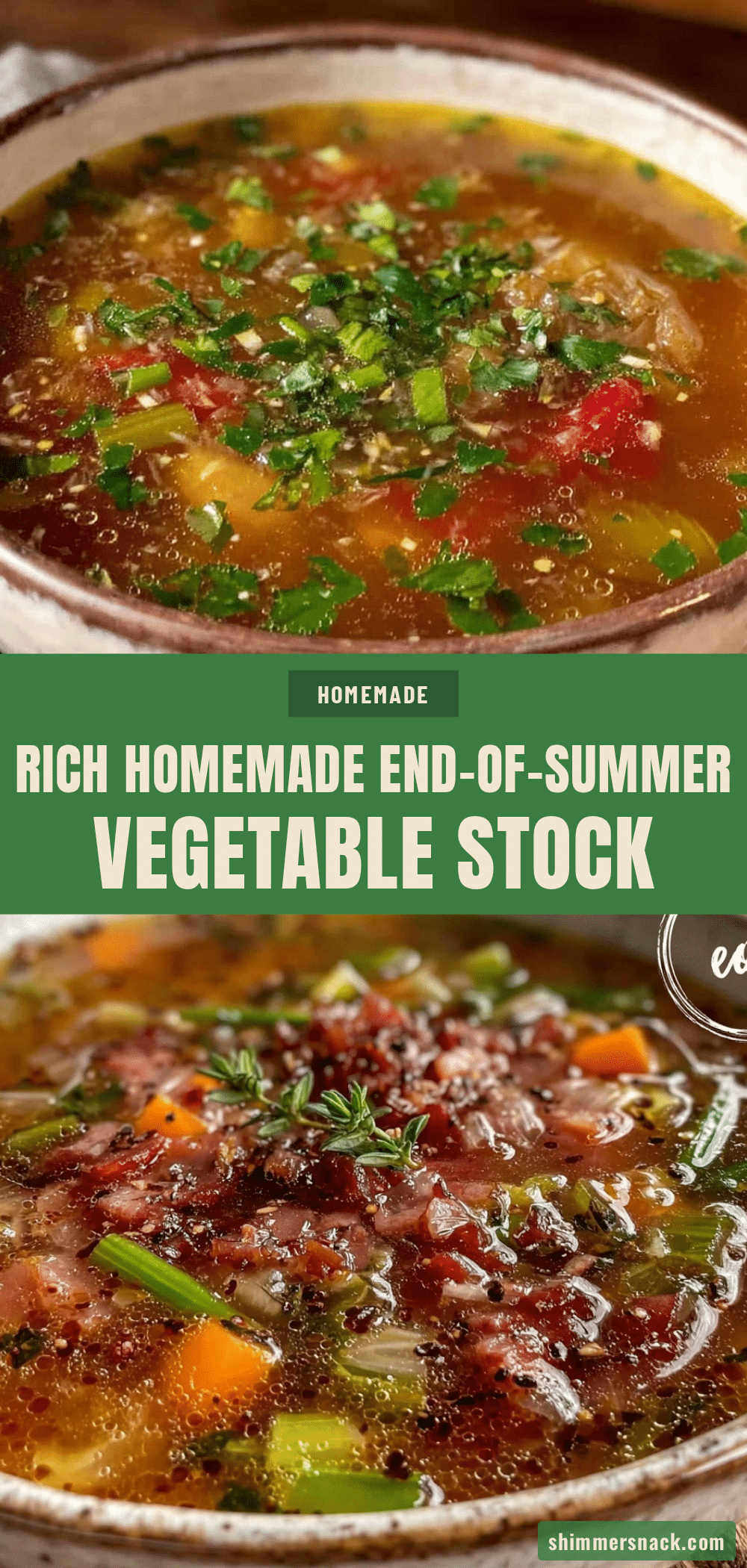
Wholesome End-of-Summer Vegetable Stock Recipe Easy Homemade Scrap Soup

A nourishing and flavorful vegetable stock made from kitchen scraps and seasonal produce, perfect as a base for soups, risottos, and sauces. This easy homemade recipe transforms leftover vegetable trimmings into a rich, comforting broth.
- Prep Time: 15 minutes
- Cook Time: 45-60 minutes
- Total Time: 1 hour to 1 hour 15 minutes
- Yield: 8 cups (about 8 servings) 1x
- Category: Soup Base
- Cuisine: American
Ingredients
- About 6 cups (1.4 liters) vegetable scraps: peels, ends, and trimmings from carrots, celery, onions, tomatoes, bell peppers, zucchini, and mushrooms
- 1 medium onion, quartered
- 2 medium carrots, peeled and chopped (or just use peelings)
- 2 celery stalks, roughly chopped
- 3 garlic cloves, smashed
- 2 sprigs thyme
- 1 bay leaf
- A handful of parsley stems
- 1 teaspoon whole black peppercorns
- 8 cups (2 liters) filtered or spring water
- 1 tablespoon olive oil (optional, for sautéing scraps before simmering)
- 1 teaspoon apple cider vinegar (optional, to help extract minerals)
Instructions
- Collect about 6 cups (1.4 liters) of mixed vegetable scraps, avoiding bitter vegetables like broccoli stalks or cruciferous vegetables. Rinse lightly if needed.
- Roughly chop 1 medium onion, 2 carrots, and 2 celery stalks. Smash 3 garlic cloves with the side of a knife.
- Optional: Heat 1 tablespoon olive oil in a large stockpot over medium heat. Add onion, carrot, and celery pieces and sauté for about 5 minutes until softened and fragrant.
- Add the vegetable scraps, smashed garlic, thyme sprigs, bay leaf, parsley stems, and black peppercorns to the pot.
- Pour in 8 cups (2 liters) of filtered water, ensuring vegetables are fully submerged. Add 1 teaspoon apple cider vinegar if using.
- Bring the liquid to a simmer over medium-high heat, then reduce to low to maintain a gentle simmer. Avoid boiling vigorously.
- Simmer gently for 45 to 60 minutes, stirring occasionally and skimming off any foam or scum that rises to the surface.
- Strain the stock through a fine mesh strainer lined with cheesecloth or a clean kitchen towel into a large bowl or heatproof container. Press gently on solids to extract liquid without overdoing it.
- Let the stock cool to room temperature before refrigerating or freezing. Store in airtight containers.
Notes
[‘Avoid bitter vegetables like broccoli stalks or cruciferous vegetables to prevent bitterness in the stock.’, ‘Keep the simmer low to avoid cloudiness and bitterness.’, ‘Skim foam frequently for a clear broth.’, ‘Do not salt the stock during cooking; season dishes later.’, ‘Optional sautéing of vegetables before simmering deepens flavor.’, ‘Add herbs at the start or during the last 10 minutes for fresher flavor.’, ‘Roasting scraps at 400°F (200°C) for 20 minutes before simmering adds a toasty depth.’, ‘Store stock in airtight containers in the fridge for up to 5 days or freeze for up to 3 months.’, ‘Reheat gently over medium-low heat to preserve flavor.’, ‘Use frozen scraps if needed; thaw before simmering.’]
Nutrition
- Serving Size: 1 cup (about 240 ml)
- Calories: 15
- Sugar: 1
- Sodium: 10
- Fat: 0.5
- Saturated Fat: 0.1
- Carbohydrates: 3
- Fiber: 1
- Protein: 0.5
Keywords: vegetable stock, homemade broth, scrap soup, vegetable scraps, easy vegetable stock, seasonal cooking, vegan broth, vegetarian broth, gluten-free broth