Love this? Save it for later!
Share the inspiration with your friends
The summer I turned thirty, I found myself juggling a last-minute backyard get-together and a fridge that was pretty much empty except for a sad-looking salmon fillet and a few pantry staples. Honestly, I wasn’t expecting much from the night’s dinner plan, but then my neighbor, who rarely cooks but always loves to chat, popped over with a cedar plank in hand. “Try this,” she said, eyes twinkling. “It’s foolproof and tastes like you’ve been slaving away for hours.”
The sizzle when that cedar plank hit the grill was music to my ears. The aroma—smoky, sweet, and just a little tangy—pulled everyone outside faster than I could say “dinner’s ready.” I forgot to grab tongs, made a mess flipping the salmon, and even got interrupted by a wayward dog sniffing for scraps. But you know that feeling when a simple recipe surprises you so much that you can’t stop thinking about it for days? That’s exactly what happened.
This perfect cedar plank salmon with sweet honey Dijon glaze isn’t just a dish; it’s a quick, elegant way to bring people together with minimal fuss and maximum flavor. Whether you’re an experienced griller or someone who’s only ever done burgers on the barbecue, this recipe will make you look like a pro. And honestly, it’s one of those meals that sticks with you—not just because of the taste but because of the memories and easy joy it creates. Maybe you’ve been there too, craving something effortlessly impressive but without the stress.
Why You’ll Love This Recipe
After testing this recipe through countless backyard gatherings and quiet weeknights, I can confidently say it’s a keeper. I’ve perfected the balance between smoky cedar notes and the sweet tang of honey Dijon glaze to create a salmon dish that’s both comforting and slightly fancy. Here’s why this recipe might just become your go-to:
- Quick & Easy: Ready in under 30 minutes, it’s perfect for busy evenings or surprise guests.
- Simple Ingredients: You probably already have the honey, Dijon mustard, and salmon sitting in your kitchen.
- Perfect for Outdoor Cooking: Ideal for grilling season but easily adaptable for indoor ovens.
- Crowd-Pleaser: My family and friends—especially those picky about fish—always ask for seconds.
- Unbelievably Delicious: The glaze adds a subtle sweetness that complements the smoky cedar, creating a flavor combo that’s anything but ordinary.
What makes this recipe stand out is the glaze’s silky texture—thanks to a little olive oil—and the way the cedar plank infuses the salmon with a gentle smokiness without overpowering it. Honestly, I never thought I’d be able to get this level of flavor without hours of marinating or fancy equipment. It’s a recipe that offers a special touch but doesn’t demand a culinary degree, which is exactly why I keep coming back to it.
What Ingredients You Will Need
This perfect cedar plank salmon with sweet honey Dijon glaze recipe relies on straightforward ingredients that come together beautifully. Each component plays a role in building layers of flavor and texture without complicating the process.
- Salmon Fillets: 4 skin-on salmon fillets (about 6 ounces/170 grams each) – fresh is best, but wild-caught frozen works well too.
- Cedar Plank: One untreated cedar plank, soaked for at least 1 hour (to prevent burning and infuse flavor).
- Honey: 3 tablespoons – I prefer raw honey for its richer flavor.
- Dijon Mustard: 2 tablespoons – look for smooth, high-quality mustard like Grey Poupon for the best taste.
- Olive Oil: 1 tablespoon – adds silkiness to the glaze.
- Lemon Juice: 1 tablespoon freshly squeezed – brightens and balances the glaze.
- Garlic: 1 small clove, minced – optional but highly recommended for a subtle kick.
- Salt and Pepper: To taste – use kosher salt and freshly cracked black pepper.
- Fresh Herbs: A few sprigs of dill or parsley for garnish (optional).
If you want to switch things up, you can substitute maple syrup for honey or add a pinch of smoked paprika for a deeper smoky flavor in the glaze. For gluten-free options, just double-check your mustard, but most Dijon varieties are naturally gluten-free. I like to use cedar planks from reputable brands available at my local hardware store or online, and I always soak them well to avoid flare-ups on the grill.
Equipment Needed
- Grill: Gas or charcoal grill works fine; charcoal adds extra smokiness if you’re feeling adventurous.
- Cedar Plank: Essential for that signature smoky aroma; make sure it’s specifically labeled for cooking.
- Basting Brush: For applying the honey Dijon glaze evenly.
- Tongs or Spatula: Preferably a wide one for safely flipping the salmon without breaking it.
- Mixing Bowl: For whisking the glaze ingredients together.
- Measuring Spoons: To get precise amounts of glaze components.
If you don’t have a grill, a broiler or oven-safe skillet can work as alternatives, although you’ll miss out on the cedar plank’s smoky magic. Personally, I’ve tried cedar plank salmon on both a Weber gas grill and a simple charcoal setup, and both yielded great results as long as the plank was soaked properly. Keeping your cedar planks wrapped and stored in the freezer between uses helps them last longer, too.
Preparation Method
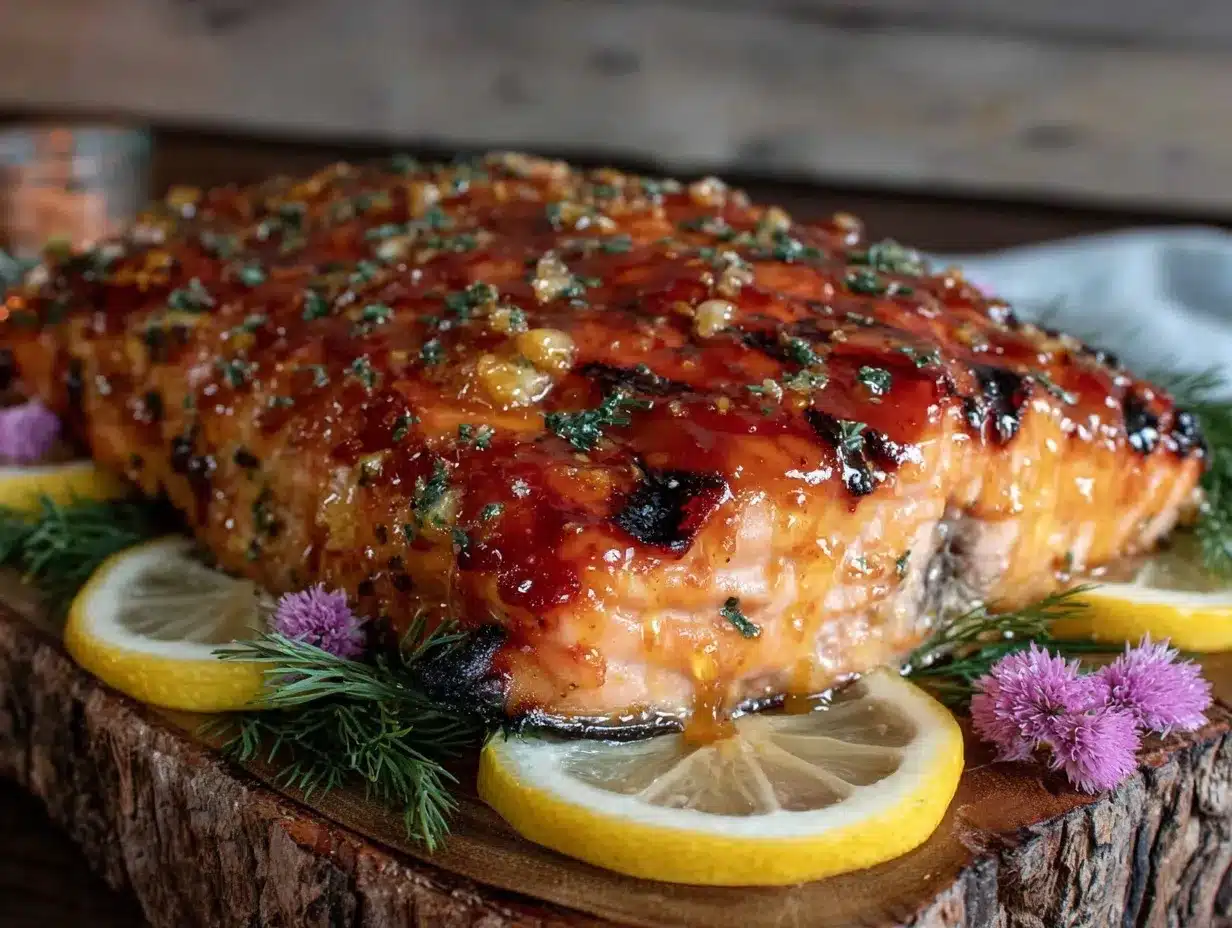
- Soak the Cedar Plank: Submerge the cedar plank in water for at least 1 hour before cooking. You can add a splash of white wine or apple juice for extra aroma. This prevents the wood from catching fire and infuses a gentle smoky flavor during grilling. (10 minutes active prep + soaking time)
- Prepare the Glaze: In a small bowl, whisk together 3 tablespoons honey, 2 tablespoons Dijon mustard, 1 tablespoon olive oil, 1 tablespoon fresh lemon juice, and the minced garlic. Season lightly with salt and pepper. The glaze should be smooth and slightly thick but pourable. (5 minutes)
- Preheat the Grill: Heat your grill to medium-high (around 375°F/190°C). If using charcoal, arrange coals evenly for consistent heat.
- Prep the Salmon: Pat the salmon fillets dry with paper towels. This helps the glaze stick better. Season both sides lightly with salt and freshly cracked black pepper.
- Place the Cedar Plank on the Grill: Position the soaked plank directly over the heat source. Wait for it to start smoking slightly and crackling (about 2-3 minutes). This preps the wood to infuse flavor and prevents sticking.
- Place Salmon on the Plank: Skin side down, lay the salmon fillets on the cedar plank. Brush generously with the honey Dijon glaze. (Use about half the glaze now.)
- Grill the Salmon: Close the grill lid and cook for about 12-15 minutes, depending on thickness (approximately 3/4 inch / 2 cm). Halfway through, brush the salmon again with the remaining glaze. The salmon should be opaque and flake easily with a fork when done. Avoid flipping the fillets to keep them intact.
- Check for Doneness: Use a fork to test if the fish flakes easily. Internal temperature should reach 145°F (63°C) for safe consumption, but some prefer it slightly less cooked for moistness.
- Remove and Rest: Carefully remove the cedar plank from the grill with tongs or oven mitts. Let the salmon rest for 5 minutes—this locks in juices and lets flavors meld.
- Serve: Garnish with fresh dill or parsley and lemon wedges. Serve directly from the plank for a rustic touch or transfer to plates.
Pro tip: If your glaze starts to drip too much or burn, brush it on in thinner layers next time. Also, soaking the plank overnight can help prevent flare-ups. And if you accidentally forget the plank soaking step (I’ve done it), just soak it for as long as you can before grilling—it still works better than dry wood.
Cooking Tips & Techniques
Cooking salmon on a cedar plank might seem intimidating, but a few tricks make all the difference. First, soaking the plank is essential to avoid flames that char the fish rather than cook it. I always keep a spray bottle handy for flare-ups, especially when using sweet glazes like this honey Dijon mix.
Another tip: don’t over-glaze. A thin, even coating allows the salmon to absorb flavors without caramelizing into a burnt mess. I learned that the hard way after rushing through the basting step once and ending up with a sticky black glaze that nobody wanted to eat.
Timing matters too. Salmon cooks quickly, so keep an eye on it and resist the urge to poke or flip it repeatedly. The skin side down method helps protect the delicate flesh and keeps it moist. If you’re unsure, use a digital thermometer to check for 145°F (63°C).
Finally, multitasking helps. While the plank is soaking or salmon is grilling, prep side dishes or set the table. This keeps everything smooth and stress-free. And if you want to experiment, try sprinkling fresh herbs or a little smoked paprika on top before grilling for an extra layer of flavor.
Variations & Adaptations
This recipe is versatile and easy to tweak depending on your preferences or dietary needs. Here are a few variations I’ve tried and loved:
- Maple Glaze: Swap honey for pure maple syrup for a deeper sweetness that pairs beautifully with cedar smoking.
- Spicy Twist: Add a pinch of cayenne pepper or smoked chipotle powder to the glaze for a subtle heat kick.
- Herb Infusion: Mix fresh chopped rosemary or thyme into the glaze for a fragrant, earthy note.
- Gluten-Free: This recipe is naturally gluten-free, but double-check your Dijon mustard label to avoid hidden gluten.
- Indoor Oven Method: If you can’t grill, place the soaked cedar plank on a rimmed baking sheet and roast the salmon at 400°F (200°C) for 15-20 minutes, basting halfway through.
One personal favorite variation involves swapping the glaze for a tangy miso-honey blend—an accidental discovery courtesy of a late-night craving. It added a savory umami edge that surprised everyone at the table. Feel free to experiment; this recipe’s forgiving nature makes it a great canvas for your creativity.
Serving & Storage Suggestions
Serve your cedar plank salmon warm—right off the grill or oven—for the best texture and flavor. The skin should be crispy, and the flesh tender and flaky. I like to complement it with light, fresh sides like a zesty cucumber salad, roasted asparagus, or a simple quinoa pilaf.
For beverages, a crisp white wine such as Sauvignon Blanc or a lightly chilled rosé pairs nicely with the salmon’s sweet and smoky profile. Lemon wedges on the side brighten each bite.
If you have leftovers, store them in an airtight container in the refrigerator for up to 2 days. Reheat gently in a low oven (around 275°F/135°C) wrapped in foil to keep the fish moist. Avoid microwaving if you can—it tends to dry out the delicate salmon.
Interestingly, the flavors of the glaze deepen overnight, so the next-day salmon makes for a great salad topping or sandwich filling. Just flake the fish and toss with greens or creamy avocado for a quick meal.
Nutritional Information & Benefits
This perfect cedar plank salmon with sweet honey Dijon glaze offers a healthy balance of protein, healthy fats, and natural sweetness without added sugars. Each 6-ounce (170 gram) serving provides roughly:
| Nutrient | Amount |
|---|---|
| Calories | 350 kcal |
| Protein | 34 grams |
| Fat | 20 grams (mostly heart-healthy omega-3s) |
| Carbohydrates | 8 grams |
| Sugar | 6 grams (from natural honey) |
Salmon is renowned for being rich in omega-3 fatty acids that support heart health and brain function. The honey Dijon glaze adds just enough sweetness without refined sugars, keeping the dish light and nutritious. If you’re mindful of allergens, this recipe is free from gluten and dairy by default.
From a wellness perspective, this dish feels like a treat without the guilt. It’s satisfying, flavorful, and uses ingredients that have real benefits beyond just taste.
Conclusion
If you’re looking for a recipe that’s both impressive and approachable, this perfect cedar plank salmon with sweet honey Dijon glaze is a winner. It’s been one of those dishes that I keep returning to—not because it’s complicated, but because it delivers consistent, delicious results every time. You can adjust the glaze, sides, and cooking method to fit your style, making it a flexible choice for any occasion.
Honestly, I love how it brings a smoky, slightly sweet flavor to the table with minimal effort. It’s perfect for those moments when you want something special but don’t have hours to spend in the kitchen. Give it a try, and I’d love to hear how you make it your own. Let me know your favorite glaze tweaks or side dishes in the comments below—it’s always fun to swap ideas!
Here’s to many joyful meals and simple pleasures shared over perfectly cooked salmon.
FAQs
Can I use other types of fish on a cedar plank?
Absolutely! Steelhead trout, Arctic char, and even firm white fish like halibut work wonderfully on cedar planks. Just adjust cooking times based on thickness.
How long should I soak the cedar plank before grilling?
At least 1 hour is ideal to prevent burning. Some people soak theirs overnight for extra moisture and flavor infusion.
Can I prepare the glaze in advance?
Yes, the honey Dijon glaze can be made up to 2 days ahead and stored covered in the refrigerator. Give it a quick stir before using.
What if I don’t have a grill? Can I cook cedar plank salmon indoors?
You can roast the soaked cedar plank with salmon in a 400°F (200°C) oven for about 15-20 minutes. The smoky effect will be milder but still tasty.
Is it okay to reuse cedar planks?
It’s best to use cedar planks once or twice max. After grilling, they tend to dry out and lose flavor, plus there’s a risk of splintering or bacteria buildup.
For more fresh seafood inspiration, you might enjoy my crispy garlic chicken recipe, which pairs beautifully with light salads, or the vibrant zesty grilled vegetable salad that complements smoky flavors perfectly.
Pin This Recipe!
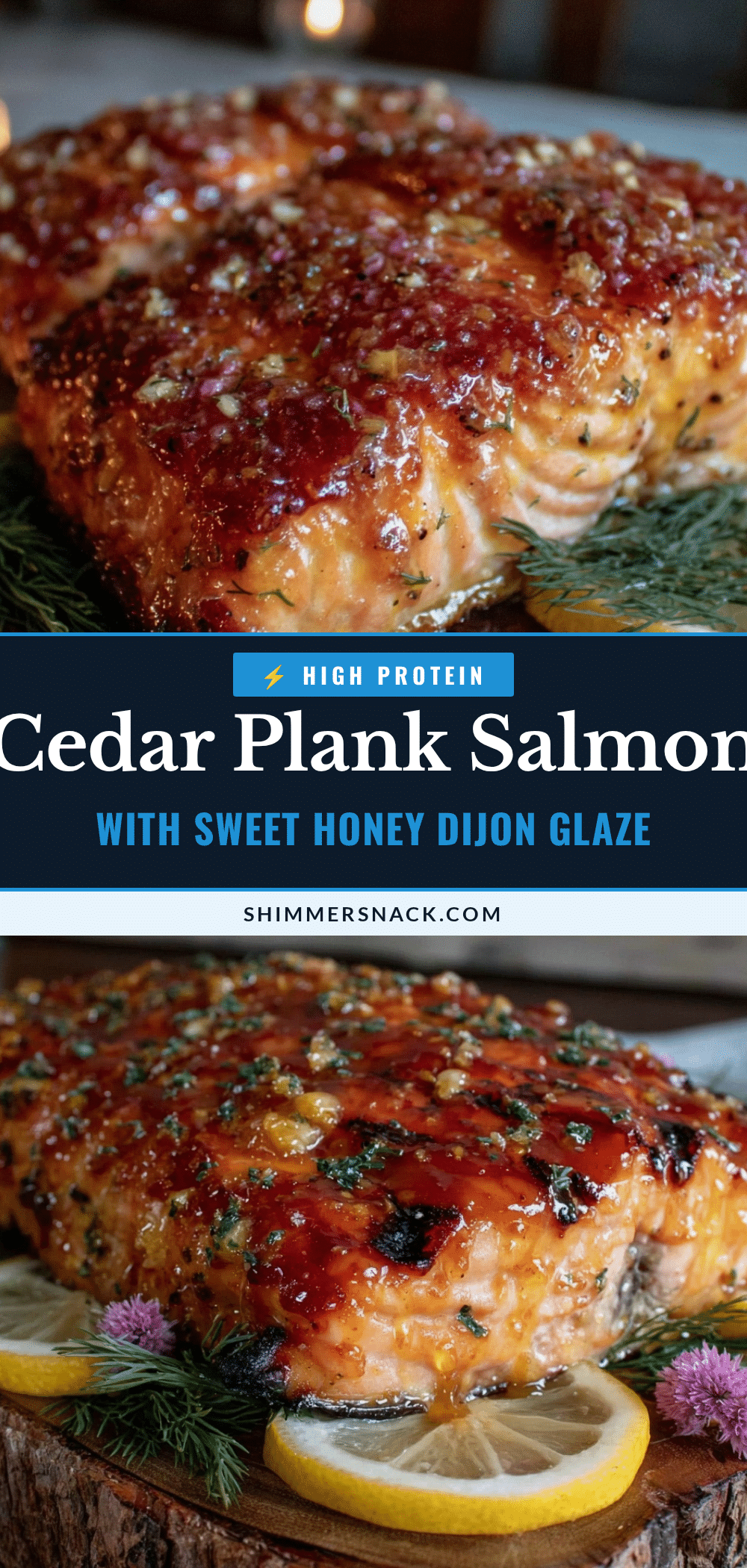
Perfect Cedar Plank Salmon Recipe with Sweet Honey Dijon Glaze
A quick and elegant cedar plank salmon recipe featuring a sweet honey Dijon glaze that infuses smoky, sweet, and tangy flavors, perfect for grilling or oven cooking.
- Prep Time: 15 minutes
- Cook Time: 15 minutes
- Total Time: 30 minutes
- Yield: 4 servings 1x
- Category: Main Course
- Cuisine: American
Ingredients
- 4 skin-on salmon fillets (about 6 ounces each)
- 1 untreated cedar plank, soaked for at least 1 hour
- 3 tablespoons honey (raw preferred)
- 2 tablespoons Dijon mustard
- 1 tablespoon olive oil
- 1 tablespoon freshly squeezed lemon juice
- 1 small clove garlic, minced (optional)
- Salt to taste
- Freshly cracked black pepper to taste
- Fresh dill or parsley sprigs for garnish (optional)
Instructions
- Soak the cedar plank in water for at least 1 hour before cooking. Optionally add a splash of white wine or apple juice.
- In a small bowl, whisk together honey, Dijon mustard, olive oil, lemon juice, and minced garlic. Season lightly with salt and pepper.
- Preheat the grill to medium-high heat (around 375°F). If using charcoal, arrange coals evenly.
- Pat salmon fillets dry with paper towels and season both sides lightly with salt and pepper.
- Place the soaked cedar plank directly over the heat source on the grill and wait 2-3 minutes until it starts smoking and crackling.
- Place salmon fillets skin side down on the cedar plank and brush generously with half of the honey Dijon glaze.
- Close the grill lid and cook for 12-15 minutes, brushing with remaining glaze halfway through. Do not flip the fillets.
- Check for doneness by ensuring salmon flakes easily with a fork and reaches an internal temperature of 145°F.
- Remove the cedar plank from the grill carefully and let the salmon rest for 5 minutes.
- Garnish with fresh dill or parsley and lemon wedges. Serve directly from the plank or transfer to plates.
Notes
Soak the cedar plank for at least 1 hour to prevent burning and infuse smoky flavor. Brush glaze in thin layers to avoid burning. Use a digital thermometer to check for doneness. If no grill is available, roast on a soaked cedar plank in a 400°F oven for 15-20 minutes.
Nutrition
- Serving Size: 1 salmon fillet (6 o
- Calories: 350
- Sugar: 6
- Fat: 20
- Carbohydrates: 8
- Protein: 34
Keywords: cedar plank salmon, honey Dijon glaze, grilled salmon, easy salmon recipe, healthy salmon, outdoor cooking, seafood